SAD Again: Trash Factor Why We Love to Hate WWE
/SAD’s “Trash Issue” was published in 2018 with a letter of then-editor Meredyth Cole praising those “who embrace the parts of life, and themselves, that are less than immaculate.” Naturally, contributors interpreted the theme in a plethora of unique and unexpected ways, but ‘messy’ seemed to be a recurring theme in their pieces. An inherent part of life and art, for reporter and film critic Jackson Weaver it showed itself most clearly in the art of wrestling, which he compares to the impeccable craft of ballet in a hot take that proves to be oddly convincing. Arguing that their main difference lies in the respect granted to them by society, Weaver cites us as the determining factor of what is and isn’t trash— particularly when a large part of their allure lies in the way in which they depict tall tales of heroism, romance and sheer grit. Anyone will admit that dancing is beautiful, so why can’t we do the same for wrestling?
As writers and creatives we are firm in our resolution not to publish what we deem to be ‘trash’, but if his experience as a writer has taught Weaver anything it is that it can be impossible to determine by ourselves what will and will not appeal to readers. Art takes on a life of its own when it reaches an audience, and the passion we feel for our work is not always a factor. Experience does make a significant difference, however, and Weaver garnered a lot in writing not only for SAD, but also for magazines like The Walrus, Montecristo and Vancouver Magazine. Now a senior writer for CBC Entertainment, he spent years applying himself in publications such as this, where two unlikely art forms are laid side by side in a piece that proves that even two unlikely adversaries like ballet and WWE can coincide if given the chance. Buckle in, readers, because this is about to be a Grand Slam.
Trash Factor: Why We Love to Hate WWE
Words by Jackson Weaver
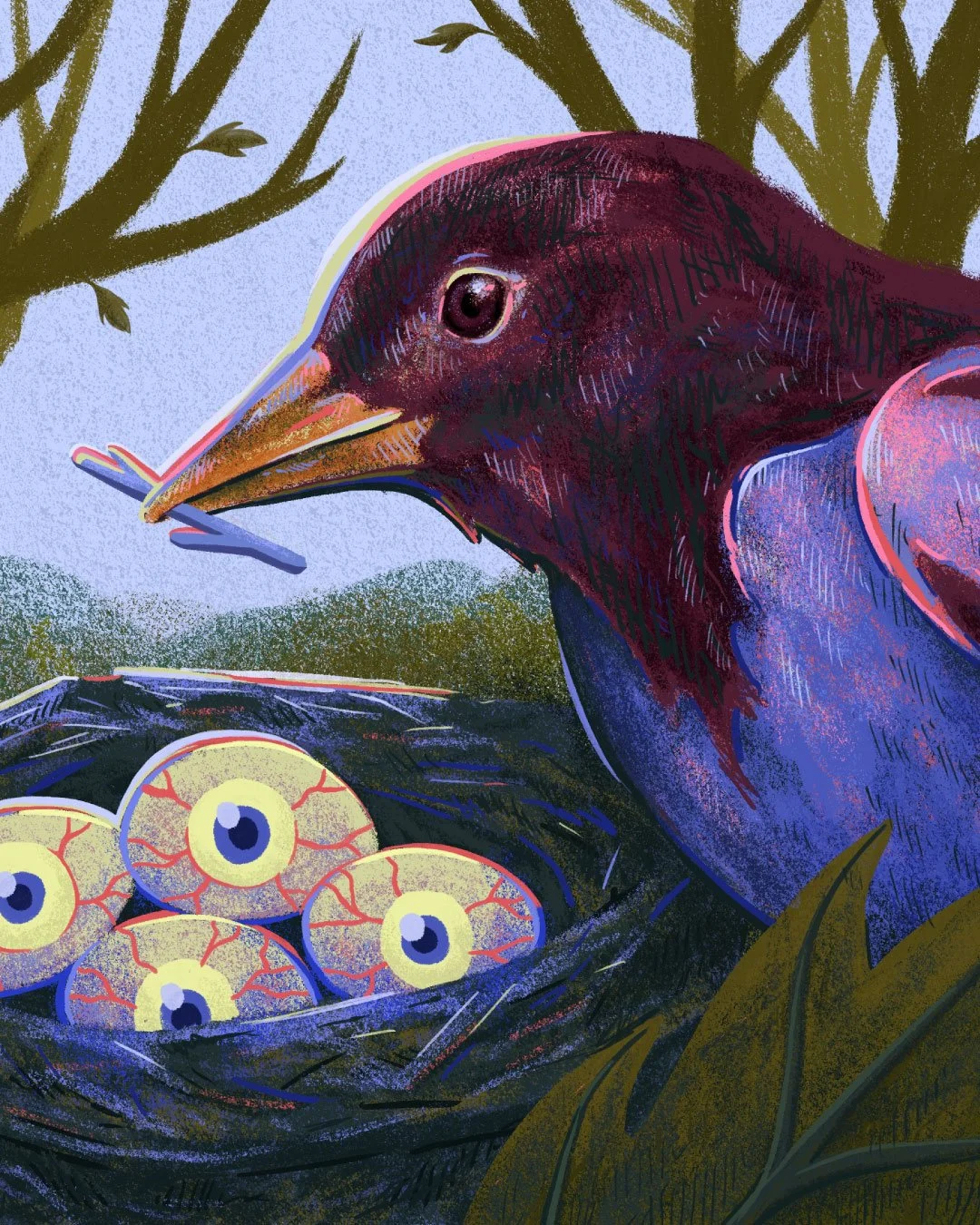
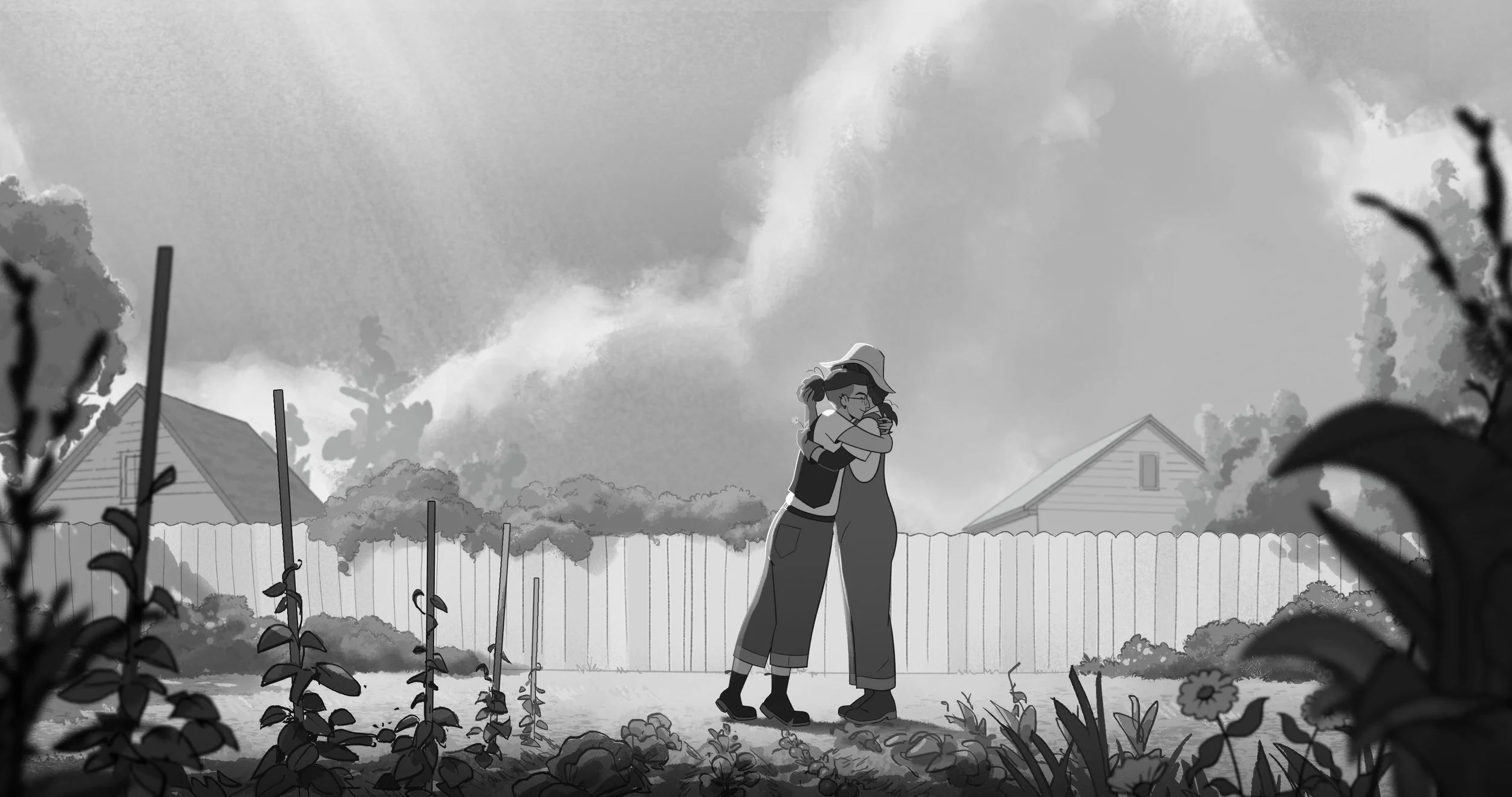
Illustrations by Erick M Ramos
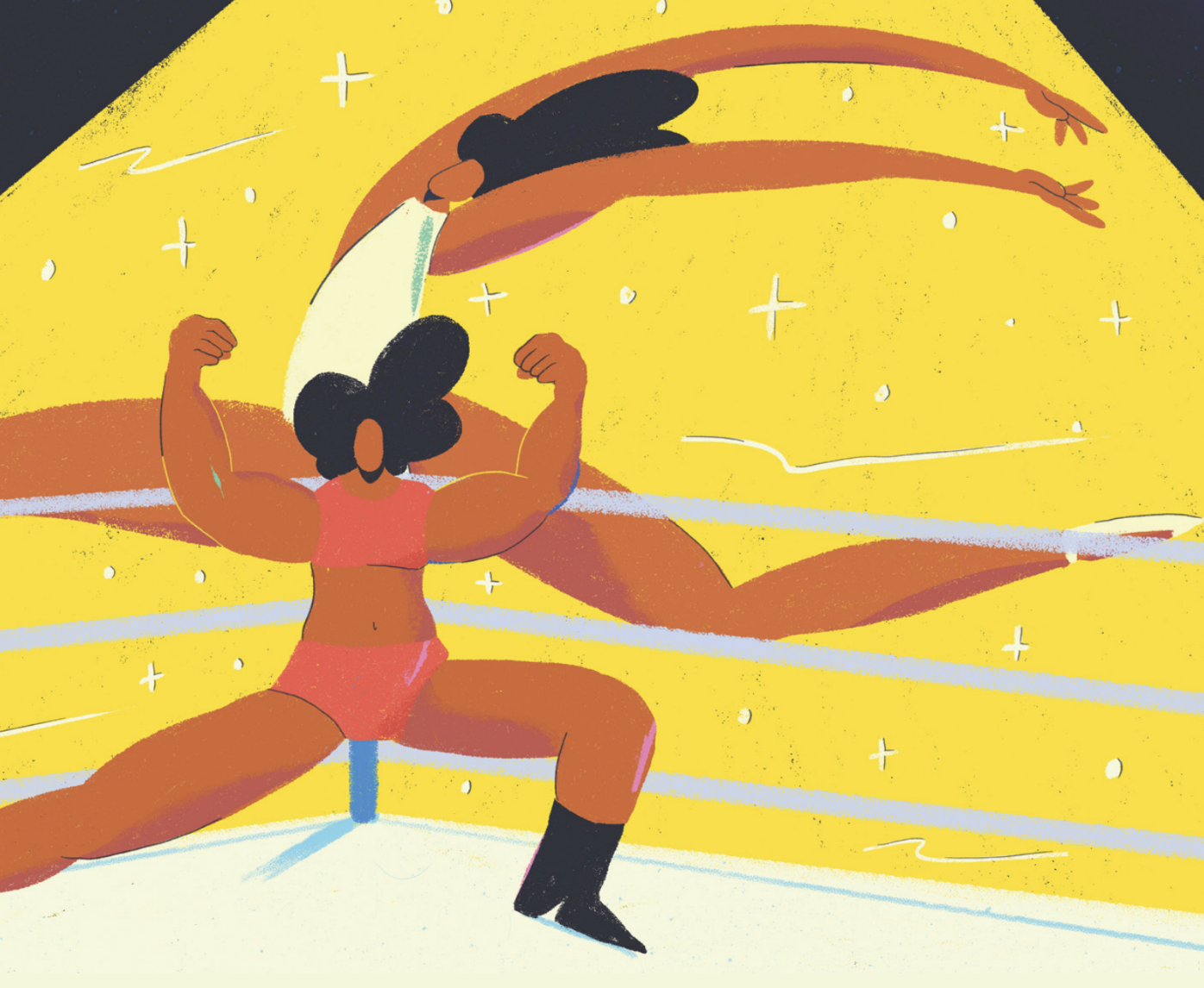
illustration by erick m ramos for SAD issue 25: trash
“In dance, you call an unpointed foot a dead fish,
an ankle turned out during a pirouette is sickled.
If you watch a ballerina’s arm go out during second position,
over her head in fourth, it moves like a wave.”
Dancers interpret the music, and tell a story with their bodies; they are self-possessed and beautiful. That’s art. Not only art, it’s high art.
And now I’m going to talk to you about wrestling.
Professional wrestling of the kind advocated by World Wrestling Entertainment, Inc. (WWE) is a world unto itself. Like the world of dance, where I spent 12 years sampling genres and challenging the limits of endurance, professional wrestling gathers fervent, devoted fans and is largely incomprehensible to outsiders. Most of us are tangentially aware of professional wrestling; on occasion, the spectacle bubbles over into the mainstream, as a punchline or an unfortunate addition to a “real” story —like the tragic one of Chris Benoit.
Beginning as an offshoot of amateur wrestling, professional wrestling became increasingly focused on theatrics during the early days of television. Still, the advent of professional wrestling in the early 1950s was a more streamlined affair, focused mostly on fixing the outcomes of matches, rather than elaborate storylines associated with them.
WWE as we know it began as a consolidation of many smaller leagues and changed its name about as often as it changed its roster, finally settling on WWE after the World Wildlife Foundation fought them on it (in court). The name change ushered in a new era of professional wrestling, right around the time it stopped being entirely about wrestling.
Fierce competition between wrestling leagues in the '90s pushed the WWE into more theatrics, and from it wrestling celebrities were born: Andre the Giant, a 7 ft. 4 French actor who went on to star in The Princess Bride; The Mystery Man, who never fought a match of his own, but instead crashed matches in progress and beat up, at random, one of the two combatants; “The Mountie”, a Quebecois antagonist dressed as a Canadian Mountie, whose ridiculous theme song boasted the uninspired title, I’m the Mountie; and—of course—Dwayne “The Rock” Johnson, whose cross-over success has far eclipsed anything anyone could accept from a WWE wrestler.
As a former dancer contemplating WWE, I share the perplexed curiosity of most non-fans. I’m driven to compare it to dance, my point of reference in the world of athletic pursuits. But, mapping the points where dance and wrestling diverge becomes confusing. Expecting deviation, one finds parallels. Increasingly, the difference between dancing and wrestling comes to look like a matter more of reputation than reality.
Wrestling rivals The Undertaker and Mankind duking it out on top of a giant, chain-link cage has become an eternal meme, while I was expected to celebrate postmodern choreographer Trisha Brown’s“dance,” wherein she donned a harness and walked down the side of a building. Most people scoff when Hulk Hogan enters a stadium to Real American by Rick Derringer, then nod deep in thought to John Cage breaking wine bottles and hitting the interior of a piano with a hammer in modern dance icon Merce Cunningham’s choreography.
I can’t argue the fact that wrestling goes over the top, but every day I walked into a dance class and learned we would be ripping up newspapers, it made me wonder what made dance high art and wrestling something else.
So why isn’t wrestling taken seriously? The sport has been subjected to the height of derision few other art forms have, primarily the high-schoolish offence known as “being fake.”
There’s a term in wrestling that defines all the fakery, all the fictional aspects, called kayfabe. This means every insult, every chair throw, every glowering look put on to get the audience excited, interested, and involved. Kayfabe means everything fake, essentially, everything that makes wrestling trash. The commitment to kayfabe is mocked by outsiders who watch wrestling but revered by insiders. The moments when wrestlers lose kayfabe and, for an instant, break character, are few and far between. Wrestlers are as committed to their performance as any great actor, or dancer.
Many of us view professional wrestling as the easily derided arena of boobs and idiots who, for whatever reason, can’t tell that it’s fake. The truth is, no one believes in the fable, but people want stories. They want excitement and distraction, and wrestling—like music, TV, movies, and books—gives it. But wrestling fans are disdained for enjoying the fiction, while other forms of performance are celebrated for it.
illustration by erick m ramos for SAD issue 25: trash
Fakery and fiction is the cornerstone of every art form. I can say, from every dance class I’ve ever taken, from every performance I’ve ever done, there’s really no difference between a choreographed fight and a ballet solo.
Dance is an art because we call it that. Professional wrestling is a trashy world all its own. I have a suspicion, though, that “high art” might be the ultimate kayfabe.
Kirsten Danae: Your piece balances critique and admiration when discussing the very different yet shockingly similar arts of dance and wrestling. As writers, we often hold back to avoid controversy, but can lose our authentic voice in the process. Why is honesty important to you as a writer and reporter?
Jackson Weaver: I think we’re all performing to a degree when writing. Especially in the non-fiction space, we’re trying to metamorphose our thoughts, opinions, observations and experiences into a consumable, affective and discrete package — concise and direct enough that an editor will bite. When you do that (or at least, when I do that) you tend to think in terms of marketability and persuasiveness: “Does this sound like something people would read? Does this have a topical element? Can it be distilled into a headline/logline that people would read?”
That leads to an element of dishonesty, and it’s unavoidable when selling writing. The importance of honesty is in how you can swing back from that point during the process — and then again in the edit. What are your unique thoughts? What is your unique style? What are the unique experiences and insights only you could bring to the topic? When it comes to writing, I’ve recently realized what really intrigues me and it’s the blueprint for this story as well. Find two things I know well — or am at least prepared to heavily research — that seem wholly unconnected, then explain how they can be seen as parallels. It’s a mental exercise that makes writing interesting to me, and feeds my passion for it. Sometimes I can go a bit far afield in a way neither editors or readers appreciate; but if I abandoned it entirely, I’d hardly write anything at all. And what I did write would be boilerplate, forgettable garbage.
Appealing to your readers and editors’ desires are a bit of dishonesty, and appealing to your own are honesty. Both are important. But that honesty is especially important in making something original and interesting. The writing and editing process is about balancing your demands for that honesty, with the audience (and editor) demands of simplicity, entertainment and general readability.
KD: Apart from writing for magazines like SAD and The Walrus, you work as an entertainment journalist specializing in film and music. What has your professional journey looked like since publishing this piece? Any advice you would give your 2018 self?
JW: I think I did the only thing I could have done to get here: wrote for everyone I possibly could, and take jobs I felt wholly unequipped for. Around this time, I was doing freelance for Montecristo, Vancouver Magazine, a little startup mag called Pilcrow and a startup newspaper that has since gone under. My lodestar was to write for anywhere that would let me write for them, and to meet as many people who might give me a chance as possible. Both of those strategies led me to every job I ever got, and the one I have now. Looking back, the only thing I might advise myself would be not to have listened to everyone telling me journalism is dying and jobs are impossible to come by. Regardless of whether that’s true, I’d already decided to try to become a writer. And until there are literally no jobs left, there are always opportunities for the people gunning for them.
KD: You clearly have a strong passion for dancing and wrestling. Can there be writing without passion, or do you think it’s bound to fall flat?
JW: Once in university, I asked my lit theory professor if he ever struggled to write, thinking he’d give me some commiseration and reinforcement. He just kind of looked baffled, and said no; writing was always fun and easy for him. Probably the worst mentor I’ve ever had.
Some stories aren’t your passion stories. Sometimes you just need to bang out the words and file something so you can go home for the day. I doubt those stories will usually hit home, though to be fair A Clockwork Orange was Anthony Burgess’s potboiler; a throwaway project written just to keep the lights on. Write enough, and you’ll be surprised by what does hit home with readers, and what doesn’t. More than once I’ve written a review I hated for most of the writing process, only to see it blow up online. And others I spent literally weeks preparing for — reading the book a movie was based on, watching previous adaptations, reading academic articles about the author and genre etc — only for maybe five people to read it.
Passion about the craft is likely necessary: you’re not going to make it far into an industry if you aren’t bitterly passionate, and feel a burning need to do it well (unless you’re Nikola Jokić, I guess). But more important than daily passion is daily commitment. Putting in the words — sometimes just to clear the to-do pile in order to make it to the next story — will land you a solid body of work.
KD: Just for fun…three words to describe your creative process?
JW: Gruelling, research, curiosity
Jackson Weaver is a reporter and film critic for CBC Toronto, with his work being present in a variety of magazines such as The Walrus, Montecristo, Vancouver Magazine and a startup magazine more people should know about called Pilcrow. After you’ve read his work here you may peruse the publications above, or find out more online at the Toronto Film Critics Association.