Vancouver International Black Film Festival and the Courage of Moving Beyond Representation
/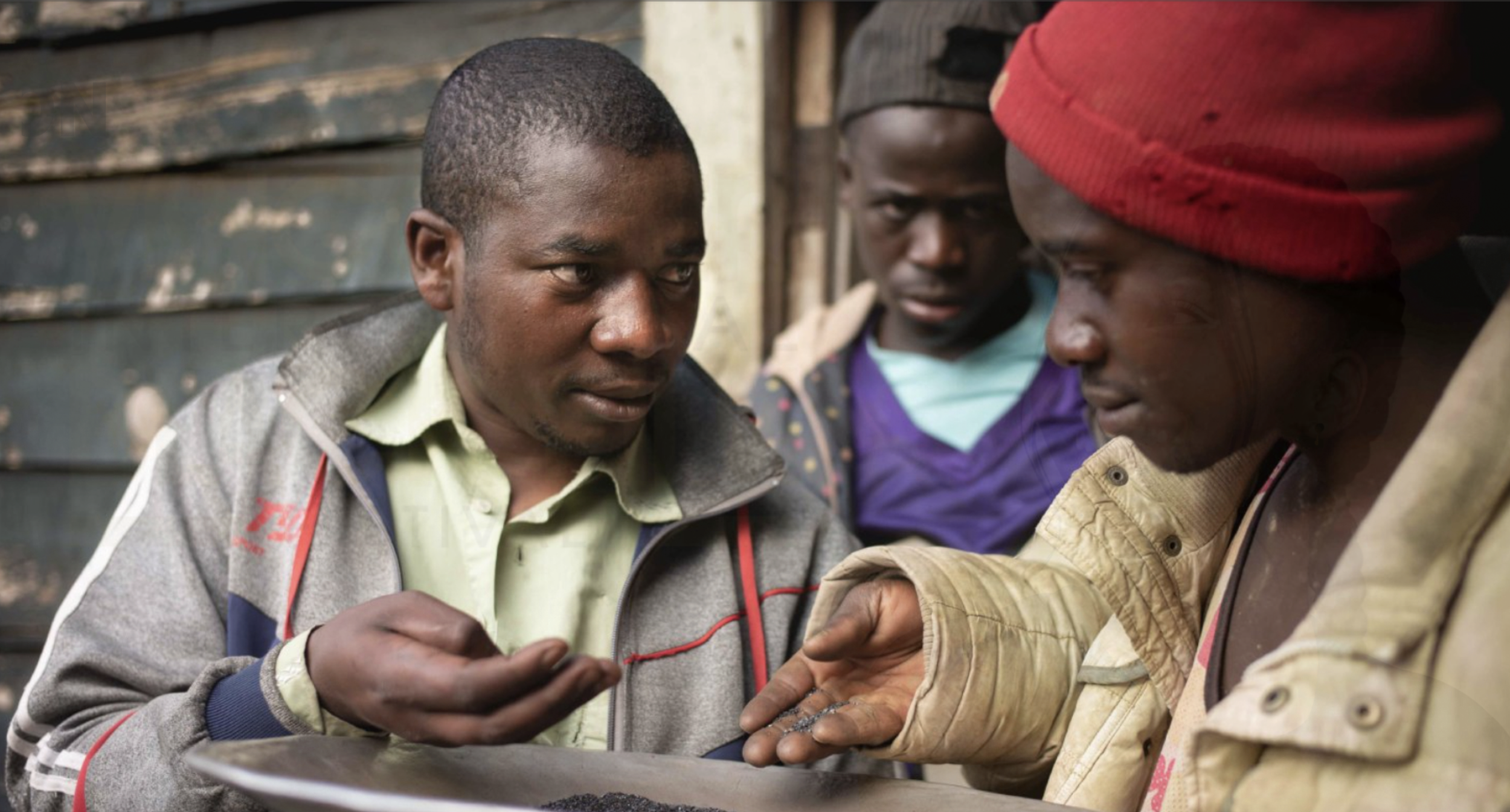
Still from the film Of Mud and Blood (Dir. Jean-Gabriel Leynaud). Image courtesy of vibff.
When I stepped out of another dark, wet, chilly December night and into the yellow light and warm confines of VIFF Centre for the opening of the fifth annual Vancouver International Black Film Festival, I was met with a familiar feeling. The radiance, attentiveness and joyous anticipation emanating from the festival's organizers is fairly typical of opening nights. As I was ushered from the doorway into a brief handshake with the festival’s head coordinator Andrea Este, however, what I felt was not mere cordiality or politeness, but a genuine gladness—a mutual regard that let me know that she was grateful that I had chosen to attend. VIBFF is one of six affiliated festivals that bring Black film and filmmakers together to celebrate, interrogate and elevate the potential of Black Canadian cinematic culture throughout the country. This network of festivals, under the guidance of founder Fabienne Colas, also includes Toronto, Ottawa, Halifax, Montreal and Calgary.
In every Canadian city in which I’ve lived or visited, there has been, particularly among Black artists and cultural workers, an enduring desire to take up space and nurture environments where the diversity of Black experience can be prioritized and compassionately reckoned with. On one level, perhaps it was this familiar desire for mutual regard, this need for spaces of affinity, that made everyone inside the VIFF Centre lobby and atrium feel so radiant to me, and the festival’s organizers so attentive and kind. But as I stepped into the theatre to experience Of Mud and Blood, I understood that the value and power of VIBFF was not merely bound up in its willingness to present Black faces on screen in a way that satisfies our need for representation. Rather, by opening the festival with this film, VIBFF prompted its audience to clarify the scope of our responsibilities to one another in an African diasporic context. Of Mud and Blood is the sort of film that invites us to practice another form of compassionate regard for Black life, one that moves beyond the comfort of representation and into questions about cinema’s capacity to engender meaningful solidarity across national and continental borders.
Of Mud and Blood is a film by French director Jean-Gabriel Leynaud that depicts the day-to-day lives and choices of people in the Congolese town of Numbi. Almost immediately, the film lays its essential tensions bare: sprawling wide shots of Numbi’s vast green hills and mountains are juxtaposed against the small pathways of a local market where one of the film’s central figures–a man named Ujumbé–haggles with a young vendor over the price of a shovel. Ujumbé’s voice is one of the first we hear, in a mode that is both narrative and poetic: “we diggers, we eat the mountains with our shovels”. And perhaps his invocation of the language of appetite is particularly apt, as the film brings us into a world in which nearly every available option–to make money, to raise a family, to evade violence or go to school–is mediated by the open mine, the eaten-away mountains, and the hunger of companies like Apple, who extract coltan and other minerals from the region. The film succeeds mainly through its grounded vérité style and its willingness to depict the realities of life in Numbi from several perspectives. The principal figure of the film is a digger named Ujumbé. Through his eyes we are made to feel the visceral tightness of the work in the mines. But as we see him struggle to stretch his meager pay into a comfortable life for himself, his wife Rachel and his young daughter Alliance, we also get the sense that even as he is eating away at the mountains with his shovel, he, likewise, is being eaten by the pursuit of ore, the darkness of the mine, the orange-brown mud caked on his clothes and under his fingernails, and ultimately, the reality that his survival depends on his ability to keep digging.
By broadening the perspective of the film to meaningfully include school teachers, children, police officers, sex workers, mineral traders and diggers, Of Mud and Blood makes the clear argument that none of the poverty and suffering experienced by those in Numbi is the result of personal failure or incompetence. Rather, these are the inevitable consequences of a system where natural resources are extracted to feed the pockets of multinational corporations, to the relative exclusion of local economies. Metaphorically and otherwise, so much of life in Numbi turns toward the mines. Ujumbé’s two-year-old daughter mimics her father, pushes a small lip of dirt into a shovel, bends down to press a finger into the soil and shouts “coltan”, the way her father might on a particularly fortuitous workday. A boy no older than eleven stops attending school, sloshes through the mud of the mine in purple boots as he’s forced to help his family earn money despite his tender age and his dreams of becoming an engineer. A sex worker struggles to make ends meet, wonders aloud to the woman braiding her hair about whether a life digging for ore might be preferable to the path she’s chosen. A police officer cleans mud from his gun, wipes his bullets clean with a wet rag and says he’s prepared to defend the community if M23 militia forces from Rwanda try to seize control of the town, its mines, people and mineral resources. A teacher, his face etched in worry, stands in front of a small classroom of uniformed boys, recites a brief list of Congo’s most prized minerals. Lithium. Zinc. Coltan. He asks the boys which countries and forces are actively stripping Numbi of its resources. Innocently, one boy raises his voice to say “the white people, the Belgians”, another says “Rwandans”, and another offers “Americans”. Each answer is correct, though the list is incomplete and each country bears a slightly different relationship to the violence and tension each resident of Numbi feels around themselves. Toward the end of the film, Ujumbé distills Of Mud and Blood’s essential tragedy rather precisely: “I don’t know what coltan is, but I know if I find some [my wife and daughter] will eat tonight.”
When I pushed open the theatre’s sound-proof doors, I was greeted by the sound of R&B music. As I stepped into the atrium, the baselines and drums invited me to dance. Near the red carpet, women snapped selfies and raised small glasses. Collectively, we were beautiful and we were glad. While the festivities did not blossom into an all-out party, the air of celebration and connection persisted, lingered. It is a mighty feat to bring together a festival of any kind, and while the evening’s opening screening marked the fifth year of VIBFF, gatherings of this sort remain relatively rare for Black people in Vancouver. I wanted to celebrate, and in a modest way, I did. I struck up a conversation with fellow filmmaker Tristin Greyeyes and we reflected on the beauty of the film’s cinematography, its narrative deftness and elegant perspective shifts. I ended the night by chatting with my friend Kim, for whom the film was emotionally sobering. We did not say so exactly, but as we spoke, we each thought of the phones wedged in our pockets, how innocuous they feel, how their sleekness belies the difficulty of the labour needed to produce them, and how, ultimately, their necessity seems inextricable from the functioning of the modern world.
While no one swaying to the music at VIFF Centre this night was a direct architect of the systems that produce violence in Numbi, the coltan in our phones means that each of us exerts at least a little bit of force on the corporate and geopolitical levers that stain Ujumbé’s clothes with mud. If we are implicated in the violent extraction of Congo’s resources, it means we can each make choices to further implicate ourselves in the region’s liberation. And while the existence of Vancouver International Black Film Festival is an important and cathartic expression of social and cultural affinity among Black people in Vancouver, I am glad that the festival seems intent on prompting its audiences toward deeper, more urgent solidarities than those produced by the politics of representation. Part of the beauty of festivals like VIBFF is that they create occasions where Blackness is both welcomed and expected. Spaces where we might delight in the simple pleasure of being together in a space that celebrates the richness of our experiences and the value of our creative ambitions. This year’s Vancouver International Black Film Festival accomplishes that, but seems to ask us to do more than revel in the pleasure of each other’s company. The films ask us to extend our compassionate regard beyond our neighbourhood, our city, or our national attachments. Instead, films like Of Mud and Blood beckon us to bear witness to iterations of Black life and consider how we might enact a form of care and solidarity that is resilient enough to stretch from downtown Vancouver all the way to the Democratic Republic of Congo, and beyond.
The Vancouver International Black Film Festival (VIBFF) runs from December 5-9 2025. See the full list of screenings and events on their website.
Brandon Wint is an Ontario-born poet, spoken word artist, educator and filmmaker based in western Canada. For more than a decade, Brandon has been a sought-after touring performance poet, having shared his work all over Canada, and internationally at festivals and showcases in the United States, Australia, Jamaica, Latvia and Lithuania. Brandon is ever-grateful for the power of poetry as a spiritual technology and social force. He is devoted to using poetry as a tool for refining his sense of justice, love, and intimacy. Brandon Wint's poems and essays have been published in The Ex Puritan, Event Magazine, Arc Poetry Magazine, and Black Writers Matter, among other places. Divine Animal (Write Bloody North, 2020) is his debut collection of poetry. In recent years, his films have screened at DOXA documentary film festival and Reelworld Film Festival