Tatreez: Palestinian Embroidery with Alex Verma
/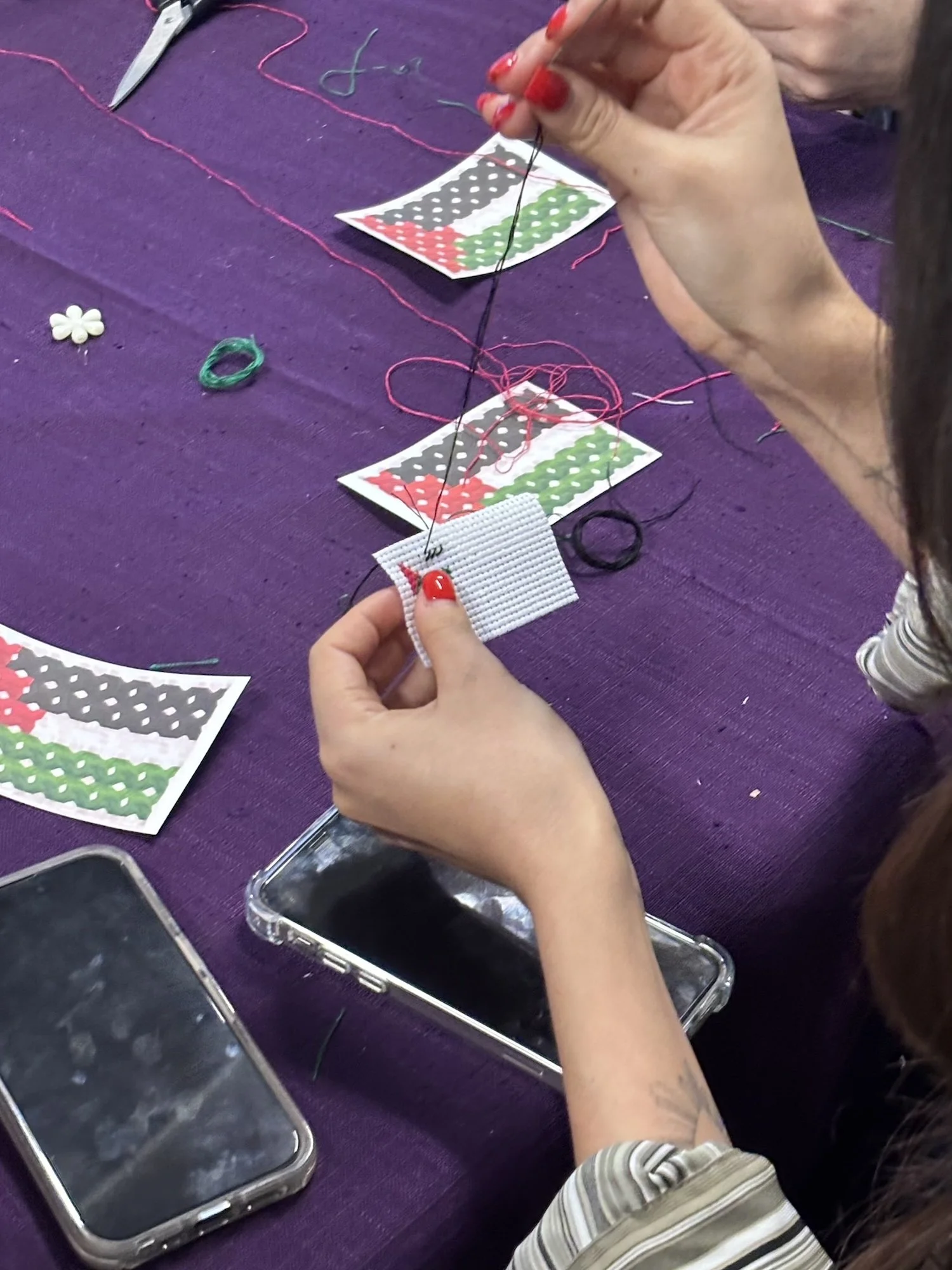
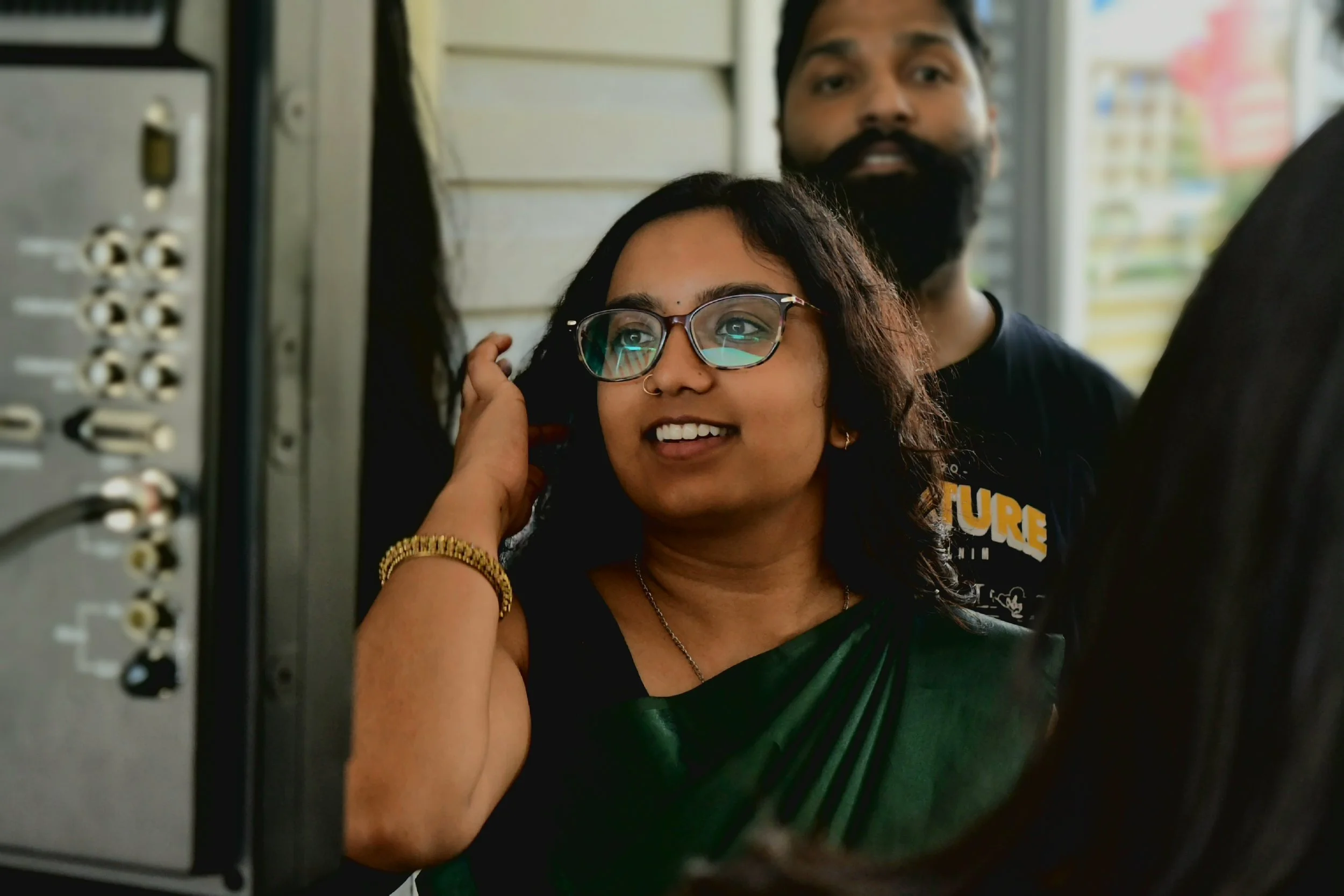
Image from Tatreez with Alex workshop on December 14 2025, courtesy of chloe roger
I walked down to Cross and Crows Books on Commercial Drive and stepped into the inviting air of Alex Verma’s workshop on Palestinian embroidery, an art form also known as Tatreez. Twelve of us gathered to learn about the history and cultural significance of this craft. Our facilitator, Alex Verma, a Palestinian-Indian fibre artist and lead of the venture, Tatreez with Alex, welcomed us into the space of the local bookstore, set up with all the supplies needed. During this workshop, we wouldn't only learn the techniques and materials used in this style of embroidery, but also be privy to Alex’s wide breadth of knowledge about Palestinian garment embellishment and the deeper language and cultural significance Tatreez weaves into every stitch.
Stemming from the Arabic word for embroidery, Tatreez specifically refers to Palestinian embroidery—the act of embellishing fabrics with patterns, symbolism and unspoken communication. Tatreez is very regional; specific techniques and motifs vary across Palestine and connote different information about the land and the people living on it. This art form is used as a visual and creative language, a form to convey information to all those who gaze upon the clothing. The embroidery, its colour and the stitched motif can tell you about the history of an individual, their social status, marital status and even the region they are from.
Alex described how someone from Ramallah or Yaffa may have a palm tree motif stitched in their garments, while Gazans are most known for embroidering the cypress tree and their prominent use of the colours pink and purple, as those pigments are most readily available through extracting their essence from shells. In terms of colour, we learned that a widowed woman looking to remarry may embroider some subtle hints of red into her clothing. As red is associated with weddings and marriage, the red thread signals to others that she is ready to find a spouse. These distinct artistic choices in Tatreez serve as a tangible representation of individual and family lives on Palestinian land.
While illustrating the history of Tatreez, Alex simultaneously invited us into the art form, guiding a three-hour workshop where each attendee leaves with a piece of embroidery stitched by their own hand and a deeper understanding of Palestinian culture. Recognizing that Tatreez is unfamiliar to most people in the West, Alex views their role as a teacher as an opportunity to share this creative tradition with others and expand attendees' range of knowledge surrounding Palestinian culture.
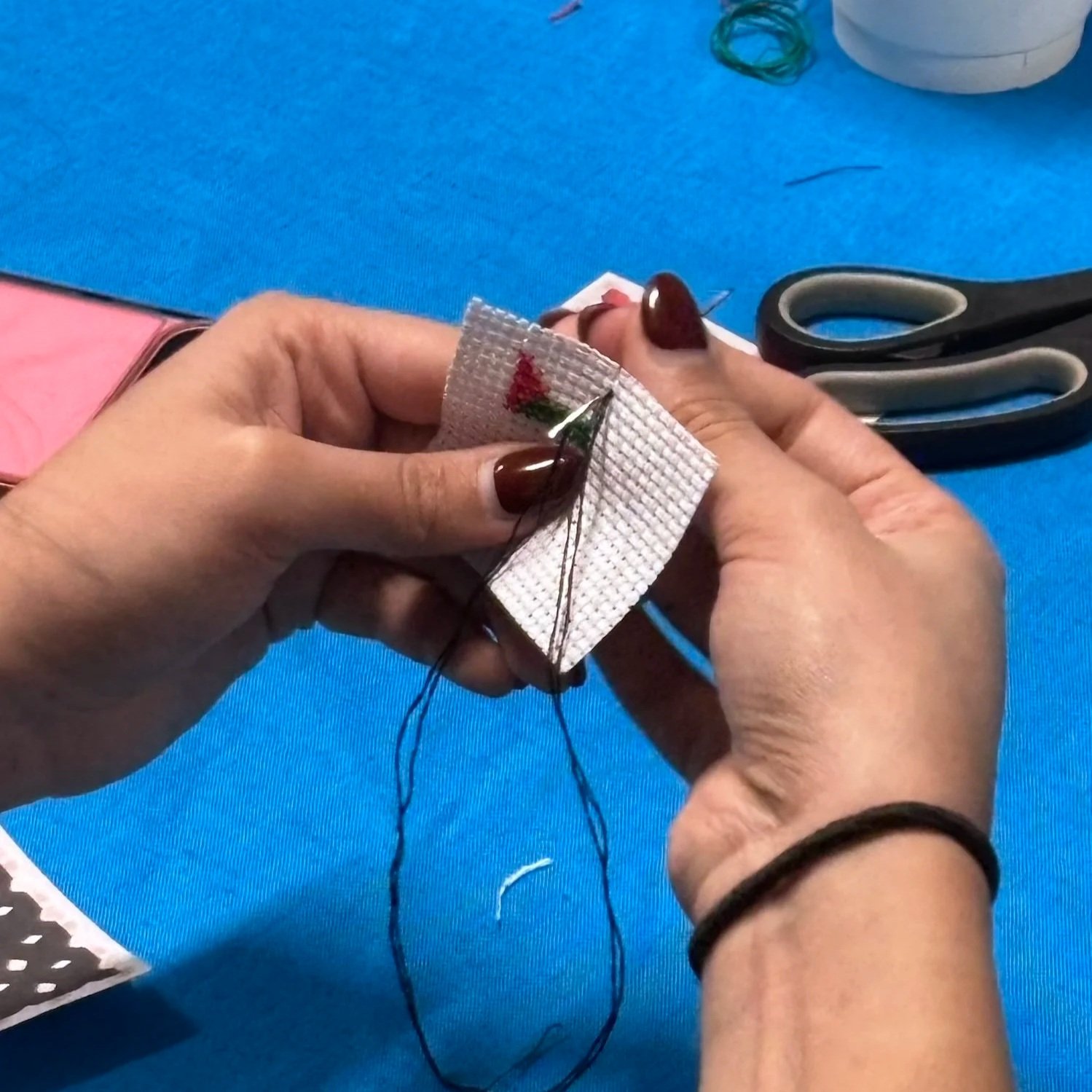
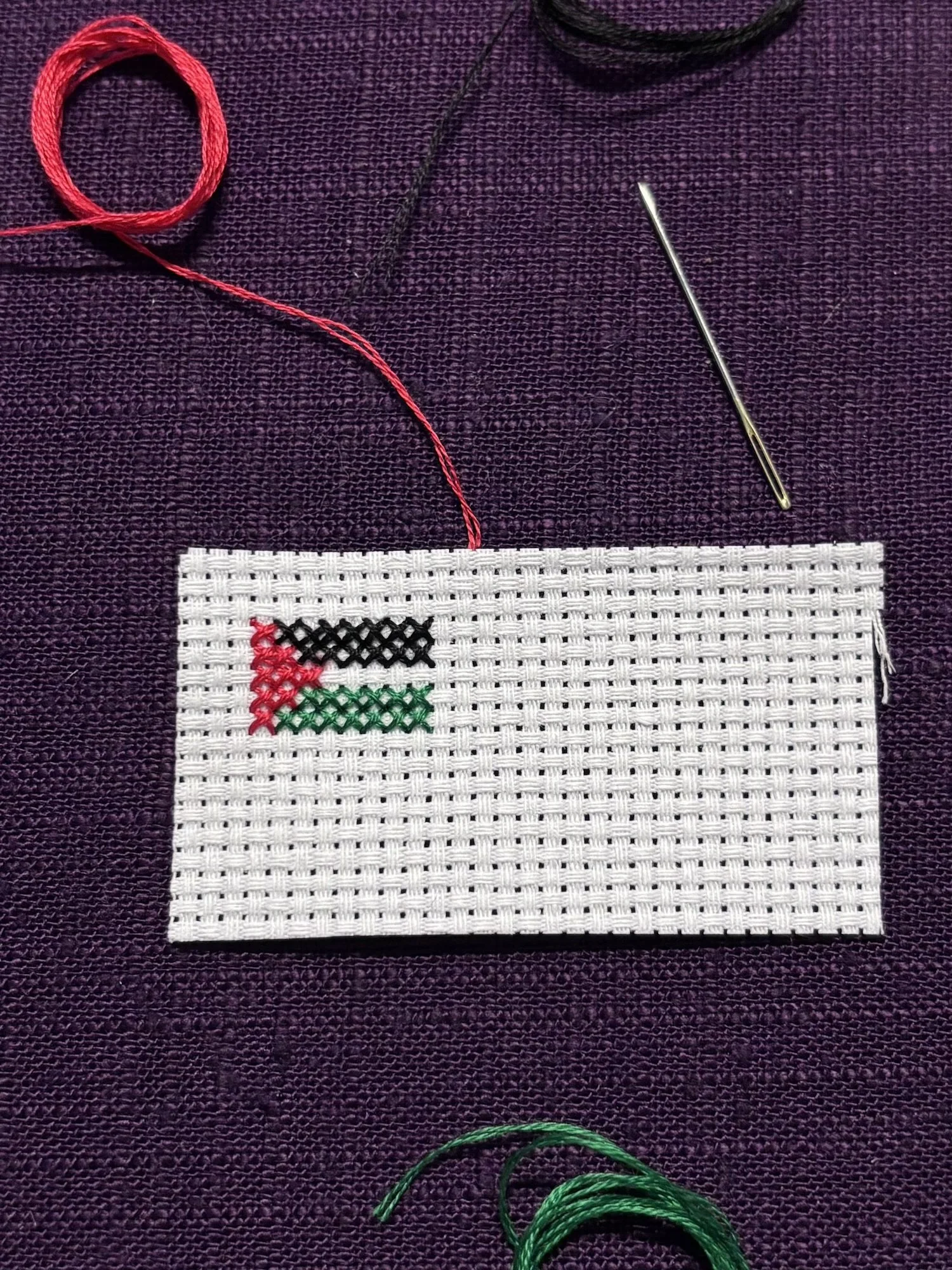
As a group with a wide range of skill levels, beginners and novice embroiderers alike move slowly through the act of stitching, becoming comfortable with the aida cloth: the base fabric upon which our Tatreez designs will rest. Alex instructs us to share pieces of red, green and black embroidery thread and follow the pattern of the Palestinian flag. Appearing similar to Cross-Sitch, Tatreez creates X-shaped patterns on top of a background fabric. However, in Tatreez, the back of the work is kept neat, with only horizontal or vertical lines seen on the wrong side of the fabric.
While manipulating the needle and thread, there are shared aches and pains when dealing with knots and misinterpreting instructions, all part of the steep learning curve inherent in learning most fibre arts. Alex establishes an open energy in the room, consistently moving around the space to reach individuals who need guidance. Faced with the shared challenge of learning something new, a group of strangers are turned into new friends. One feels free to chat and commiserate with their neighbours during the workshop and we proudly showed off our work to one another, celebrating the small wins of correctly completing a row.
Alex balances the delicate line between encouraging everyone to enjoy themselves, while ensuring the class progresses at an even pace, never letting any one person fall behind. She remarks that everyone learns differently and individuals should make modifications that work for them, even if they stray from her methods. “I learned from my mother, and someone else from theirs,” she says, emphasizing that no two Tatreez artists ought to be taught the same way. The final product, she explains, is still authentic if it reflects the artist’s unique journey and connection to the cultural tradition.
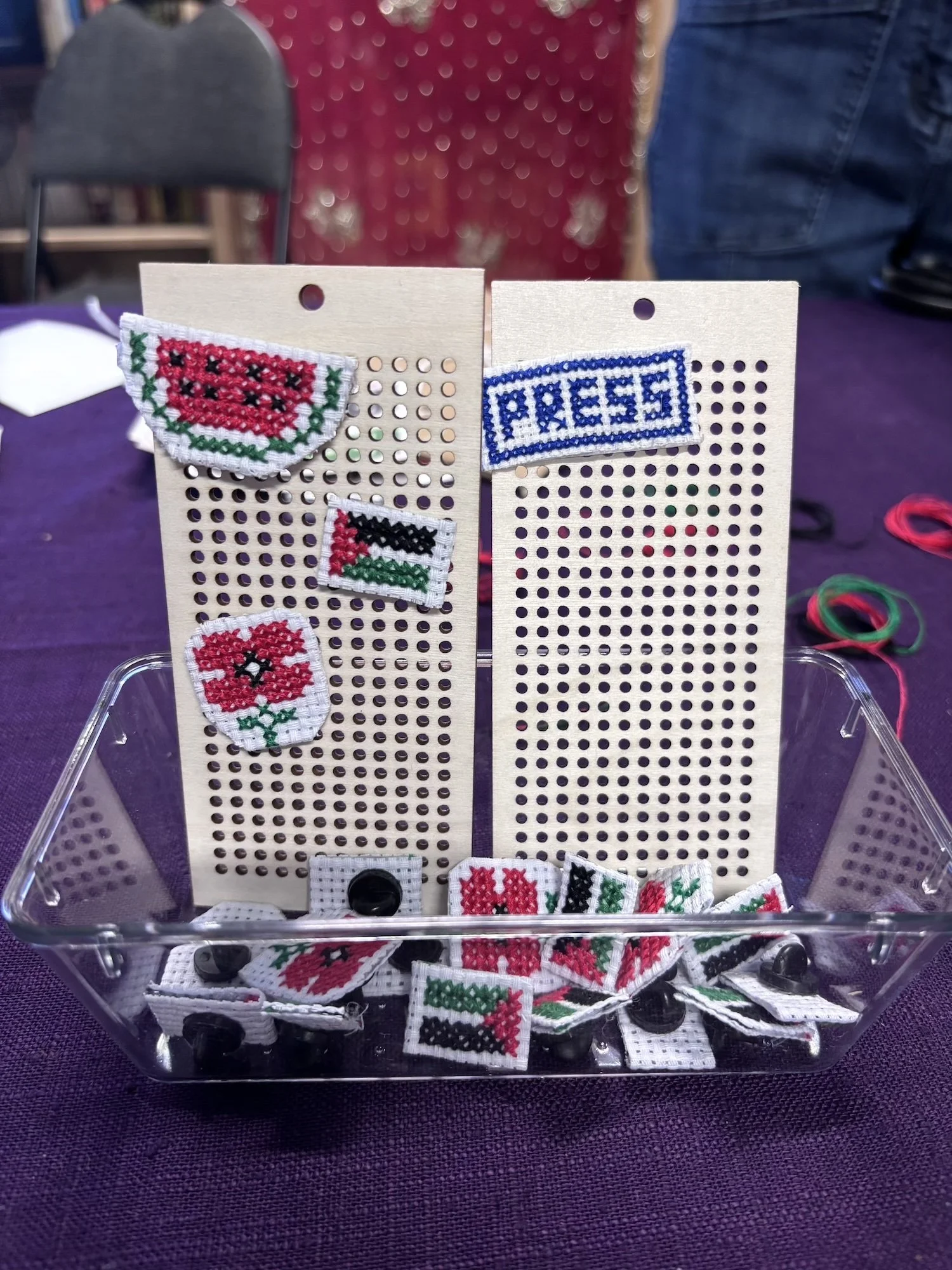
As the workshop nears its end, I hold up my finished Tatreez Palestinian flag and reflect on its significance. Alex explains how, after the Nakba, Israel’s occupying forces made it illegal to display the Palestinian flag. Therefore, incorporating the flag’s colours into one's garments through Tatreez and other forms of art is a powerful act of resistance against cultural erasure, both within Palestine and the broader diaspora. The continued replication of the flag is vital to this resistance. Now, thanks to Alex’s workshop this past Sunday, there are twelve more Palestinian flags in the world. Twelve more Tatreez pieces that stand as symbols of Palestinian existence and resilience.
Tatreez with Alex will continue into the new year with upcoming course dates on December 28th, January 4th, January 11th and January 18th. All courses are pay-what-you-can to ensure that the art programming is as accessible as possible, particularly for marginalised and low-income attendees. The link for registration for the next December and January courses is here. These courses are possible because Cross and Crows Books kindly donates both their time and space to ensure that these workshops run smoothly.
Chloe Roger is a Vancouver based writer with a communications degree from Simon Fraser University. Her work is shaped by an interest in the body, care and the quiet anxieties that structure everyday life. She is an avid knitter and crocheter, and hosts “Germ Girl”, a CiTR radio podcast that approaches contamination and illness through a creative, non-fiction lens as she talks about living with OCD post pandemic. Across mediums, her creative practice dwells in the space between fear and intimacy, asking how we learn to live with what unsettles us.