A Bear, a Boy, and a World Changed in The Cultch’s Jordan
/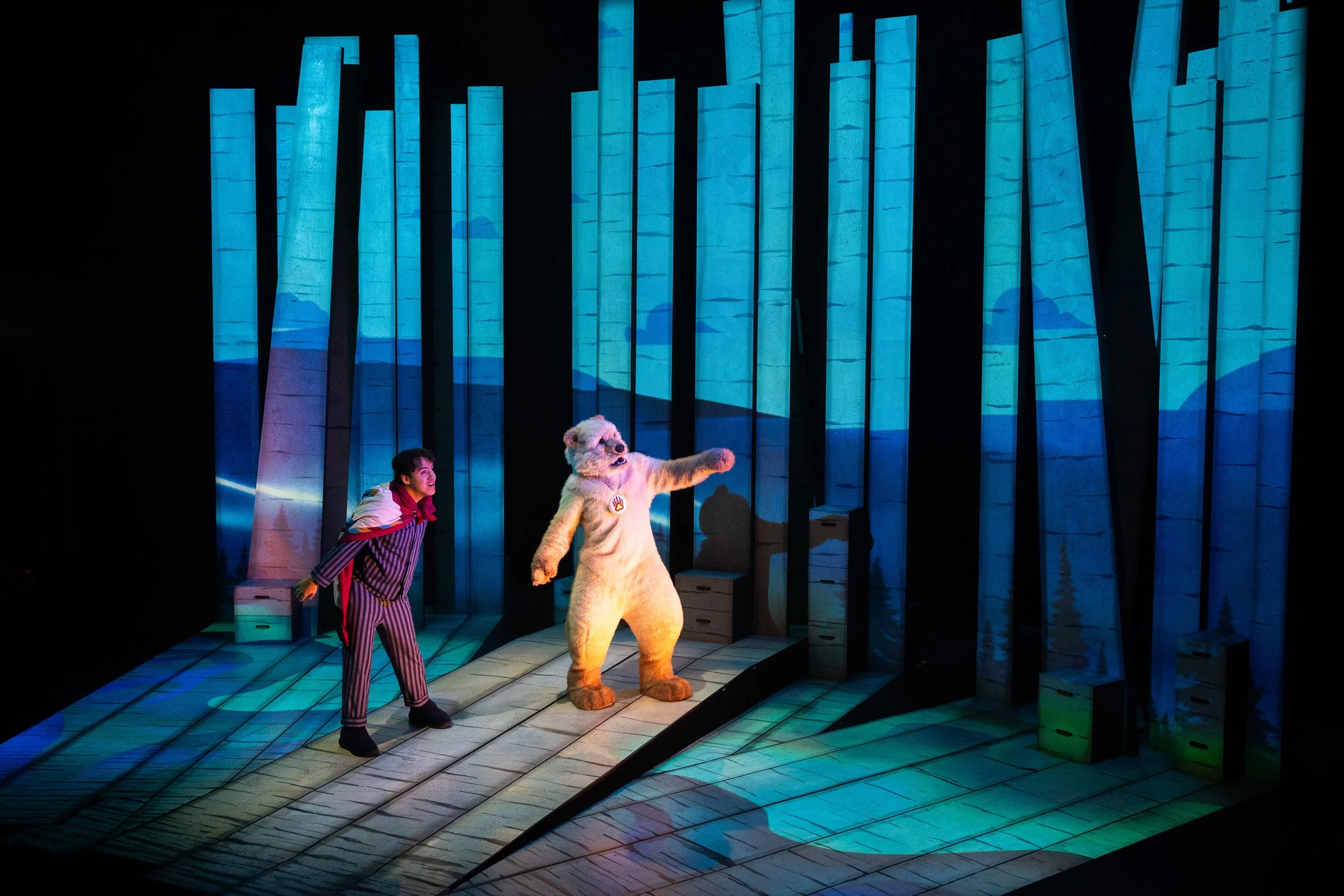
image courtesy of emelia hellman.
In 1999, a young First Nations boy from Norway House Cree First Nation was born with complex medical needs. Due to a funding dispute between the Canadian provincial and federal governments in regards to the cost of his care, he wasn’t allowed to return to his nation and spent his childhood in a Winnipeg hospital, where he tragically passed away at just five years old in 2005. Two years later, Jordan’s Principle was developed: a human rights principle that ensures that First Nations youth have immediate healthcare access without having to first wait for funding.
Directed by Jimmy Blais of Muskeg Lake Cree Nation and written by Algonquin writer Yvette Nolan with blessing from Anderson’s family, Jordan is an Indigenous-led theatre production seeking to educate young audiences about Jordan’s Principle and the importance of equitable nationwide healthcare access for Indigenous youth. From November 12th–15th, Jordan premiered its first Vancouver run at The Cultch’s Historic Theatre in partnership with Carousel Theatre for Young People.
Inspired by the titular Jordan Anderson River, the play stars him as a superhero learning how to use his new powers with his spirit bear friend, Maskwa, as they fly across Canada helping Indigenous youth and their families. Jordan (played by Braiden Houle) and Maskwa (played by Wahsontí:io Kirby) had a playful dynamic between the former’s innocence and the latter’s goofiness. They reminded me of a curious little nephew who keeps running off somewhere away from their fun-loving yet exasperated aunt or uncle who’s supposed to be looking after them (probably why the parents in the crowd laughed so often!).
Krystle Pederson and Ravyn R. Bekh filled up the stage with a variety of support characters, with notable roles in Penderson’s representation of Gitxan activist Cindy Blackstock, who began the movement that would result in Jordan’s Principle, and Bekh as young girl Kelly. Whatever the role, the cast inhabited their characters with such full body enthusiasm that they totally drew me into their world. Pederson’s Blackstock moved on stage with a powerful aura that commanded respect, while succinctly explaining the complexities of Jordan’s Principle and the bureaucratic hurdles facing Indigenous peoples (she also had on a crisp suit). Bekh’s portrayal of Kelly’s mental health struggles conveyed her crisis with a sensitivity and charm that communicated to the play’s young audience how to give support to such issues.
Certainly it was this young audience that was most captivated by the play. There wasn’t a single dull moment where the kids got bored and distracted, which considering how short attention spans are these days is an impressive accomplishment of its own. They were especially entertained by the physical comedy segments: whenever Jordan and Maskwa flew together, or when Jordan tried to show off his “cool magic powers,” the theatre erupted with the kids’ laughter each time.
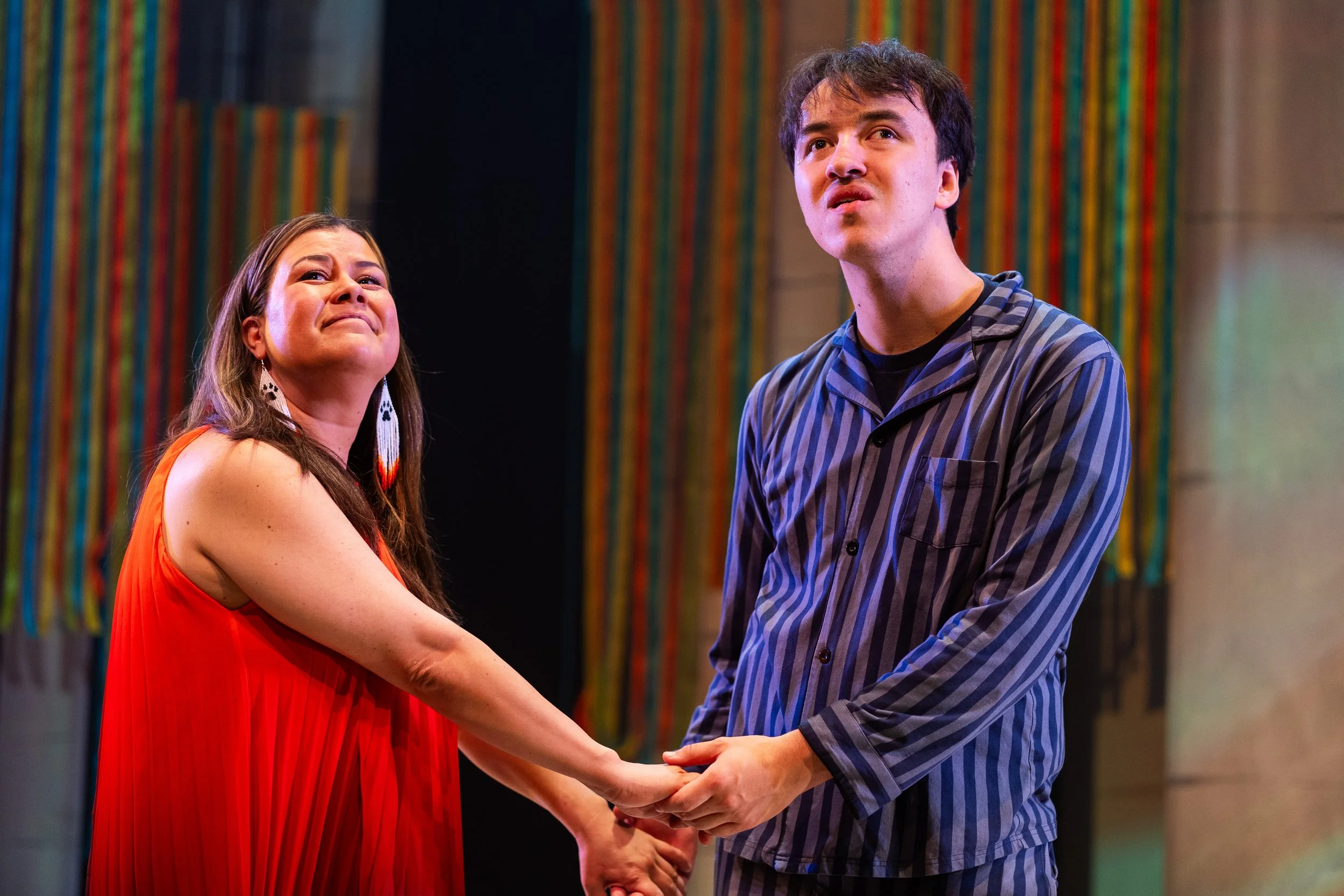
image courtesy of emelia hellman.
This openness continued on even into the Q&A panel with the production cast after the play ended. A young boy asked an astute question about how Jordan’s character existed within the narrative: “Were there two different Jordans, or was Jordan dead the whole time?” The cast explained that yes, Jordan was deceased in real life and that he was a spirit in the play. The panel attended questions from kids and grown-ups alike with equal consideration; and watching how respectfully the children and their thoughts were treated by everyone around them endeared me more to this theatre experience.
The creativity of the stage design was equally a delight to witness in real time. Designed to maximize the limited space, the set covered the walls and floors with long wooden planks that were painted to resemble cedar trees, a projector screening animated backgrounds onto them. Hidden cabinets blended into the set as “tree trunks” until a character opened them up to reveal the props inside. A unique practical effect that wowed me occurred during a powwow scene, where ribbon streamer banners were pulled out from behind the trees to represent the regalia of the fancy dancers, shimmering under the lighting and smoke effect. A ramp in the middle of the floor made dynamic use of the stage as the actors climbed up and jumped off for the flying scenes with Jordan and Maskwa, suffusing the play with a sense of play and wonder.
At the reception, I was curious about how the production was crafted with its child audience in mind and how that influenced its development. Director Jimmy Blais described how he and Yvette Nolan set out to center the production around the emotional needs and understanding of children. Throughout their many drafts, what they discovered was the importance of embracing two realities at once: that children are far more capable of comprehending mature topics than adults assume they can, and that they need sincere hope to empower them to persist through difficult things. Blais and Nolan wanted to honour Jordan’s life by highlighting the joy he brought to his family and the strength he gave to Indigenous families across Canada through Jordan’s Principle—in Blais’ own words, “to balance the hope with the grief.”
I resonated deeply with Blais’ reply; having been a curious kid myself, I wouldn’t have grown into the artist I am today if it weren’t for adult creatives like Blaise and Nolan who care about children as people deserving of art that prioritizes their needs and feelings. The Cultch’s Jordan does what it sets out to do: to teach audiences about Jordan’s Principle and the people and history behind it, to inspire and empower young people, and to bring to theatre a production that embodies compassion and joy.
Lenny Yang (he/him) is a comic artist, illustrator, writer and community worker based in Vancouver. He enjoys organizing local low barrier art making events for all ages and is a lifelong avid student of communal care praxis. You can see his art @mudanart on Instagram, Bluesky and YouTube.