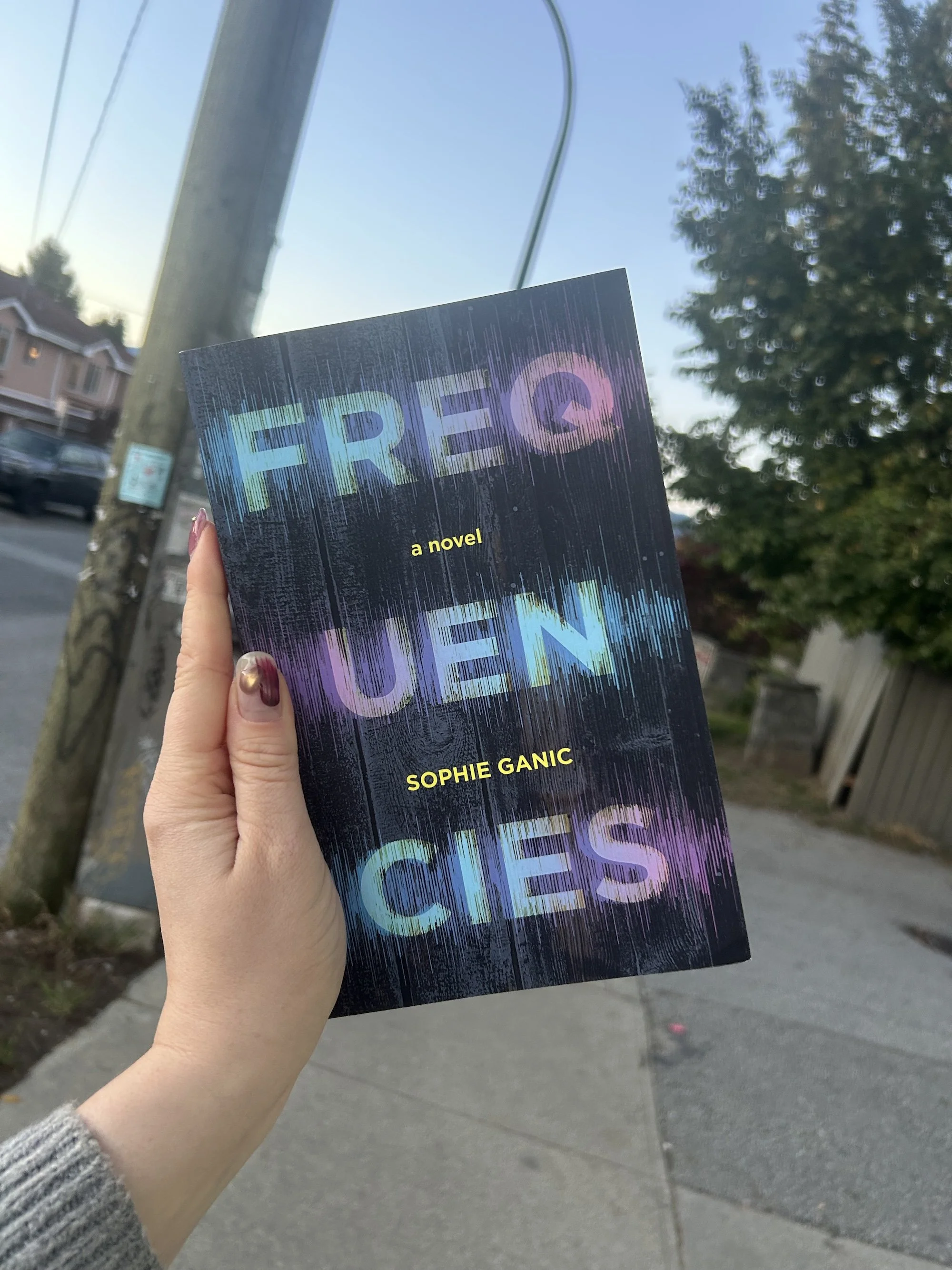
Sophie Ganic's Frequencies explores the intimate traumas of isolation
/
In the wake of multiple global pandemics that have made human proximity deadly, Hannah lives alone in a remote mountain cabin, sustained by canned food, the routine of tending her indoor tomato plants, and nightly conversations with Joe, a stranger whose voice reaches her through a CB radio. As the world outside becomes increasingly inaccessible, their disembodied connection offers a reprieve from the psychological toll of isolation. But left all alone, old traumas begin to resurface and Hannah must reckon with the possibility that the voice keeping her company may be tied to something she has spent years trying to escape. In Frequencies, her debut novel with Tidewater Press, Sophie Ganic blends dystopian science fiction with feminist horror and domestic suspense, exploring the dichotomy between self-preservation and true loneliness.
There is something strange about reading a book concerning global pandemics in the aftermath (and continuation) of COVID-19. I am sure there is a name for this feeling, but pandemic horror seems to occupy a category of its own, now that we have lived through something resembling it. The isolation, the all consuming anxiety, the slow erosion of normalcy: these are no longer unfamiliar horrors, and they feel just as real in our own lives as they do in the life of Hannah, the protagonist Sophie Ganic has crafted. Yet, as a reader, I found the end of the world to be the least frightening thing about this debut novel.
What makes Frequencies unsettling is not so much the prospect of a world emptied of people as the prospect of being left alone with yourself. Hannah's life is pared down to the essentials: food, shelter, routine and the comfort of another human voice, even if only through CB radio. Her communication with a man named Joe is reminiscent of the comfort we all found online during our own lockdown. The mundanity of it all is the most disturbing; the tomatoes still need tending as she uses what light she can get through the windows; the days still need filling as she finds herself misplacing her coffee more and more often; the birds still sing in the morning (until suddenly they don’t). Life continues, even when the world as Hannah knows it has all but disappeared. There is an intense divide between the outside world and her own insular one. People aren’t just the problem, the virus might be airborne, which makes isolation feel all the more tangible. With so little left to occupy her attention, there is nowhere for Hannah to put the things she has spent years trying not to think about.
“When everything first started, I could still hear the birds in the morning. They seemed so loud, louder than I remembered them being, but I guess the rest of the world had just become quiet enough for me to really hear them.”
It is here that the novel’s horror becomes the most compelling. As someone who grew up watching way too many crime dramas, psychological horror and uncanny programming, I was incredibly excited to read this book. There is nothing more terrifying and fascinating to me than exploring what happens when you are left alone. The pandemic provides the conditions for Hannah’s isolation, but her past gives that isolation its teeth to sink into her flesh. As the distance between the outside world and the confines of her isolation grows, so too does the tension between the story Hannah tells herself and the things she may not be ready to confront. The question is no longer simply whether she can survive the end of the world, but whether survival is enough when the mind and body carry their own histories of harm. Ganic draws on the familiar conventions of dystopian fiction while turning her attention inward, toward the more elusive and often less legible ways that trauma shapes a person’s understanding of themselves and the world around them.
I found this shift from the apocalyptic to the intimate particularly effective in the writing. There is a particular kind of dread in watching someone attempt to make a life out of so little, knowing that the routines and comforts keeping them afloat may not be enough to protect them from what lies beneath the surface of one’s own mind. In Frequencies, the end of the world is frightening, certainly. But the possibility of losing yourself in the silence that follows is far more so.
Ciara Gordon: What most inspired you to write Frequencies?
Sophie Ganic: Frequencies came from a short story I wrote when I signed up for a writing workshop through The Writer’s Studio in 2023. I’d never written a short story before, I focused more on long form. I’d just read a past Nebula short story award winner (“Where Oaken Hearts Do Gather” by Sarah Pinkser) and I really loved the non-traditional narrative structure, so I wanted to do something that wasn’t bound by the traditional rules of writing. I ended up including the short story in my TWS portfolio when I did the full program in 2024 and received excellent feedback. It was optioned by JJ Lee, one of the mentors, then published, and JJ talked me into expanding it as a novel. The rest is history! I wasn’t originally going to write the novel, but I really enjoyed making the lives of the characters slightly bigger and exploring the history of the world a little more.
CG: What was the biggest difference between writing the short story and writing the novel?
SG: Writing the novel was challenging, because the world is so limited. There are potentially only three people left in this world. I had to spend a lot of time thinking about how to flesh it out and give the world some kind of meaning. The novel leans heavily into the previous lives of the characters, and I think it works nicely because you learn about all the things that have happened before that inform the decisions they make in the present. It was challenging because a lot of the time, I think flashback scenes are used almost as filler, but they had such an important part in the novel that they had to be there. The biggest hurdle for me was figuring out how to write about the past in a way that had value to the present. I learned a lot about craft during this process: why is the character telling us about this, and why are they telling us about this now? It was a tough process but I’m very happy with the result!
CG: As someone who works across both the sciences and the arts (doctor of molecular biology! That is very cool), how do these different ways of thinking inform one another in your creative process?
SG: You know, that’s the funny part. I think there’s a need to suspend disbelief when you read something, particularly genre pieces. I’m used to writing science fiction and so I can lean into what I know about the scientific world when creating these stories, but horror is a totally new ball game for me. My main character in the novel doesn’t have a scientific background at all, so it was difficult for me to write about the way she believes what she is told about very scientific things, even if it’s wrong. That does happen in Frequencies, and getting the balance right was something I had to really think about. I never want it to come across like I’m lecturing the reader!
CG: Were there any particular scenes, characters, or ideas that surprised you as you were writing? Did the story take you somewhere you had not initially anticipated?
SG: I think it’s really hard to write a character and not put part of yourself into them. That’s certainly true with Hannah. Part of my process is to just write and let the characters tell me what they want to say. A lot came out that way. Frequencies gets a little dark, and yes, I drew on some of my own past experiences. What surprised me the most is how Hannah worked some of that out on the page.
“My name is Hannah Meadows. That’s how I start my broadcasts. It feels strange writing it here, because I know who I am, obviously. I suppose you don’t, though.”
CG: How did you approach balancing the scientific or speculative elements of the novel with its more human, emotional dimensions?
SG: I think this was easier for me. Hannah isn’t a scientist, so I let her shy away from any of the more technical aspects of how the virus works. Joe, however, is a scientist, or at least he says he is, but we hear what he says about the virus through Hannah. I had to really put myself in the shoes of someone who doesn’t know how to think about an event like this through a scientific lens, which was hard at first, but it worked, in the end.
CG: Did writing Frequencies teach you anything about yourself that you did not expect to learn?
SG: So much! I have to be honest in that I really worked some stuff out in this novel. I learned a lot about my own feelings and motivations and how they explain some of the ways I’ve reacted to terrible things that have happened in my life. I don’t want to go into too much detail here, because it’s a huge part of the book, but I will say that the emotions and reactions Hannah has in the book are real, even if, when you read it, you might think, why did she do that?
CG: What was the most unexpected part of bringing your first novel into the world? Was there anything about the publishing process that you had not anticipated?
SG: The biggest surprise for me was how much the story stopped being just mine as soon as it got picked up by a publisher. I want to be clear that it’s not a bad thing at all, it was just something I hadn’t even realised would happen. You spend so much time in a world with these characters, you understand them so well, you’re kind of attached to them at that point. Then you have the opinions of your editor and publisher and the story changes, maybe in ways you don’t like at first. The big takeaway here is to trust the process. The advice you get is valuable, and the people you’re working with are helping you to produce the best version of your story possible. Never be afraid to kill your darlings; I killed a ton of them.
CG: What do you wish you had known before publishing your first book? Is there anything you would approach differently if you were starting again today?
SG: I wish I’d known that it was okay to be vulnerable. My first draft was really restrained. The bones of it all were there, but I was afraid to really go into depth on some of the darker material. I thought it would leave me wide open to all sorts of criticism and negativity. My editor was instrumental in drawing it out of me, and I think that the vulnerability Hannah shows on the page is very real. It makes it a much better book, one I think a lot of people will be able to relate to. I think that’s the secret of writing something people are going to want to read. I’ll definitely be taking that with me into the next project.
CG: What are you working on next, are there any upcoming projects you can share with us?
SG: I’m trying to figure out what to work on next. I have a cyberpunk themed action sci-fi novel that I’ve been working on forever, and I think it’s probably time I get that out into the world. I was thinking about working on some short stories set in that world to flesh it out a little, but right now I’m taking a little break! I think I earned it!!
CG: Do you have any advice for emerging authors, particularly those working on their first book?
SG: Trust the process. Understand that the finished product is going to look very different from your first draft and be okay with that. Kill your darlings. But most importantly, let your characters tell you the story!
Frequencies: A Novel has a launch party on October 25, 2026 at Craft Café in New Westminster. Find more details here to RSVP.
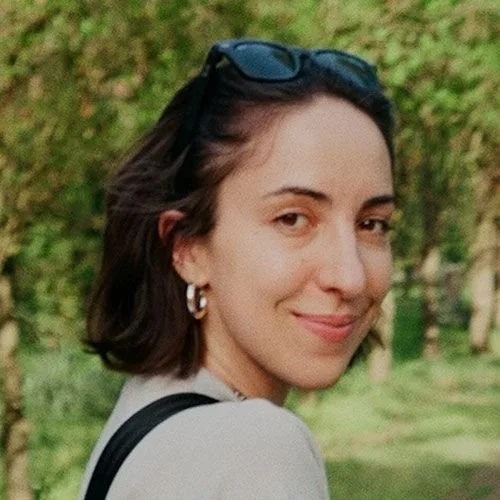
Ciara Gordon is a Vancouver-based writer who loves strange and uncanny stories. She writes queer horror and speculative fiction, with work published in SAD Magazine, orangepeel, and the SFU emerge 24 anthology, and has been shortlisted for PULP Literature’s Hummingbird Prize. She is the founder of Chthonic Lit, a speculative fiction print publication. She works as a print editor for SAD Magazine and as a copyeditor for DOXA Documentary Film Festival. While primarily a short story writer, Ciara is currently working on a fantasy novel and you can often find her at a local bookshop, adding new books to her ever growing ‘To Be Read’ pile.