Blue Heron director Sophy Romvari curates VIFF’s “Leading Lights” series
/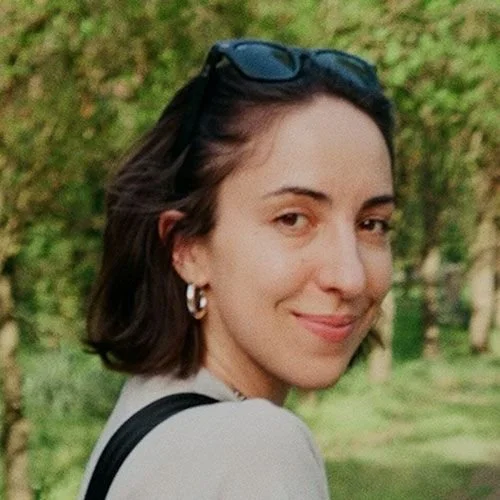
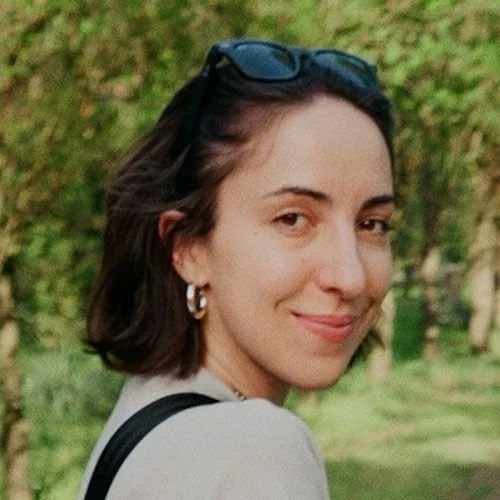
SOPHY ROMVARI.
There were few Canadian films more talked about last film festival season than Blue Heron, the debut feature film by Victoria-born filmmaker Sophy Romvari. And for good reason. Nominated for seven Canadian Screen Awards, including best feature film, Romvari’s semi-autobiographical debut is a tender, kaleidoscopic exploration of her upbringing on Vancouver Island. It is also a daring experiment in form—an attempt to understand the past rather than simply tell a story.
Now, just a year after Blue Heron graced the screens at VIFF, Romvari returns to the Festival as a guest curator for this year’s “Leading Lights” series, which features four films that have had an influence on her artistic journey. We were lucky enough to sit down with her to discuss the series, her reflections on Blue Heron and the unique powers of film as an art form.
This interview has been edited and condensed for clarity.
Emily Blatta: Maybe we could just start by talking about your relationship with VIFF. You grew up in BC on Vancouver Island, and then you moved to Vancouver for film school. What role has VIFF played in your journey as a filmmaker over the years?
Sophy Romvari: Yeah, when I was doing my undergrad in Vancouver, I was looking for work and I got a job at VIFF in my early 20s as a box office attendant. And the main reason I wanted that job was also because you get a pass to the festival. So it allowed me to see a lot of films that I otherwise wouldn’t have access to. I think it was a pretty integral part of opening my education up to international films and contemporary films that were being made, which was really exciting at the time. I also later got a job as a graphic designer for VIFF, and then eventually started making my own short films. And those were programmed at VIFF between 2015 to 2023. And then finally, my feature last year, played at VIFF as well. So, yeah, I’ve had a long, long history with them.
EB: Yes, Blue Heron. How did that feel to release your debut feature film out into the world?
SR: Well, very exciting. I mean, it was a long process of making the film. A little bit nerve wracking, but also really exciting and a huge milestone.
EB: This year you’re also curating VIFF’s “Leading Lights” series, and you’ve chosen four films that have influenced your artistic journey: Vengeance is Mine, Close-up, Le Bonheur and The Tree of Life. What about these films resonates with you as an artist?
SR: All four films are films that I personally really love, and they each had different impacts on my film. Some of them were direct, and some of them were just films that I often look back on for inspiration. They’re also just films that I personally would like to see or would like other people to see in theatres. It’s a rare thing to get to do; it’s like picking a movie for a sleepover [in that] you get to share. I think it’s a really cool and unique experience. Filmmakers are not often given the platform to program, so I think it’s really exciting that VIFF is doing that.
EB: You’ve mentioned that these films also feel spiritually linked to Blue Heron, and that each has given you permission in different ways. Do you mind sharing a little bit more about that?
SR: Yeah. I think in general, the way that I view films as a filmmaker, when I’m looking for inspiration, is to see what films are doing that I would never consider myself. Once you start opening your mind up to films that are less conventional, the permission you get is, “Oh wow, a film can do that. A film can do that.” You get a better understanding of breaking the rules or how to challenge the audience in different ways. So I think all these films are quite emotional, but they also have very strong directorial visions. And I think that’s really helpful for me and inspiring to see.
EB: Do you feel like, in making Blue Heron, you were breaking rules? Or maybe your own rules about filmmaking?
SR: I mean, I think what excited me about Blue Heron was the structure of the film, of breaking it into these two halves of past and present. And I think, conventionally, the way that would be done is to cut back and forth between these two timelines. But for me, what I found exciting was being able to stick the audience into this character’s point of view without giving them that opportunity to go back and forth, which was risky because you can lose an audience if you don’t give that side-by-side comparison. Because you’re introducing a new character halfway through the film, and it’s a bit of a jarring thing, but it was meant to be quite jarring. That was a risk on the screenplay level, but one that I was quite confident about and excited by. So you never know if that stuff pays off until you share it with audiences.
EB: I watched Blue Heron a couple of weeks ago, and I sort of experienced it as an inquiry—obviously into your family’s history, but also maybe into form and how it can help us to carry, or better carry, the content of our lives. I’m wondering if you have any reflections on that relationship.
SR: Yeah, no, I think that’s a well-posed question. I do think a lot about why something should be a film and why the format is the best one to express the artistic idea, because I’m not as interested in just, you know, telling stories as I am having it be a visual, but also emotional experience for the audience to engage with. Even to this day, after having talked about the film for over a year, I still struggle to summarize the story because I think it is more of an emotional journey that the film takes you on. The story itself is quite simple. So I always think about, “What is it that I can bring to this as a filmmaker that another medium wouldn’t be able to?”
EB: Yeah, I really felt that watching your film. It was a container for something.
SR: Yeah, I mean, I think the experience was just such a unique one, because it’s the closest one that we have as human beings to expressing exactly how we experience the world. If you read a book or you listen to music, it’s so interpretive of the subjective experience, and film is as well. But in many ways, I think it’s a more one-to-one artistic representation, viewing actual human beings on screen and empathizing with them. It’s a collective experience in a way that I think is unique to the art form.
EB: That leads into my next question, about the capacity of film to ask these big questions that maybe start off as personal, but of course they’re also always collective, too, in some way. Do you feel like there are questions being posed in Blue Heron that feel especially relevant to today?
SR: Yeah, it’s funny because I think that we are in a moment in film, but also maybe in society, where we’re thinking about nostalgia and personal histories and how they were captured, and also questioning things like authenticity and AI. I think we’re seeing a lot of films that are looking back, and looking back at childhood. That’s always been a very common theme in film, but I think as a generation, there’s a lot of desire to try to understand the past, which wasn’t necessarily always the case, because other generations didn’t necessarily have that privilege or opportunity to look back. I think we’re at a particular time in history where people are willing to do that, even if it’s difficult. So that might be part of why the film is connecting with people, because they’re more willing to have those conversations with themselves or with family members.
EB: And now, curating this series, your film is maybe being put in conversation with this lineage in filmmaking.
SR: Yeah, I think that’s why I love the opportunity so much, because, you know, every film is in conversation with the films that precede it. And it can be really interesting to make those links yourself. But then there’s other films that people point out to me, like “Oh, this film reminds me so much of your film,” and it’s not even something I had even thought of. And I think that’s such an interesting and exciting thing about the medium, because it is relatively still new. But still, so many things are repeated. You can think you have a really original idea, but it’s already been done. I guess it’s just about how you express yourself. Individual expression is what makes a film unique and interesting.
EB: Are there any other films playing at VIFF this year that you’re especially excited about?
SR: It’s a great question. To be honest, I haven’t looked very closely because I just got out of TIFF, but I know that I’m going to try to see Matthew Rankin’s new film, Ladies and Gentlemen, Brian Mulroney. I’m definitely excited to see that. And one of my producers, Sarah Wiley, has a short film that I’m going to go see as well. Other than that, I think I’m just playing it by ear.
The “Leading Lights” series runs as part of the Vancouver International Film Festival, happening October 1-11. For more information, visit their website.
Author Bio: Emily Blatta is a freelance writer, journalist and web editor at SAD Mag. She lives in Vancouver, BC.