The Chemistry of Connection: A Review of 'The Effect'
/
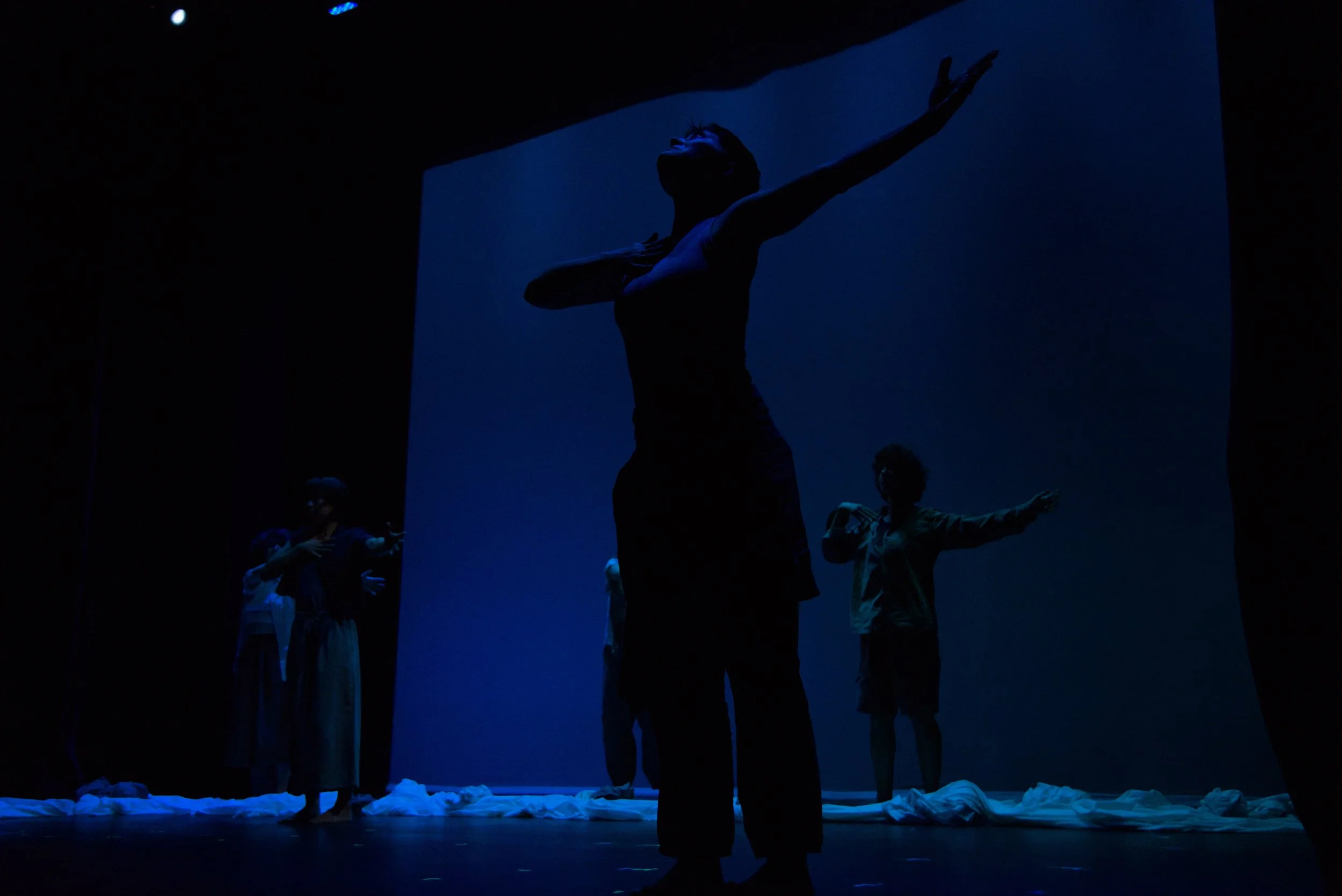
Photo by CHELSEY STUYT.
There’s not much on stage when I arrive at The Cultch’s Historic Theatre on Friday night. Three boxes form a triangle facing the audience, with a stool downstage centre. It’s a stripped-back, almost clinical environment, appropriate for a play that will rely heavily on its performances.
The Effect, written by Lucy Prebble, premiered in 2012 in London. This Vancouver run is a co-production by Rumble Theatre and ITSAZOO Productions. It’s directed by Jivesh Parasram and stars Megan Gardiner, Andy Kalirai, Paige Louter, and Anthony Santiago.
The premise is simple: two people who volunteer for a pharmaceutical trial find themselves attracted to each other. Are the feelings real, or are they merely a byproduct of dopamine-enhancing drugs they’re testing? In other words, the play poses a question that feels especially pertinent today.
How much of what we feel is real?
The stripped-back set is repurposed throughout the performance, with the actors and the audience's imagination doing much of the work. What begins as the setting for a clinical trial becomes the stage for a TED Talk-esque presentation and an abandoned mental hospital. The dark, metallic atmosphere evokes the feeling of being trapped, both mentally and physically.
A show like this lives and dies by the ability of its actors to find chemistry. As an audience, we need to be brought along on their emotional journey in a way that makes us believe these people feel for each other, without making it clear what the cause is. Gardiner and Kalirai make this work, capturing the awkwardness of a first meeting and the excitement of discovering someone you click with. Watching the relationship develop, it’s difficult not to start forming your own questions about brain chemistry, medical intervention and emotional authenticity.
Chemistry is central to The Effect in more ways than one. The production depends on the chemistry between its actors, while the play questions the role of brain chemistry in shaping human emotion.
As the medical professionals overseeing the trial, the characters of Lorna and Toby bring a second set of competing perspectives to the play. Their personal history complicates their professional roles, adding another dimension to its questions about depression, treatment, and the limits of clinical understanding.
In The Cultch’s note from the director, Parasram describes the script as a “more nuanced, multidimensional portrayal of the depressant mind than we tend to see in media.” The production brings this complexity to the stage, with moving individual performances and conflicting perceptions that feel credible, even when difficult to reconcile.
At its core, The Effect is a multilayered examination of depression, its causes and its treatment. Prebble resists easy answers, instead building tension through the competing perspectives of her characters. Connie and Tristan approach life in philosophically different ways, while Lorna and Toby disagree over the causes of depression and the best ways to treat it. These conflicts complicate the boundary between medical diagnosis and lived experience, prompting the audience to consider both the limits of psychiatric treatment and the difficulty of separating biological explanations from subjective experience.
I won’t spoil the final act, only say that the play doesn’t hold the audience’s hand. While there are genuinely heartwarming, funny and impressive moments, don't expect a straightforward feel-good experience.
At 90 minutes without an intermission, the production feels brisk. I found myself increasingly invested in Connie and Tristan’s relationship, even as the uncertainty surrounding it became harder to ignore. By the end, The Effect offers no easy distinction between what we feel and the biological processes that shape those feelings. That uncertainty is unsettling, but it’s also what makes the play linger.
The Effect runs October 15-25 at The Cultch’s Historic Theatre. For more information, visit thecultch.com/.