Lessons of lichen: Fei Disbrow’s photo-sculptures
/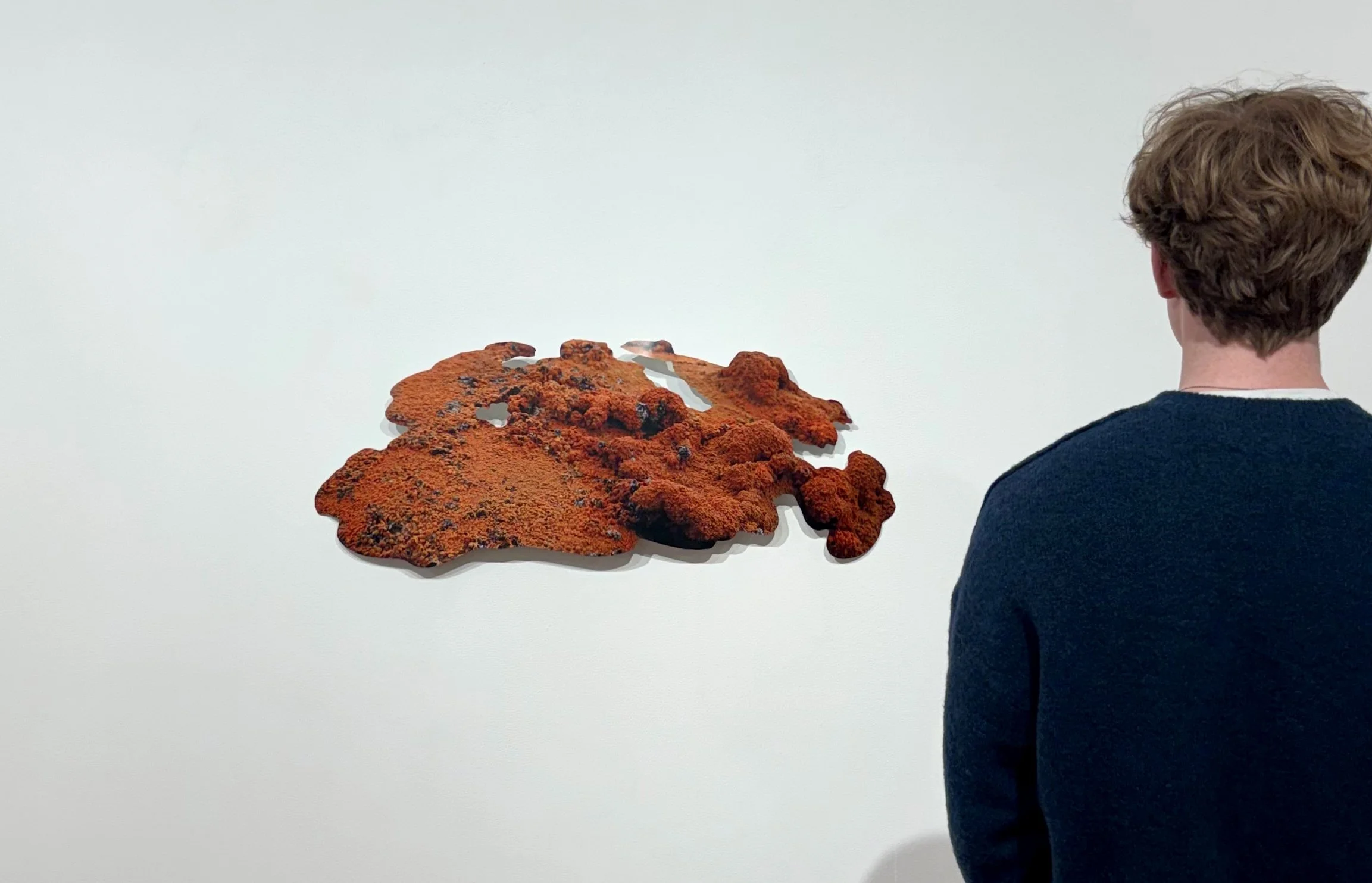
Crept. UV sublimation print on aluminum. 30 x 11 x 2”. 2025.
The walls of Gallery Jones are punctuated by colourful, oddly shaped metal sculptures. Each has a quiet, yet lively character. The natural textures they depict seem to glow from within. Standing a few feet away, visually tracing their contours and curves, feels a bit like looking through tiny windows to the Earth’s crust behind—magical portals into uncontained, wild landscapes on the other side of this controlled gallery environment.
In her latest series, Vancouver-based visual artist Fei Disbrow turns her attention to cryptogamic covers, a taxonomical category of spore-proliferating organisms including lichens, mosses, and algae. Printing photographs directly on metal, she then reintroduces biophilic shape and volume to the images by cutting and/or folding them into delicate reliefs. First exhibited at West Vancouver Art Museum in January, a selection of the series is now on display at Gallery Jones as part of Capture Photo Fest in a show called Quietly Palpable (April 4–25, 2026).
I was lucky enough to visit the artist’s East Van studio mid-way through her process in 2025, when the work was just starting to take shape. I was immediately drawn to the photographs strewn across her table—vivid images of lichens, rocks, and mosses forming miniature forests around the globe. She showed me her maquettes, all lined up on the window sill—paper sculptures that sparked the idea during a residencyat Listafólkasamband in the Faroe Islands. Disbrow described the transformative moment when she began physically folding her photographs, and imagined using metal substrates as a way to give them full expression.
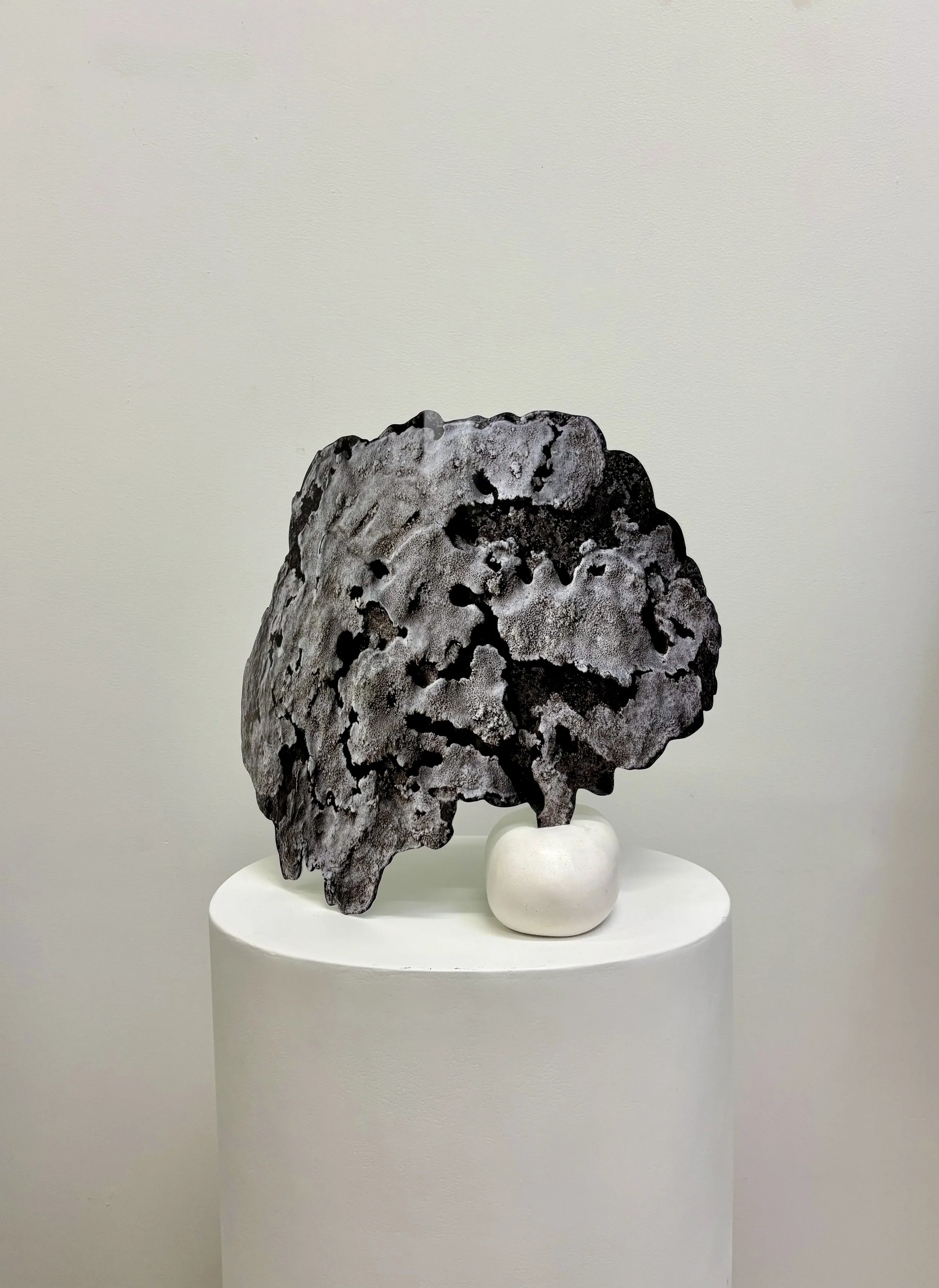
Sideline Still Life. UV sublimation print on aluminum, paint, plaster, wax. 14 x 13 x 9.5". 2026.
Across her career, Disbrow has moved easily between mediums—photography, collage, printmaking, painting, soft sculpture, low relief forms, installation, and drawing—but a particular aesthetic is always visible. Her exploration of space is experimental yet sophisticated, playful yet restrained; she maximises the ocular impact of shape, finding cohesion through assemblages. Negative space is key, offering entrances for the eye to explore and imagination to inhabit. Others have made celestial or planetary connections when considering her work, but this series in particular is unequivocally terrestrial—pulled from the sediment, the stone, and the soil.
In the context of a precarious planet, Disbrow’s latest work accesses a narrow, rather than global, gaze. This is an act of resistance, and possibly one of revolution. In the artist’s own words, it is a strategy of “looking at the little things... at individual parts to understand the whole." Echoing anthropologist Anna Tsing’s call for a form of attention “to the particular in the planetary, and finding the planetary in the particular,” (Field Guide to the Patchy Anthropocene: The New Nature) her work reminds us there are similarities between the vast and the minute—truths that permeate the cosmos. There is a refreshing optimism to this approach, and the idea that observing more deeply how life exists might help inform how we (humans and non-humans) can continue to exist.
Though they cover approximately 6–8% of the Earth’s surface across six continents, lichens are complex creatures still not fully understood by science. Most are symbionts (mutually beneficial pairings of fungus and algae, and sometimes yeast), but some are classified as obligate mutualists—a type of ecological interaction where two species are entirely reliant on each other for survival and reproduction. If we consider that the word symbiosis, a late 19th Century term, is derived from the Greek sumbiōsis, which translates as “living together,” obligate mutualism could be understood as “surviving together.” By binding their fates, these organisms have managed to survive the most hostile landscapes on the planet, and become a foundational building block for ecosystems.
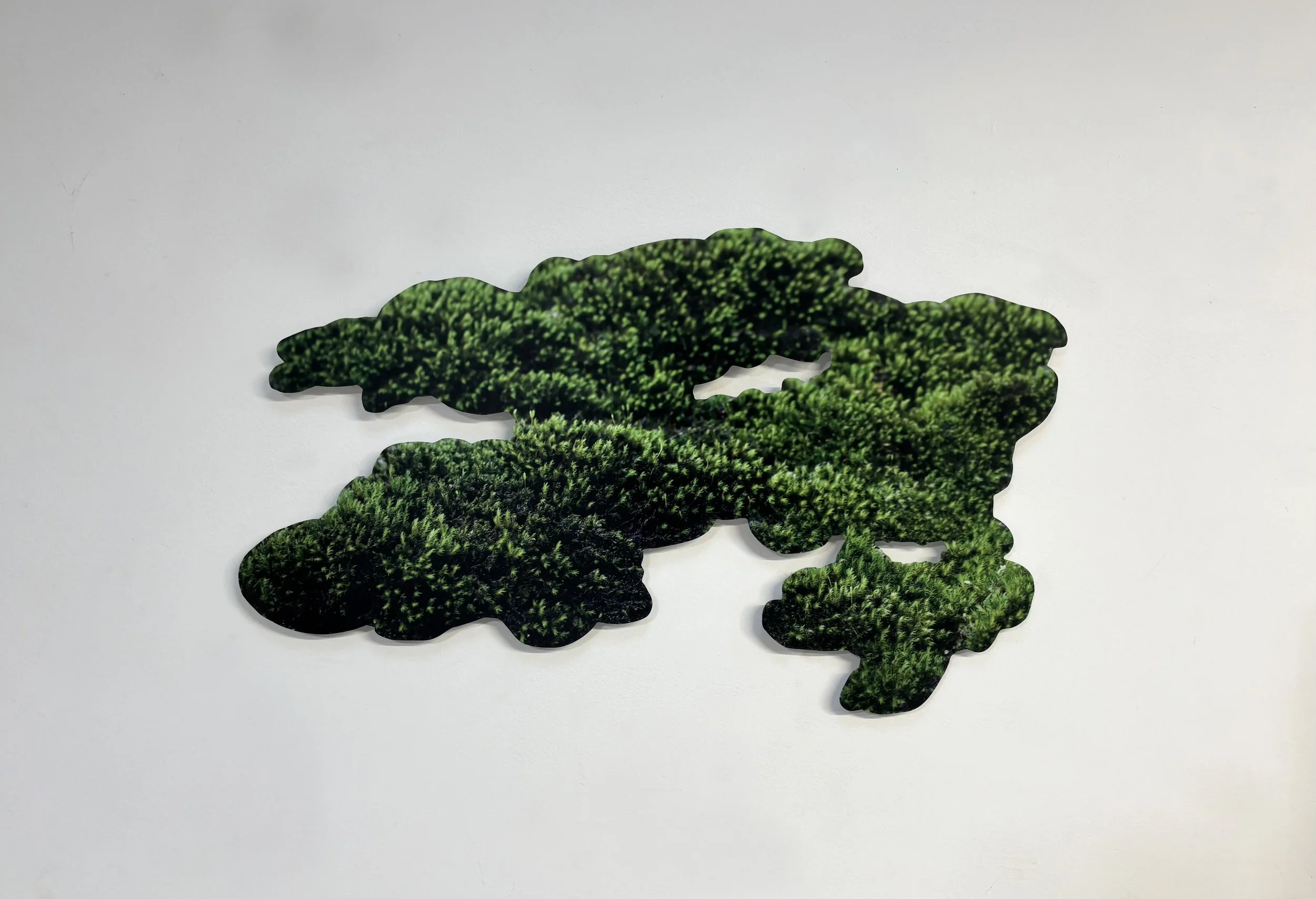
Through our Breath. UV sublimation print on aluminum. 15 x 24 x 3/4". 2026.
Disbrow’s process involved the profound witnessing of landscapes across BC, Nunavut, Norway, and Iceland. On her visits to remote areas, she describes being regularly engulfed by incredible rain and wind—making it necessary to find an inner stillness before observing a lichen-covered stone, or snapping a photograph. This sense of pause, and almost reverent observation is detectable in the works; they have a quality of attunement that quiets the mind and opens the imagination. It’s almost impossible to walk through the show without slowing your steps to take a closer look.
In the gallery’s back hallway, I pause to admire the soft, woven forms of bright green moss in Through Our Breath. It brings me a surprising sense of calm to know that these ancient organisms will likely outlive all of us. Amid environmental and sociopolitical instability on our planet, lichens, mosses, and stones will continue to morph, grow and shrink as the Earth’s crust (and climate) continues in a state of becoming. They will survive even after the anthropogenic record has spun its last track, and silence envelops the world.
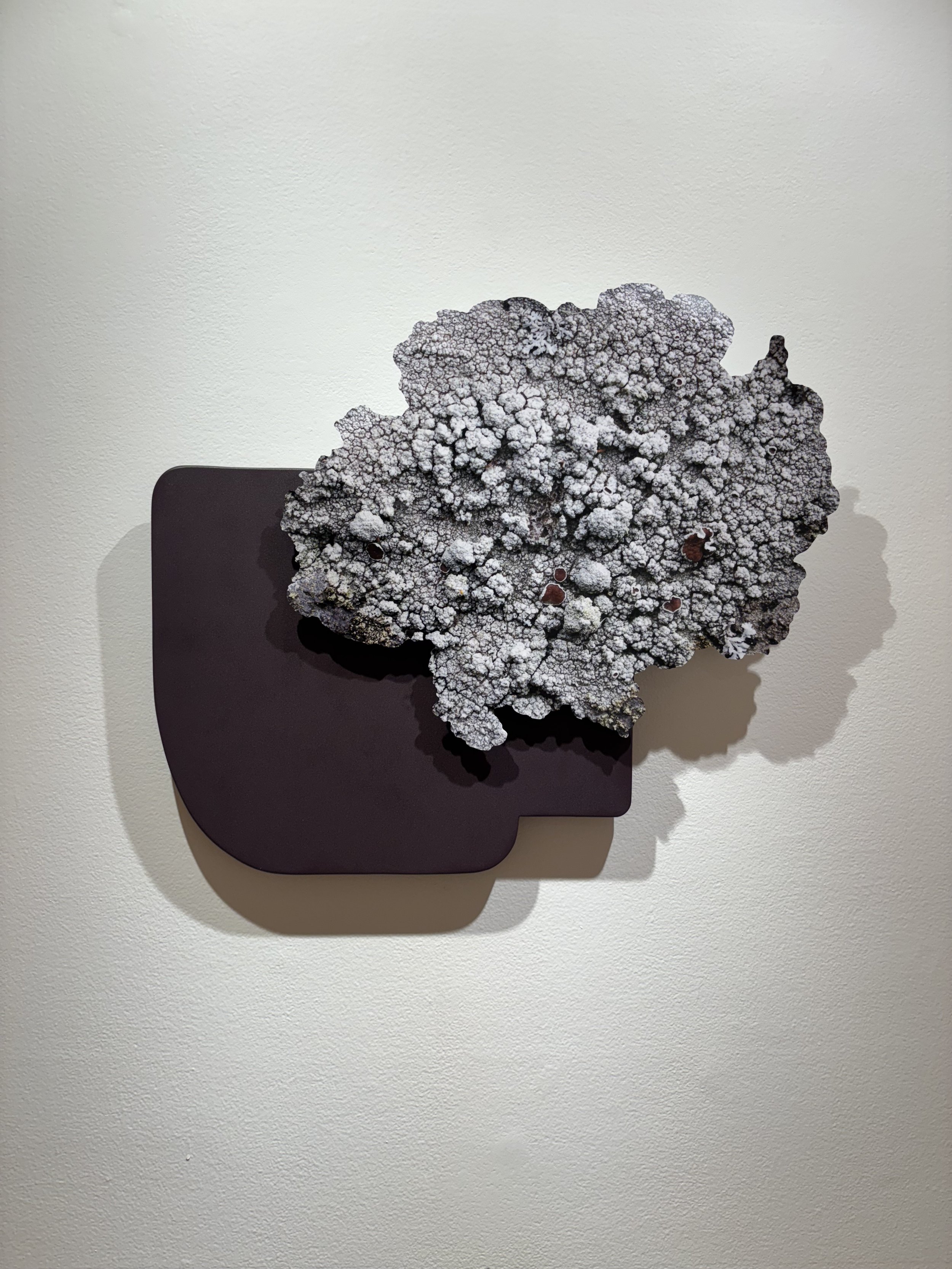
Lumps and Bruises. UV sublimation print on aluminum, painted wood. 22 x 25.5 x 2.25". 2025.
When I stop to observe the white, barnacle-like lichen of Lumps and Bruises, I am reminded of the stunning pictures released on April 7th by NASA’s Artemis II mission to the far side of the moon. Seeing the Earth peeking out from behind a wall of resolute lunar stone speaks to our shared fate from a whole different vantage point. Both perspectives, however, are telling the same lesson of interdependence—from the cosmic to the microscopic.
QUIETLY PALPABLE by Fei Disbrow is on exhibit from April 4 - May 2, 2026. Artist talk (in conversation with Pennylane Shen) is Thursday, April 16, 5:30pm. Featured exhibition of the Capture Photography Festival.
Rachel Silver Maddock (she/her) is an independent dance artist, writer and curator based on the unceded territories of the Musqueam, Squamish and Tsleil-Waututh First Nations. She holds a Masters of Contemporary Arts from SFU’s School for Contemporary Arts. She sees the body as a site of investigation, tool of expression and mysterious archive. Her writing has been published in The Georgia Straight, Dance Central, Comparative Media Arts Journal and SAD Mag.