SAD Bookclub: Dead Bees Still Sting by Susan Cormier
/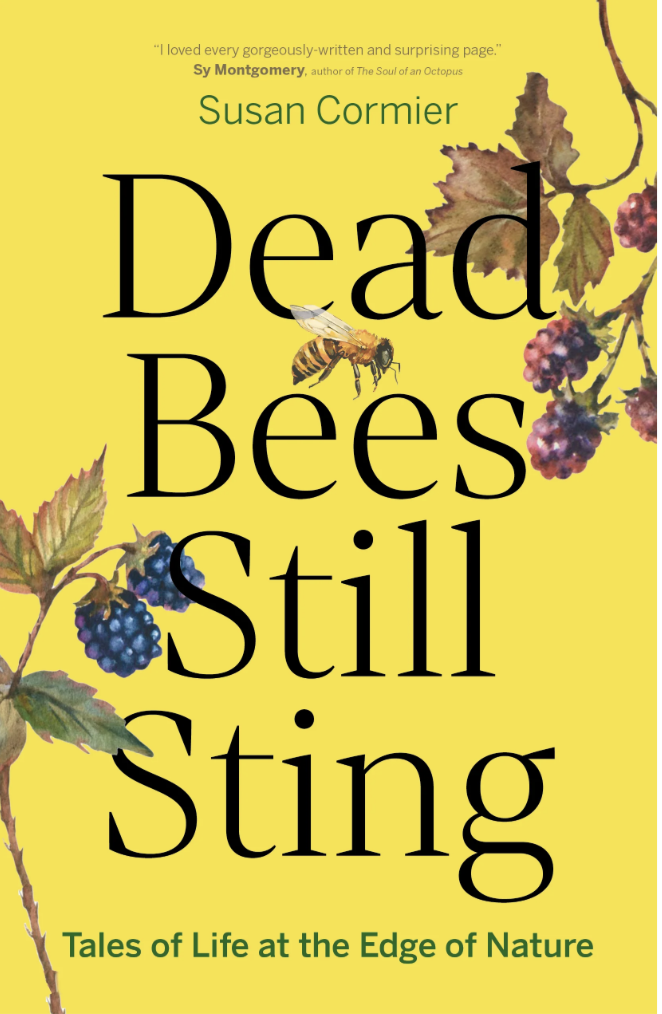
Writer and beekeeper Susan Cormier, author of 2026 memoir Dead Bees Still Sting: Tales of Life at the Edge of Nature, keeps accidentally adopting creatures. By the end of the book, in addition to several beehives, her rural BC homestead had taken in (and lost) quail, cats, dogs, and a cottontail bunny.
Cormier’s writing also makes for a sweet pastoral escape for urban dwellers with cottagecore fantasies. It’s also a grounding lesson about the gore and grief that accompanies caring for wild creatures well.
The book grew from Cormier’s essay “Advice to a New Beekeeper,” which won the 2022 CBC Nonfiction Prize. If you’re thinking about keeping bees (or rabbits…or quail…), Dead Bees Still Sting has plenty of actionable tips.
Cormier’s life is full of sweet Snow White moments. She cuddles quail chicks in her lap, hand-feeds a pregnant squirrel, and coaxes a bunny from the forest (clearly someone’s abandoned pet) back to domestication.
But, she always foregrounds the practicalities of managing a semi-agricultural menagerie. The bees she keeps are invasive European honeybees that must be managed carefully, both to keep the hives safe and to avoid spreading pests to other bee populations. The prize — honey that tastes like her backyard forest — is sweet, but the risks — swarms, stings, and colony collapses — make painful lessons.
Cormier embeds every story with warnings about the dangers of romanticizing animal stewardship without the commitment to back it up. She rags on uninformed, careless animal-lovers who harm the creatures they claim to care about. When Cormier tries to rehome a domesticated bunny found in the forest, people tell her to put it back outside - where it will surely either die quickly, or breed relentlessly. While her concerns are very real, the lecturing tone starts to get old early on in the book.
The chapters dwell in small moments, to a fault. A (funny!) story of a bee maybe getting trapped in the author’s underwear loses its charm when examined over dozens of pages through a braided essay.
Meanwhile, the specific dynamics of the place where she lives are mentioned sparingly, or only alluded to through arms-length allegories. Lack of context makes it hard to feel truly situated in the place that the narrative centres.
Dead Bees Still Sting shines where Cormier turns her empathetic, observant eye beyond her backyard. One excellent chapter delves into the forest behind her house, where her bees forage and where an unnamed, unclaimed corpse lies in an unspoken local secret. How do we honour our dead, known and unknown? And what do we lose when development encroaches to turn the gravel mine-turned-forest into more suburbs?
The edge of nature is a thorny place, but not for the reason you might think. The classic homestead story frames nature as the darkness outside the circle of firelight - the powerful, chaotic wilderness that resourceful families tame for survival.
More often in Cormier’s world though, dangers flow the other way. From escaped pets to invasive honeybees, the nature around her bears the messy marks of history. Cormier and her partner try to remedy human errors -- to give the plants and animals that come into their care the best chances of good lives, without compromising the lives of others.
Find Dead Bees Still Sting by Susan Cormier at your local bookshop!
Tova is a writer based in Vancouver. Her work, focusing on climate, ecology, and culture, has appeared in publications including the Georgia Straight and the Energy Mix.