Bella Sutra: An Interview with OK Pedersen
/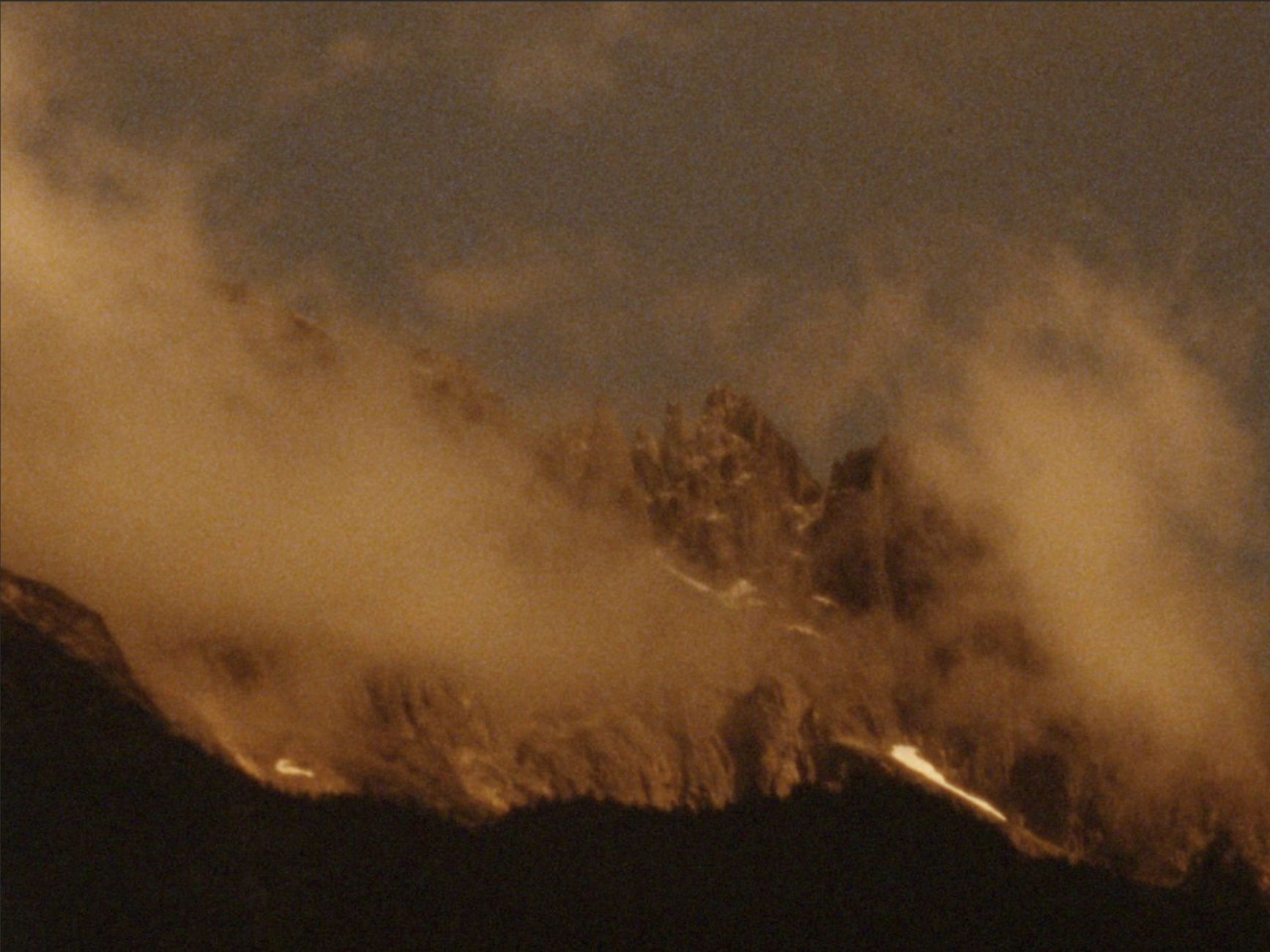
Bella sutra film still, courtesy of doxa documentary film festival.
This Thursday, April 30, Montreal-based director OK Pedersen will present Bella Sutra, a live cinematic performance of film, voice and live music in the Fei and Milton Wong Experimental Theatre at SFU’s Goldcorp Centre for the Arts as the opening film of the DOXA Documentary Film Festival in Vancouver, running from April 30 to May 10, 2026. DOXA is presented by the Documentary Media Society, a non-profit presenting independent documentaries as an art form.
Inspired by Alan Ginsberg’s Sunflower Sutra and set in Bella Coola, Bella Sutra is a deeply personal essay about the messes we make together in our crises of communications, geography and the myth of progress. Separated from city life and a relationship, Pedersen hand-developed 2400 feet of 16mm film of beautiful landscape and iPhone video to process her helplessness, flotsam and jetsam, sows unafraid of bear bells, septic tanks and fire. Bella Sutra is an experience featuring live narration by Pedersen, Eden Glasman on violin, Jakub Tokarczyk on piano and a soundscape designed by Peter Hošták.
“It’s messy. It’s about the folly of not being in control of your own desires. I’m a mess. I believe we all wish we had permission to share our messiness, which is why I believe this piece has resonated with people. ”
I spoke with Pedersen from her Montreal studio ahead of the screening about image-making between ancient Nuxalk mountains in 16mm, asking about her uniquely fragmented approach and what audiences can expect from the live performance. This conversation has been edited down for clarity.
Vyas Saran: What prompted Bella Sutra?
OK Pedersen: I wrote the text behind this performance after a break-up in Montreal. Like all good breakups, it rocked my world, and also destabilized my ability to stay in Canada as a permanent resident. I didn’t have a place to live, I didn’t have a job, I didn’t have status.
At the same time, my mother’s husband – a longtime salmon fisher in Bella Bella – knew the owners of a bed-and-breakfast in Bella Coola, very random. They needed a caretaker and so I went. I would’ve never found it otherwise. I’ve done it for the past four summers, doing everything: cleaning and checking in on guests, taking care of the grounds…
VS: …And, based on a couple of scenes in dreamy 16mm, cleaning out septic tanks.
OKP: It was a lot of manual labour, which I’m not romanticizing! But coming from away, they were summers of dreams. I had no idea what to expect going there for the first time. I was on this tin can of an airplane flying over hundreds of miles of glaciers. You’re surrounded by these ancient mountains when you’re in the valley. It’s truly the end of the road. Whenever I’m there, even just driving to the store, I have this total awe and reverence for the landscape.
VS: What guides your filmmaking?
OKP: I have a background in photography, but as an artist I don’t feel tied to traditional filmmaking processes or techniques. For me, image-making is not tied to any historical photography tradition, but instead refers to an expanded practice of image-making that makes room for the ubiquity of cameras, screens, social media, cloud-based technologies, global news media and all of the visual information interfaces that govern our everyday lives and the global narratives into which we project ourselves.
I’m a big fan of filmmaker Kevin B. Lee who pioneered the ‘desktop documentary’ and this idea that filmmaking is about showing the thought process, and making that process into a narrative. And in reality the thought process involves more than just thinking original thoughts that have never been thought before, but is also a constant churn of memories, and dreams, and movies and media from childhood, and adulthood, family stories, and personal experiences of global media events, etc. So I’m making images that reflect that. Together with the music, this process gives a fragmented feeling to the diary that is the film, reflecting and refracting emotion and memory like a spinning diamond.
Like many of my films, there is a reflection about life in migration. My family migrated to the US from Baghdad in 1979, and now I have moved across borders too. Looking both back and forward in my family, I see an unending pattern of movement to seemingly new and safer lands––searching constantly for a better life and love and education and security – peace!. But I feel that we’re really just moving in circles, both our own small circles, and these larger ancestral circles. We try to move forward, but it's a bit of an illusion. Sometimes we realize it and catch it, but then we forget it and try to go forward again, and fail again, and that's kind of what life is. This film is about what it’s like to be just passing through.
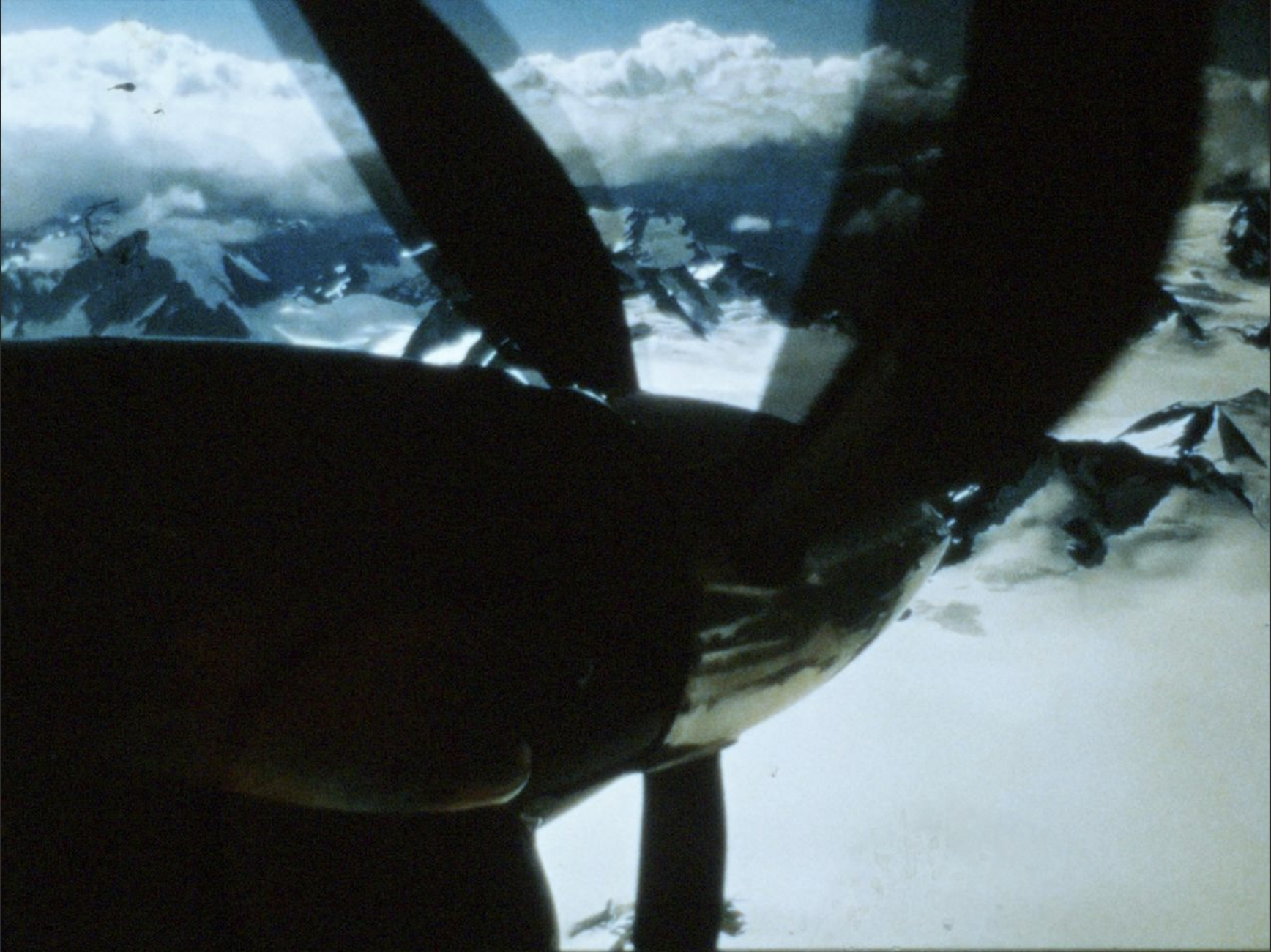
bella sutra film still, courtesy of doxa documentary film festival.
VS: Spinning diamonds is definitely going into the interview. So, what drew you towards filming in 16mm?
OKP: Mostly convenience and money, ironically. I was working on another film when Hubert Sabino, a programmer at RIDM, asked me if I was working on anything interesting, something that could be a performance. I said let me think about it. I wanted to do something with the Bella Sutra text, which I had written two years ago, so I dreamed this big dream of a film with an orchestra and moved forward from there. I had no money, a bunch of 16mm film leftover from another project, and access to a mechanical Bolex for free. I shot about 600 feet in Bella Coola, and then the rest of the images are iphone video or VHS or screenshots or Super8 or still images from the past four years, that I rephotographed onto 16 and hand-processed in the lab. I like 16 because it has that quality of making the mundane feel mythical and dreamy, but also still has a handmade quality. And I wanted to flatten the whole experience onto one kind of media, because I wanted the feeling of this vast place to be filtered down into a single, tiny, imperfect perspective.
VS: Now I feel insignificant in this world, all I’ve done is break a Rollieflex. How does the film speak to the rest of the live performance?
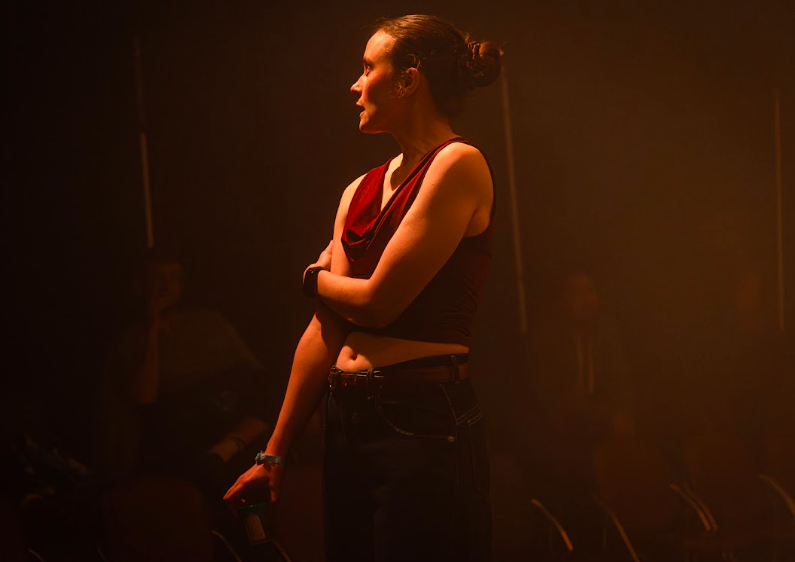
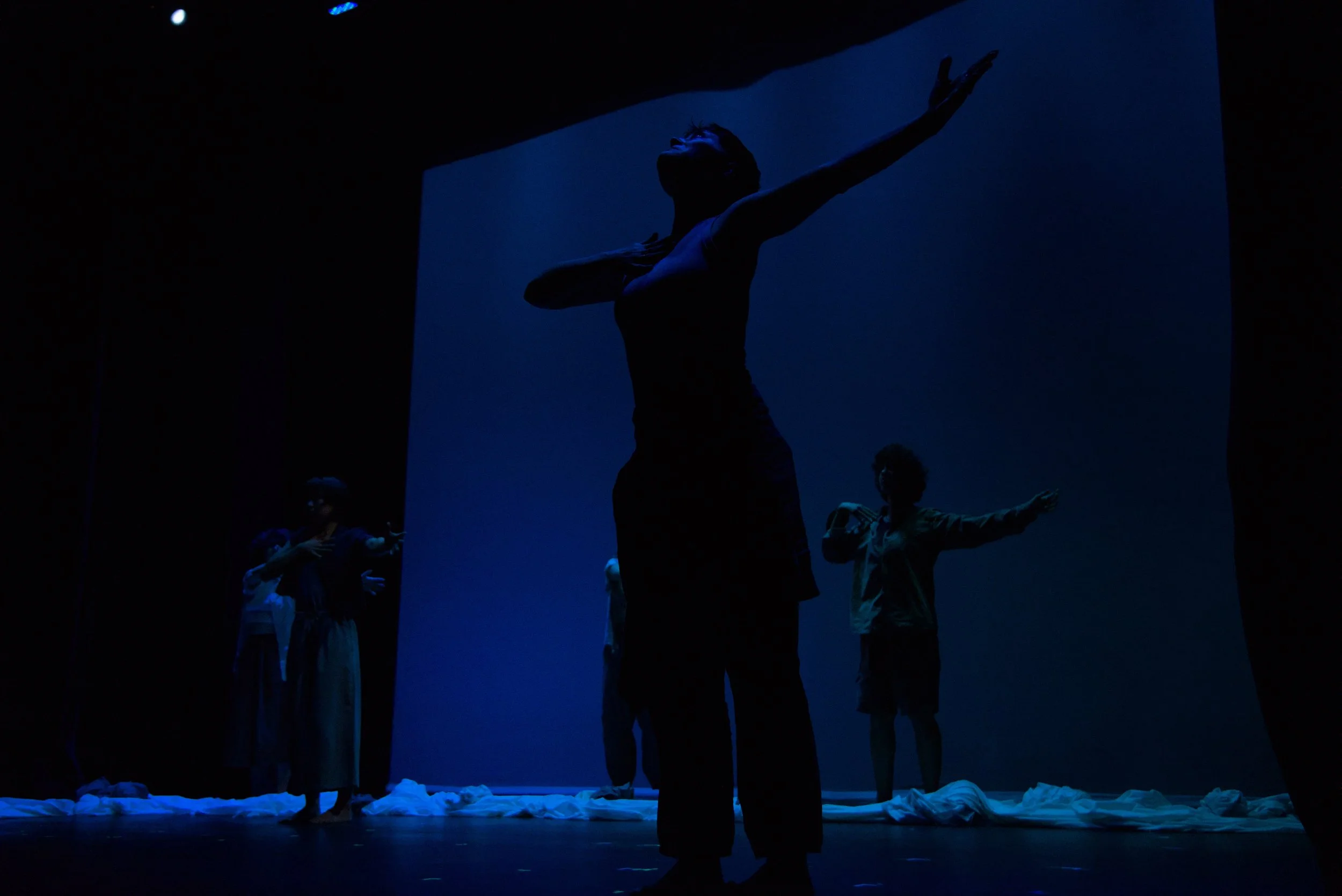
OKP: It’s like how silent movies were originally performed. The film is there alongside a narrator and a musical ensemble performed live. It has the stakes of theatre, but the ambience of cinema, since we’re not lit as performers, leaving you to get lost in the screen. But there’s energy in the room. That’s what makes the show magical, how seemingly simple a violin (played by Eden Glasman), a piano (Jakub Tokarczyk), and a voice (mine) come together. There’s something so satisfying about good timing.
VS: In the performance you introduce us to that past relationship, and cautiously into another: Peter, who you rush to in a moment of panic. Why invite us into these intimate questions and memories?
OKP: Being a thirty-two year old woman, you imagine a path for yourself until it crashes and burns and doesn’t exist anymore. No matter what kind of woman you think you are, you panic, even if those normal things aren’t things you actually wanted. It’s hard to know what you want because of what society tells you that you should want, and then you resist that because you tell yourself you’re a different kind of woman, and then you ask yourself if you’re only trying to be that as a reaction to this other expectation. It’s confusing. It’s messy. It’s about the folly of not being in control of your own desires. I’m a mess. I believe we all wish we had permission to share our messiness, which is why I believe this piece has resonated with people.
VS: Speaking of which, in one scene you say you’re “fated to be Frankenstein’s bride, rejecting the monster of marriage…”.
OKP: I read Frankenstein every time I’m in Bella Coola. In most of the book, the monster hides out in the mountains. In Bella Coola, you feel like you’re in those exact mountains, the forest is so dense and ancient. We all know it’s the story of a scientist who wants to do this amazing feat in the name of progress and science which is to discover the mystery of life. And he makes this machine and ultimately this monster that everyone’s scared of, most of all himself, and he spends the rest of his life trying to hunt down and kill the monster. And of course the monster is like this super sensitive guy who just wants to be accepted as a normal person, but the more he is rejected by society, the more he hates and resents them, and the more he wants to punish and harm them.
It’s a feeling I dramatically amplify in the film. I was reflecting on a failed relationship and throwing it away and throwing away the whole project of being in a normal life trajectory slash relationship slash family thing. I was in this isolated small town, trying not to feel like a total monster outsider, with no sense of whether I was moving forward or backward or what. I was just there, in the mountains, with dirt under my nails, out of any real control of things, like the rest of everyone.
VS: You mention control. I was stuck on that topic across the film. There’s a sequence where the power goes out, that ends in a home video of a baby crying, which struck me as a descent through the realization of a lack of control, of helplessness, that your brief life in Bella Coola revealed you to be no more than an infant in that home video..
OKP: I didn’t even know that that was why I did that, it is such a cool reading of it.
VS: But surely you had some reason to put these seemingly unrelated fragments and mediums together?
OKP: Yes, intuitively, I tried to make a feeling... The video is from my baptism in the Armenian Orthodox Church. About being subject to forces and desires beyond my control. I wanted to include that footage because the film is meant to be self-critical, hopefully not in a self-indulgent way. The film is a bit of a treatise about my disillusionment with the progress narrative. I had never lived in the country before and I was really struck by how immediate life is there. How concrete and non-symbolic everything is. In the city for example we talk about ‘the environment’ like it's some abstract elsewhere. But in the valley your relationship with the environment has immediate feedback: If you don’t chop enough wood in the summer you’re going to be cold all winter. If you dump chemicals in the river, your drinking water is poisoned. All of these things that we take for granted, that there will be roads to drive on and that water will come out of our taps, and electricity will work and garbage will be collected. It really makes me feel like our whole approach to life in the city is completely backwards.
VS: I had similar feelings visiting Heiltsuk territory across the water.
OKP: We live in this myth that history is moving forward, that the future will be better than the present. That more technological solutions, more energy, more data centers, more bike lanes––anything faster and better will solve the problem. Climate-friendly weapons and condominiums with an art budget and automated customer service will lead to universal justice or happiness. But the more we accelerate these ‘solutions’ the further we get from each other, and from the resources we consume. It’s a backwards and bizarre framework for thinking through our disconnection. I realized how implicated I was, of course. I’m exactly who I’m angry at. I open the film with a quote from the Dark Mountain Project’s manifesto, which calls for us to decouple from always moving forward and to instead look down. I disagree with parts of the message but if we don’t realize our incapacities as humans, we take things for granted. The more we ignore or contract out the immediate needs of our life, the more we disconnect and that distance damages us.
VS: Speaking of the environment, you chase fires during your time there.
OKP: I was trying to touch on how we forget how the environment comes to be the way it is over long periods of time, yet also immediately. When I was there, a fire grew so large it blocked the highway, and another summer a landslide blocked the river at a certain point. 15 years ago a huge apocalyptic flood wiped out all the roads. It just makes me feel small in time to know a place as it is and know that in all of a sudden it can change. So it was this dual reflection of always being on the edge of danger, and our job is to mitigate that danger but also to accept that it is part of the life of the landscape and of the earth.
VS: Across your work, I see an attraction to things discarded, things in the corner, flotsam and jetsam. You approach them with tenderness instead of a derisive hostility. In Three Parables, a tide washes through some detritus. It felt like a metaphor for scenes in Bella Sutra. What is it about an image that draws you in?
OKP: What I’m drawn to has changed over the years. I make my own images less, and am more interested in finding that detritus, media that already exists, and using it in interesting ways. I’m also attracted to a technical feat, and without it the work isn’t fun. I’m not a filmmaker who makes traditional beautiful images…although maybe all of us would say that about ourselves. Filmmaking is about the thought process. It’s fragmented with flotsam and jetsam. To me, the composition of these images together is more interesting than a single well-shot image.
VS: What do you hope people take away from your performance?
The truth is that I have no particular expectations from the audience. I write for myself, I speak for myself. There’s nothing really didactic to learn from the film, no formal lesson or history that someone from the region might find useful or even new. It’s a simple diary about the disillusionment with the myth of progress and the mess I’ve made of my life. And I’ve been surprised how much these feelings end up resonating with people. Any reaction is interesting. That’s the beauty of a live show, that we’re all present in a moment together, and it could go either way.
Bella Sutra will play at 7pm, April 30, 2026, as the opening night film for the 25th anniversary edition of DOXA Documentary Festival. Browse the festival’s film guide here for more information.
Vyas Saran is a writer, organizer and lawyer. His work is found around town in places like The Tyee, Maclean’s Magazine, Chinatown Today, unmentionable zines, privileged documents, and non-threatening letters towards the owners of a local sports franchise.