How to Make a Monster
/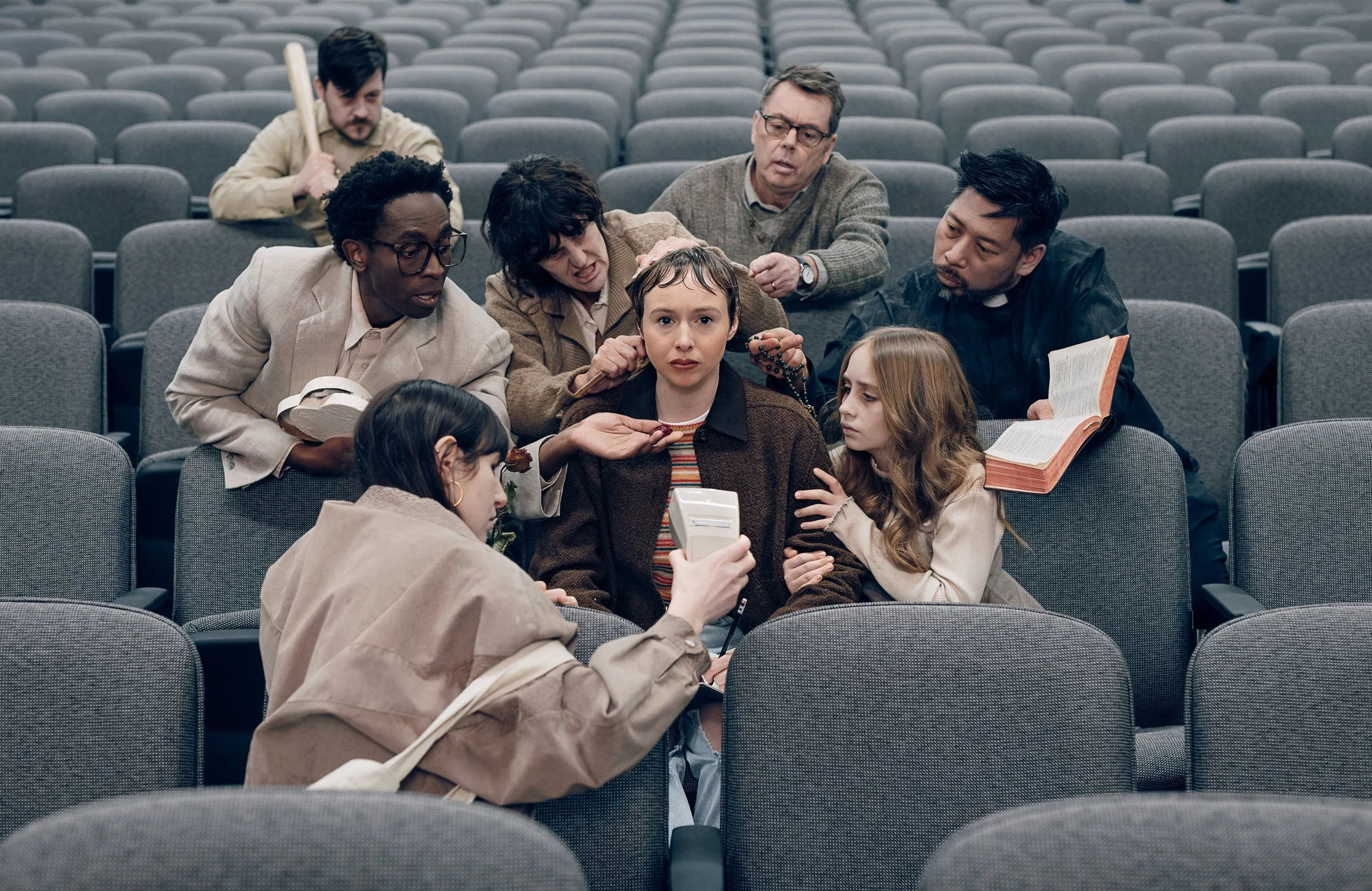
photo courtesy of the automatic message.
Have you ever walked into an art exhibit, thinking you understand it from the description, but left with hundreds of questions?
This was my experience after I checked out “How to Make a Monster,” an exhibition by Tanya Goehring and Trevor Jacobson, the creative duo known as The Automatic Message.
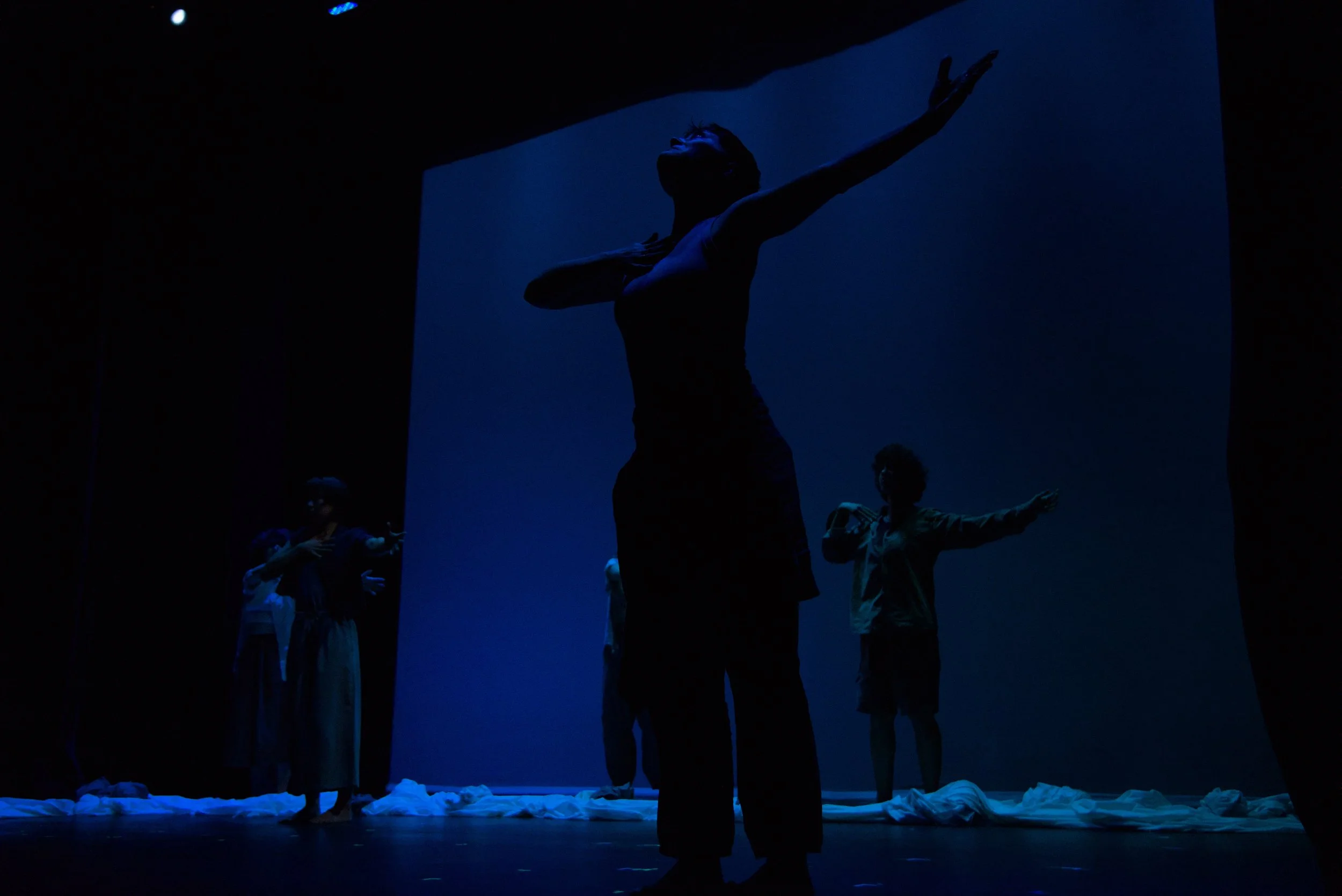
The exhibit is set in the T building of Langara College, and features a heptagonal configuration of seven screens. The viewer (you) stands in the middle, and at some point, you become the protagonist.
The mix of sound, music and visuals pulls you in different directions. A parallel to how we feel when we deal with anxiety, fears and internal critics.
The exhibit has a 25-minute film that shows seven characters. The protagonist is a young woman who carries with her all the inner critics everywhere she goes. The seven characters are the Father Figure, Mother Figure, Inner Child, Idol, Soulmate, Priest and the Adversary.
The Battle between the jury and the protagonist
Each of the seven characters, the "Jury," has their own screen, and they stare directly at the protagonists, the virtual one in the film, and the physical one, the viewer.
Standing in the middle, you experience this confrontation, facing your internal critics through each screen.
The protagonist is shown inside a hospital room, alluding to the fact that mental health affects our physical health, something I personally can relate to as someone with chronic illness, and I deal with anxiety and PTSD.
The protagonist is seen crying on the hospital bed, while her “idol” is showing her clips of other women who seem to be perfect.
At this moment, I took a huge sigh. I’ve been there. Sitting on a hospital bed scrolling social media and feeling insecure, lonely and feeling that I’m not good enough.
The Father and Mother figure are fighting on another screen, blaming and belittling each other. Father figure is blaming Mother figure for how their child turned out; he also calls the mother figure lazy and unhealthy. The mean things they say about each other, they also say about their child. Each parent says the child is just like the other.
The argument echoes in the back, while the other screen shows the inner child, inspecting herself in the mirror. And you can feel how the child's wound starts, by feeling unwanted and unloved.
The protagonist is then at her home, still surrounded by her “jury.” The mother figure is brushing her hair forcefully, which suggests an attempt to shape her child into her image and beliefs. Or perhaps, it’s how Mother Figure wants her child to always look presentable to the world. Meanwhile, the protagonist tries to protect her inner child, seeking to offer safety.
As a mom, this made me contemplate the ways I unknowingly expose my kids to my own fears or beliefs, and in turn, burden them. I dump my past traumas or insecurities on them without even thinking or realising.
Breakthrough is on the horizon.
The protagonist is seen waiting for a bus, with all her inner critics, under the constant rain, to symbolise how our inner thoughts, fears and internal judgements dampen our thoughts and cloud our lives.
The protagonist arrives at her destination, a lecture room, with a few people scattered around, listening to the words projected on the screen in front of them. She finds difficulty reaching the chair she wants, as she carries the load of her “Jury” with her. The more she tries to listen to the lecture about mental health, the jury’s attachment and the internal dialogue get louder and louder. The inner child seeks comfort and is afraid of the new place they’re in. This resembles our self-doubt and feeling like nothing will work.
While all the inner critics remain attached and close to her, the adversary stays a few chairs behind. I didn’t understand it at first. Why would the adversary or the opponent stay away?
At the end, there’s a breakthrough. The protagonist has had enough. She learned to be more compassionate towards herself. And I think the more we understand ourselves, and what’s happening and acknowledge these inner feelings and criticisms, the more we can actually heal and have peace.
The silence is calming, and slowly, each critic/voice gets silenced and fades.
The protagonist smiles; she takes a huge sigh of relief as the burden is lifted off her, and the lecture continues by providing ways to self-regulate.
The viewer, now in the protagonists’ shoes, hears some practical ways to “tame” the critics, such as using self-compassion phrases, adopting the perspective of a coach vs a critic, and physical soothing rituals. And as a viewer, you also feel calmness in your body. And the virtual and physical protagonists at this point become one, both smiling with relief.
Self-Reflection
What I loved about this exhibit is that it speaks to all of us. Art has always been a gateway to healing for both the artist and the viewer.
I left with so many thoughts, and one thought lingered with me stronger than the rest. When the adversary was a few chairs behind her, I think the adversary here might be our suppressed anger.
From therapy, I got to know more about my internal conflict and anger. I suppressed it due to many factors. Whether culturally, being a woman, a BIPOC immigrant, a mom and also due to religious reasons.
Women, especially, are taught to always look and act calm. And I can see that in the protagonist. How much she was resisting the anger, which was always there but a few feet away from the rest.
When I reached out to the artists with some questions, they told me “ The Adversary” was purposely always in the corner, because he represented the fear or the threat that’s always lurking at the back of your brain. Which is why I really liked this exhibit. Art is very subjective. And each person viewing this piece might connect to one or all of the fears or issues. How I felt about each character was a reflection of my own “Jury.”
And just when you thought that anxiety and mental health issues had been discussed and talked about in art circles endlessly, and there’s nothing more to bring to the table, “How to Make a Monster” challenges you. You will face your own critics or understand what others go through.
I highly recommend visiting the exhibit, even out of curiosity.
It will be open until April 20th, and admission is free, just go with an open mind.
“How to Make a Monster” runs April 1-20, 2026 in the T-Building Foyer at Langara College.
Karen Habashi is a freelance writer based in Vancouver. A dentist turned writer. A mom of three. She focuses on parenting, mental health, BIPOC and immigrant issues. She has bylines in CBC, Business Insider, Georgia straight and more.