On Native Land: A story of belonging and acceptance
/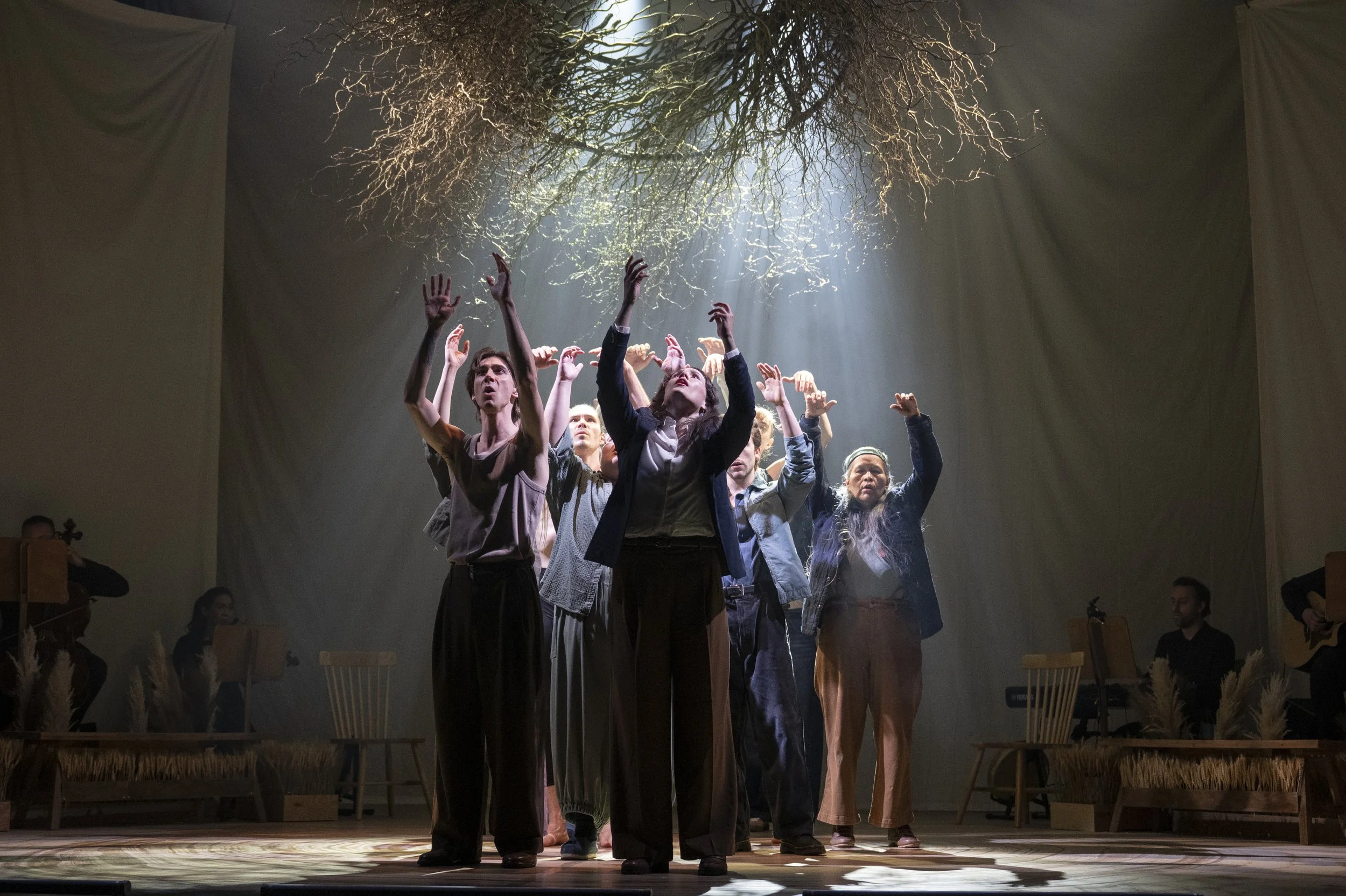
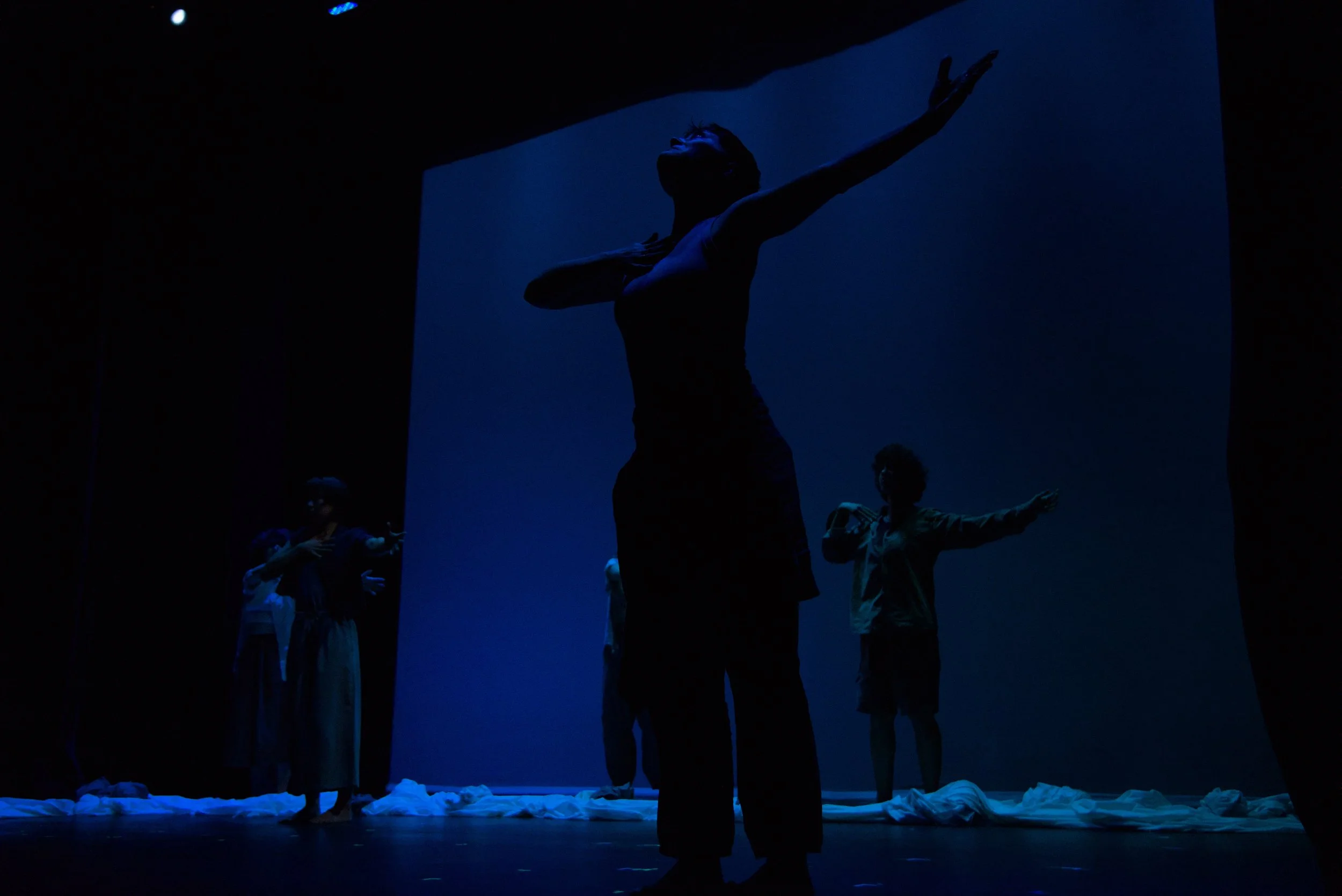
On Native Land a musical written and directed by Corey Payette, Set Design Alaia Hamer, Costume Design Stephanie Kong, Lighting Design Jonathan Kim, Produced by Raven Theatre and Urban Ink presented by The Cultch, Actors: Amanda Trapp, Dustyn Forbes, Hailey Christie-Hoyle, Jacob Woike, Jenna Brown, Jera Wolfe, Jesse Alvarez, Nathan Coburn, Sharon Crandall, Taninli Wright, Wahsontí:io Kirby, Zac Bellward. Photos by David Cooper.
One of the most powerful images in On Native Land is that of return. The show tells a story of belonging and mending relationships through willingness, self-forgiveness and acceptance of one another. In a little under two hours, we see the distance between people, between past and present, between self and community begin to close.
A musical created by writer and director Corey Payette, On Native Land unfolds through three intersecting character arcs: Blood (Dustyn Forbes), a rising musician grappling with questions of cultural identity and belonging; Chief (Taninli Wright), a community leader engaged in an ongoing legal battle to maintain stewardship over her people’s land; and the young Indigenous lawyer Rielle (Amanda Trapp), tasked with representing Chief within a system that demands she shed parts of herself to succeed. Together, these stories move between the personal and the political—and the personal as political—tracing how identity, community, and land are constantly shaping one another.
Binding their stories together is the Land (Wahsontí:Io Kirby) itself, the narrator embodied as an ever-present being. The show introduces the land not as a passive setting, but as an entity that is alive and relational to the people. They are a witness and a keeper of memory, inviting us to “live with the land, not on it.”
Blood’s storyline offers an intimate and at times volatile exploration of belonging. His heritage is questioned as he is accused of performing Indigeneity for his own gain. He is a young man surrounded by people, yet devastatingly alone.
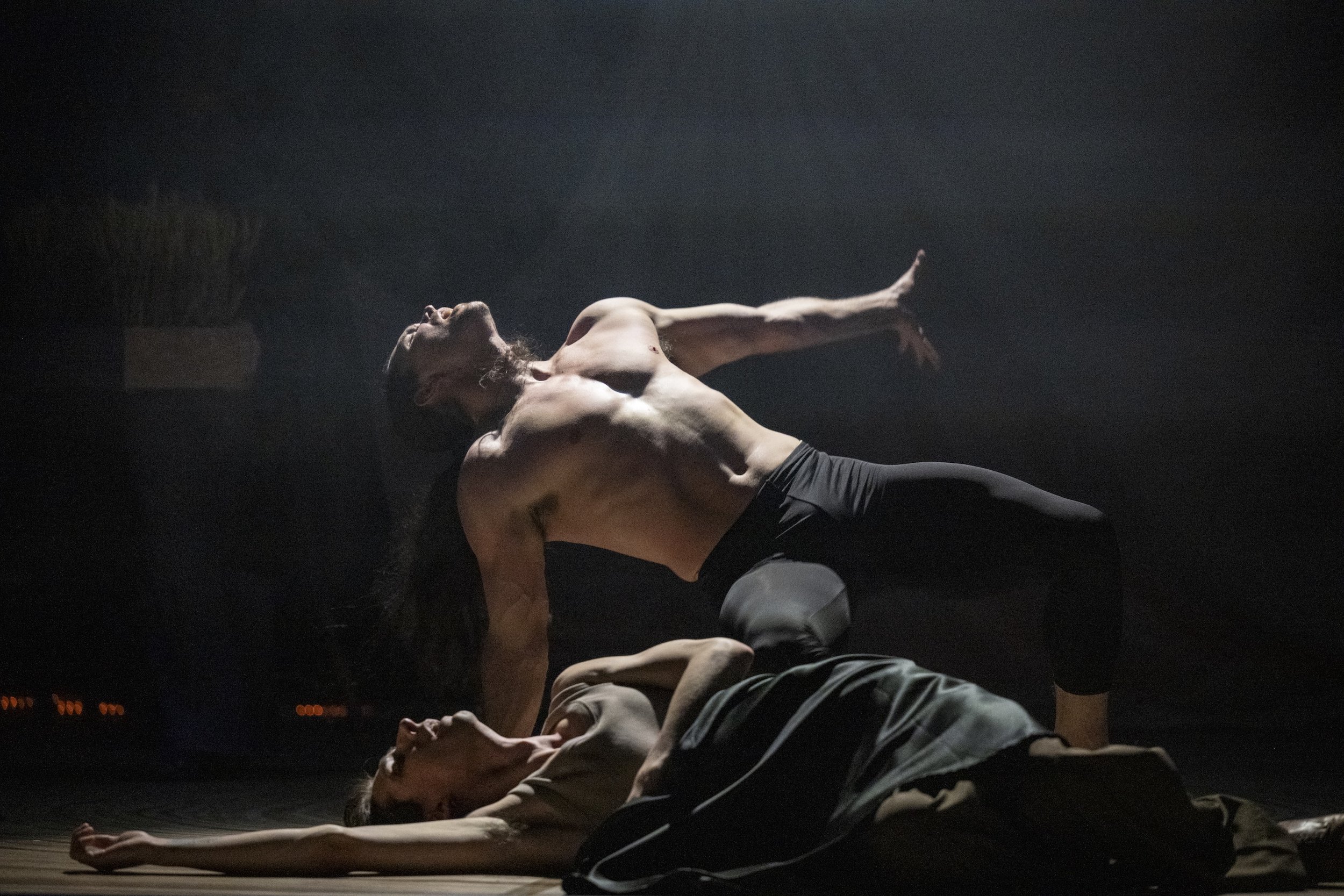
Photos by David Cooper.
Fighting a similar battle is Chief, whose public legal battle comes at great personal cost. Her decision to purchase a piece of land for two of her three daughters is used to question her leadership, motives and perceived hypocrisy. However fine the line is between secrecy and privacy, it is made clear to the chief that she is not allowed to have either.
Rielle’s presence illustrates certain complications of the colonial legal system. Her belief in the justice system is constantly under pressure because it depends on her masking her Indigeneity. The question beneath her narrative is: what does it mean to seek justice within the same colonial structures that enabled your dispossession in the first place?
Beyond the characters, the music in the play ties everything together near-flawlessly. As striking as the score itself, is the near disappearance of the musicians on stage. Dean Edward Thiessen (Pianist), Chris Fraser (Guitar), Emilio Suarez (Cello) and Sarah Ho (Violin) sit almost invisibly on the edges of the small space as their music draws the audience farther into the story. You may notice them in a few moments of conscious attention, yet for the most part, they are heard but not seen, supporting an indisputably strong cast of vocal performers.
This seamless integration isn’t by accident. Payette describes his process where “Music is integrated early in the process, because it is so essential to the storytelling.” He makes it inseparable from the world of the show rather than layered on top of it.
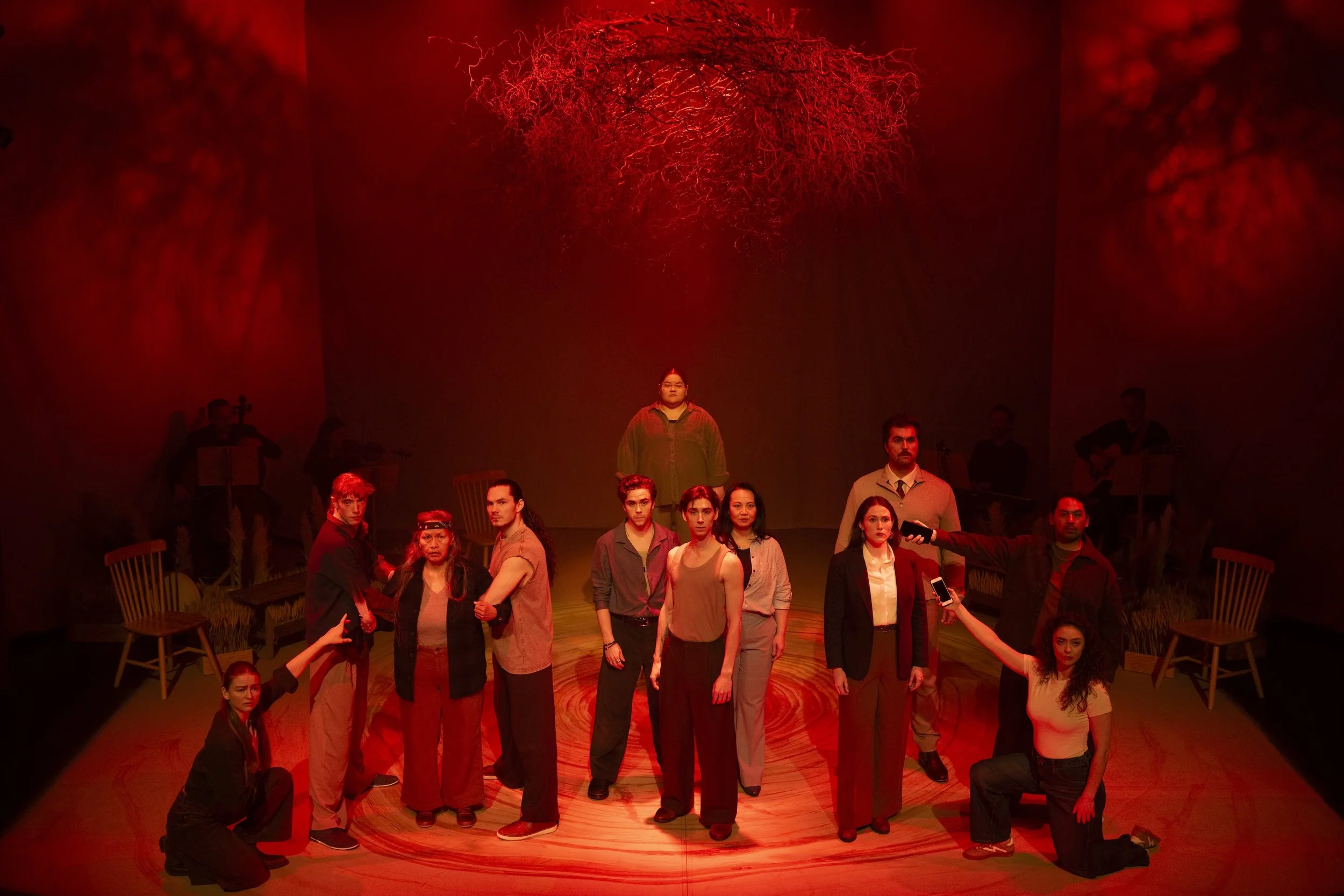
Photos by David Cooper.
There are a couple of disappointing moments in the show. The inclusion of Blood’s addiction gestures toward a reality that carries deep and ongoing impact within Indigenous communities. Yet Payette only lightly touches on it before moving on, which makes it feel unnecessary to the plot.
Payette creates a sense of the show moving towards something big with the dramatic musical numbers, costume selections and emotional set-pieces of Act 1. In contrast, Act 2 feels almost rushed despite its 45-minute runtime. He mentions having to cut down on the storylines around the legal system and community conflict, explaining that although they “added depth to the world, especially around the legal system and community tensions…they pulled focus from the central relationships.” He preferred instead to “trust the audience would still feel that weight without everything being explained.”
There’s only so much story one can tell in such a limited time; still, I think another few minutes would have made these final moments weightier.
The show has a great ensemble that does an excellent job of bringing Payette’s story to life. Wright delivers a brilliant performance with her impassioned portrayal of an elder carrying the weight of the world on her shoulders.
The outstanding performer of the night, no doubt, is Kirby as Land. They steal every scene they’re in with their charm, wit and charisma. The way they move seamlessly between humour and gravity reflects a complete emotional range, encompassing joy, hurt, grief and resilience, in both story and character.
On Native Land is an impressive blend of storytelling, music and production. Payette says in his notes, “My deepest hope is that Indigenous audiences feel seen, and that others leave with a fuller understanding of how layered and lived these realities are…This exchange has been one of the greatest gifts of my life.”
And what an incredible gift it is.
On Native Land is at The York Theatre from April 08–19, 2026.
Nicole Wasuna is a Vancouver-based writer originally from Kenya. She writes about books, film and performance, with a particular interest in how stories engage with race, gender, queerness, class and disability.