DOXA: Concrete Turned to Sand
/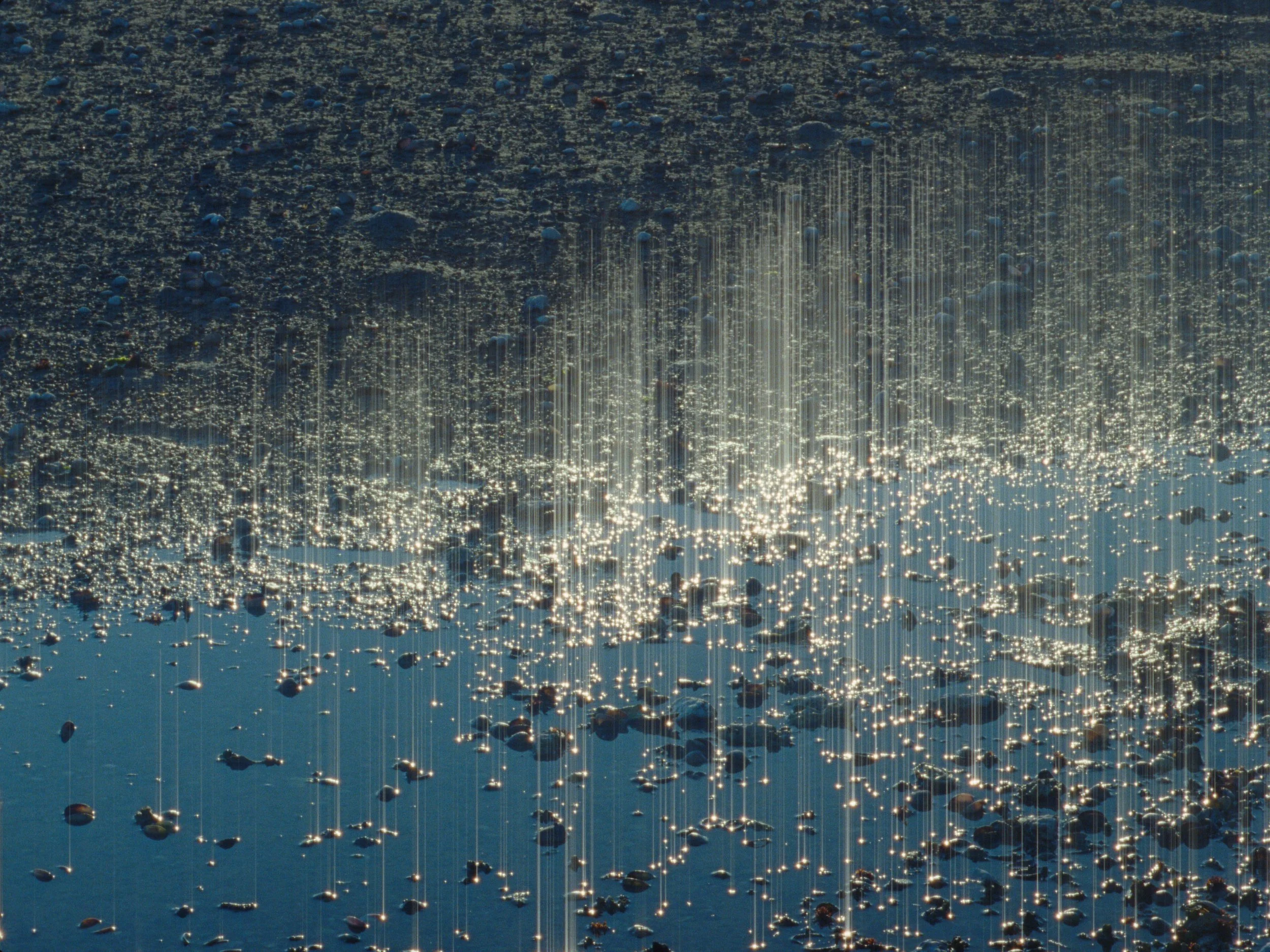
Concrete turned to sand image still, courtesy of directors jessica johnson and ryan ermacora
At the beginning of Concrete Turned to Sand, a new documentary from Directors Jessica Johnson and Ryan Ermacora screening this week at DOXA, a paragraph from Ursula K. Le Guin’s classic novel The Dispossessed, shows on the screen:
“The lights were out, there, and it was illuminated by starlight. The air was quite cold. A night-blooming flower from some unimaginable world had opened among the dark leaves, and was sending out its perfume with patient, unavailing sweetness to attract some unimaginable moth trillions of miles away, in a garden on a world circling another star. The sunlights differ, but there is only one darkness.”
The excerpt lingered in my mind throughout my time watching the film, not just because Le Guin is one of the best to ever do it, but because of how elegantly it reflects so many aspects of the film — especially that last line.
Concrete Turned to Sand begins in darkness, with dim light glimmering off flowing water in the night, and the sounds of the ocean looming in the background. That darkness persists for minutes, until light flashes across the screen. At first it’s fleeting, and the sweep of it gives the impression of a time lapse. Then the beam steadies, returns to a spot, and we get the first clear shot of the topic of the film—the oysters of Cortes Island, and the people that farm them. This is work done largely at night, and the lights are from the flashlights held by people combing the beach.
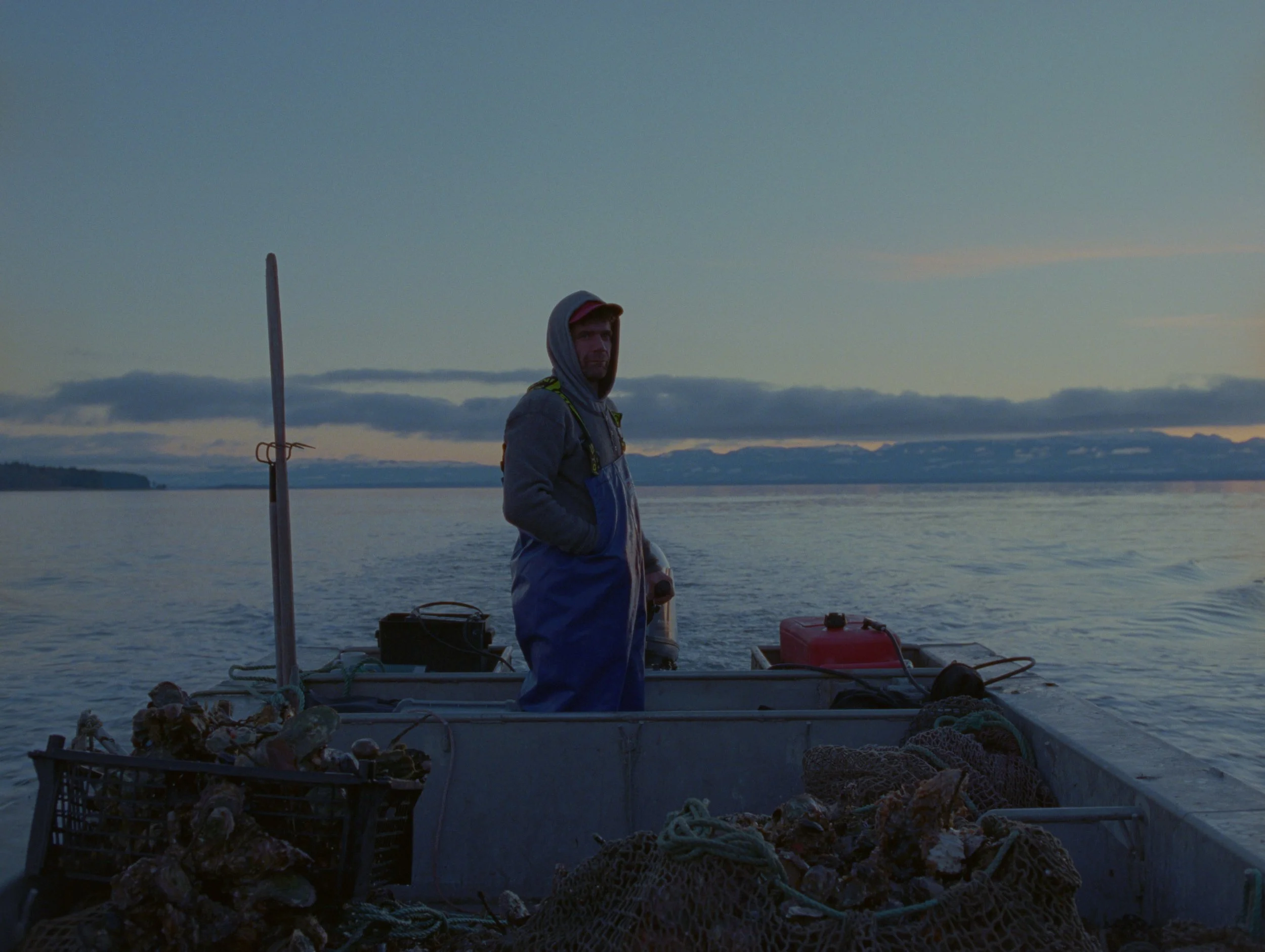
Concrete turned to sand image still, courtesy of directors jessica johnson and ryan ermacora
The film follows people at work, carrying out the various stages of farming and harvesting oysters, from floating lines and trays into bags, from bags onto beaches, and back onto boats. I won’t pretend to have a comprehensive understanding of the process, and the film makes little attempt to educate on that front. There’s little conventional storytelling in it at all, for that matter — no narration stringing together a chronology, no score to guide the emotions of a scene, no dynamic editing to build momentum or tension — instead what we get is a series of vignettes, videographic portraits of the various people who live on the island, as they go about their days taking part in the cultivating, monitoring, and harvesting the West coast’s delicious mollusks.
It’s from these people that we get the only dialogue of the film, the first word of which isn’t uttered until nearly 20 minutes in. What they offer us are stories, or sections of stories, about how they came to work in the island’s intertidal zones, how they’re navigating or measuring the increasing hostility of the environment to this kind of work as a result of the ongoing climate crisis, and more.
All of that is set to the steady, static camera work that characterizes the film’s look. There’s virtually no panning, zooming, or shifting of the camera whatsoever. What little movement of the frame that happens between cuts is almost always a result of the camera being fastened to a moving object or vehicle, creating an effect where the foreground stays largely still, but the background moves steadily. It’s a really striking effect, especially when the vehicle in question is a boat and the background in question is a pink-hued ocean horizon punctuated by the many beautiful Discovery islands, and one the filmmakers employ regularly.
The look, and the use of long lingering shots without narration or non-diegetic sound, really lends itself nicely to the film’s observational style. The only context offered comes from what the people featured actually say, and their voices almost never play when they are on-screen. Even their names don’t appear until the credits. It feels like the film lays out its materials for the viewer to assemble its meaning, unguided, but also like it would be impossible to put those pieces together any other way.
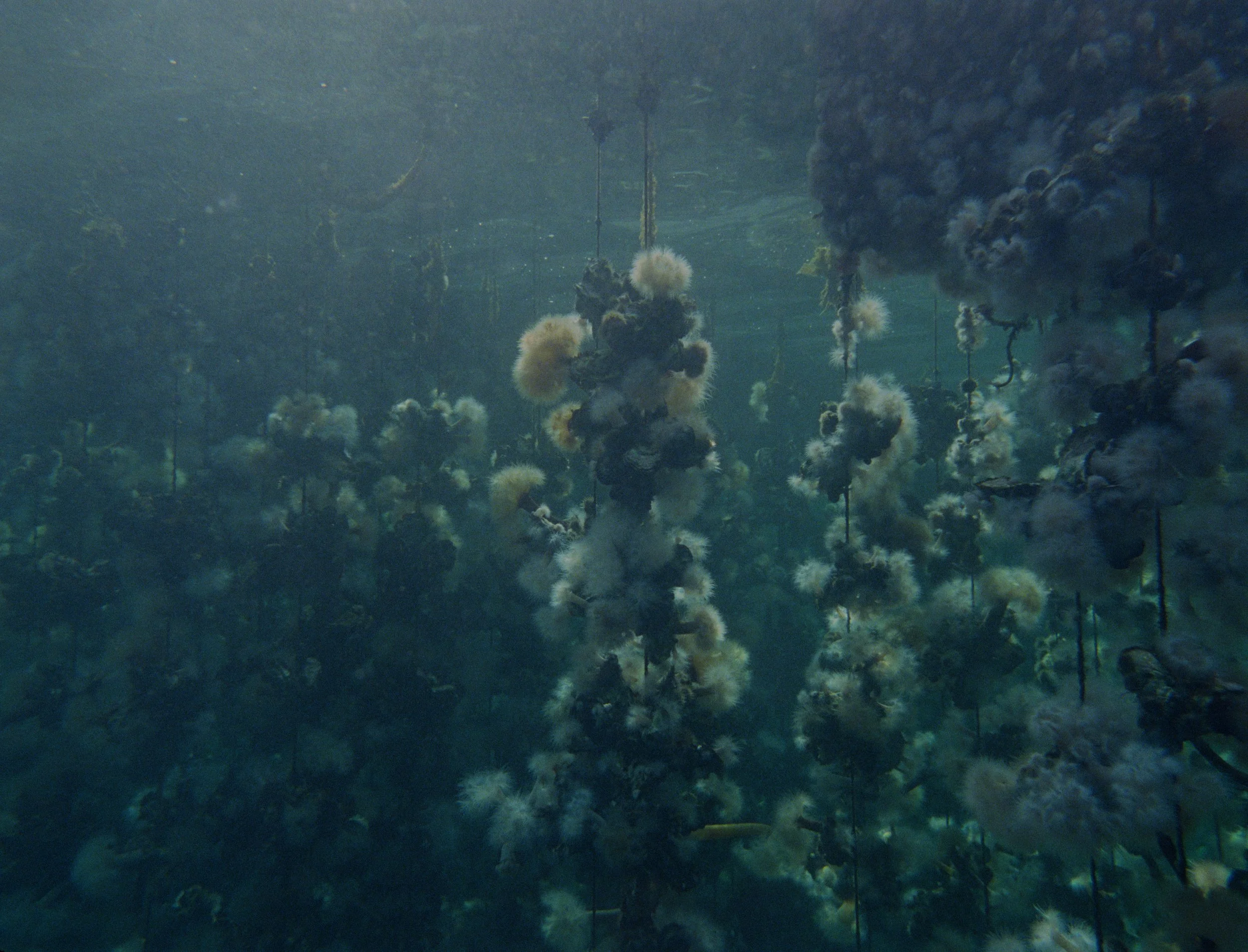
Concrete turned to sand image still, courtesy of directors jessica johnson and ryan ermacora
As Le Guin wrote, “The sunlights differ, but there is only one darkness.”
The pervasive uncertainty that seems to hang over every person in the film, with climate change at its root, is impossible to miss. It touches the life and livelihood of every person who speaks in the film, whether they’re scientists measuring shell sizes or farmers spending their days cutting clusters of shellfish off lines and nights combing over beaches full of them at low tide.
Concrete Turned to Sand is an arresting film to watch, for all the reasons above, and more. In addition to being a fascinating snapshot of a community balancing on the edge of precarity, the slowness of its cinematography, the ambience of its soundscape, and the rhythm and routine of the work it captures combine for an almost meditative experience. It’s both calming and concerning, in the best way.
Concrete Turned to Sand is screening at the DOXA Documentary Film Festival on May 6, 7 and 9, 2026. Browse the festival’s film guide here for more information.
Sam Moore is a writer, editor, and journalist, whose work has appeared with his name on it in such places as Montecristo, SoundGuys.com, Lion's Roar, and Canada's National Observer, and without his name on it in many more.