DOXA Film Festival: Green Valley
/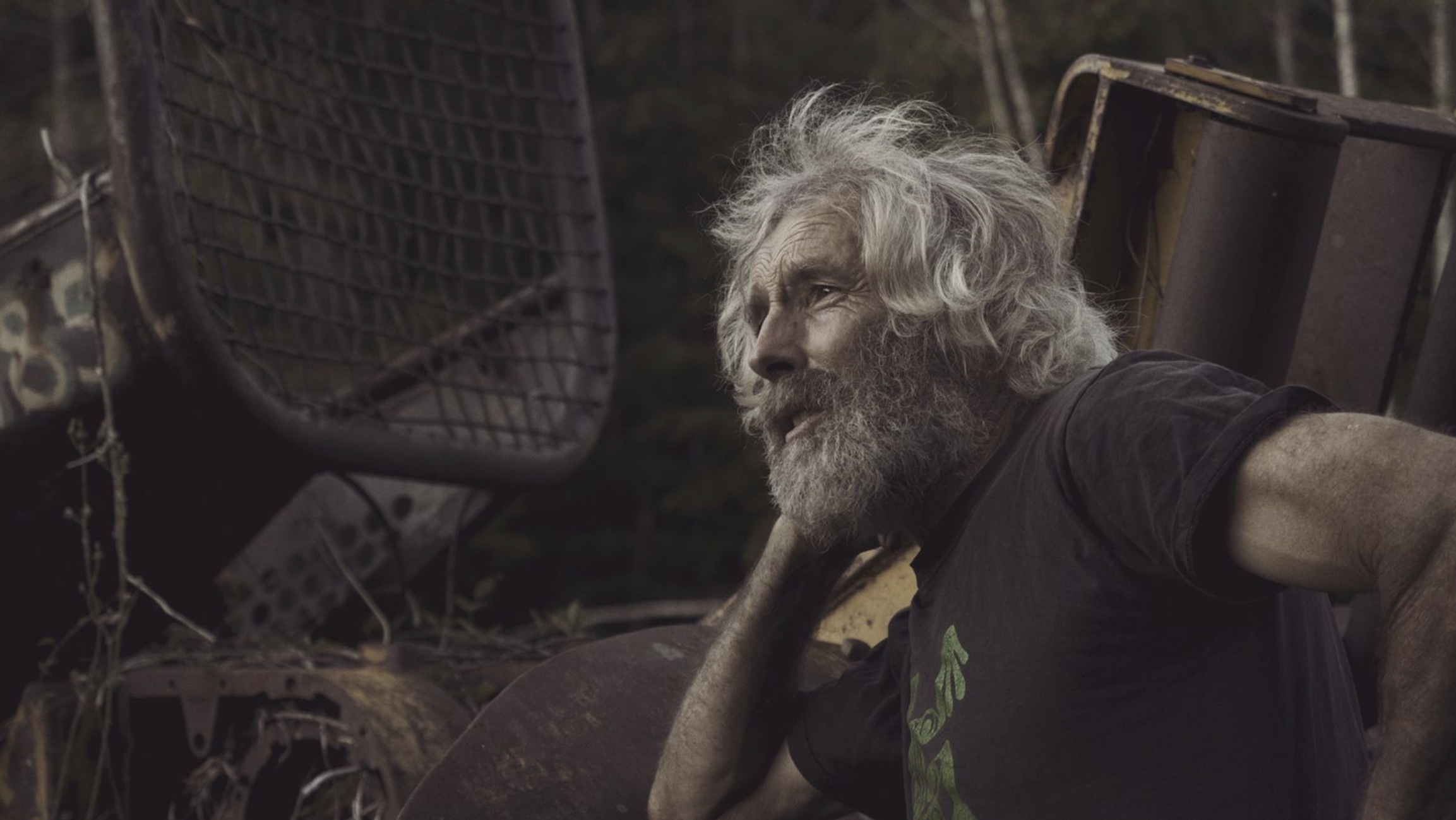
green valley film still, courtesy of doxa documentary film festival.
Cultish stereotypes arise at the thought of an off-grid community that farms its own food. But Blue Jay Lake Farm, nestled in the remote fogginess of BC’s Cortes Island, offers a more understated portrait. This group of homesteaders forms the focus of Green Valley, a lushly immersive documentary directed by Morgan Tams, himself a member of this community.
Over two years and a dramatic change of seasons, we follow select members of the group: Max, an ideological carer of cows who contemplates his late father’s “debt” to nature; Heidi, a gourmet farmer who dreads the prospect of city life; Anne and Sam, young parents balancing childcare and their small produce business; and their kids Gael and Graciella, who are growing up in this “Farmily.” Henry, the soft-spoken, bearded patriarch, is the opposite of domineering. (After receiving a greeting card of gratitude, he remarks that he’s been feeling “inadequate” lately, which he surmises may be a good thing, because he also feels “king of the turd hill too much.”) Everyone featured appears white or white-passing, and—with the exception of Henry—are on the younger side of mid-life. But we are shown little insight into their lives pre-Farmily.
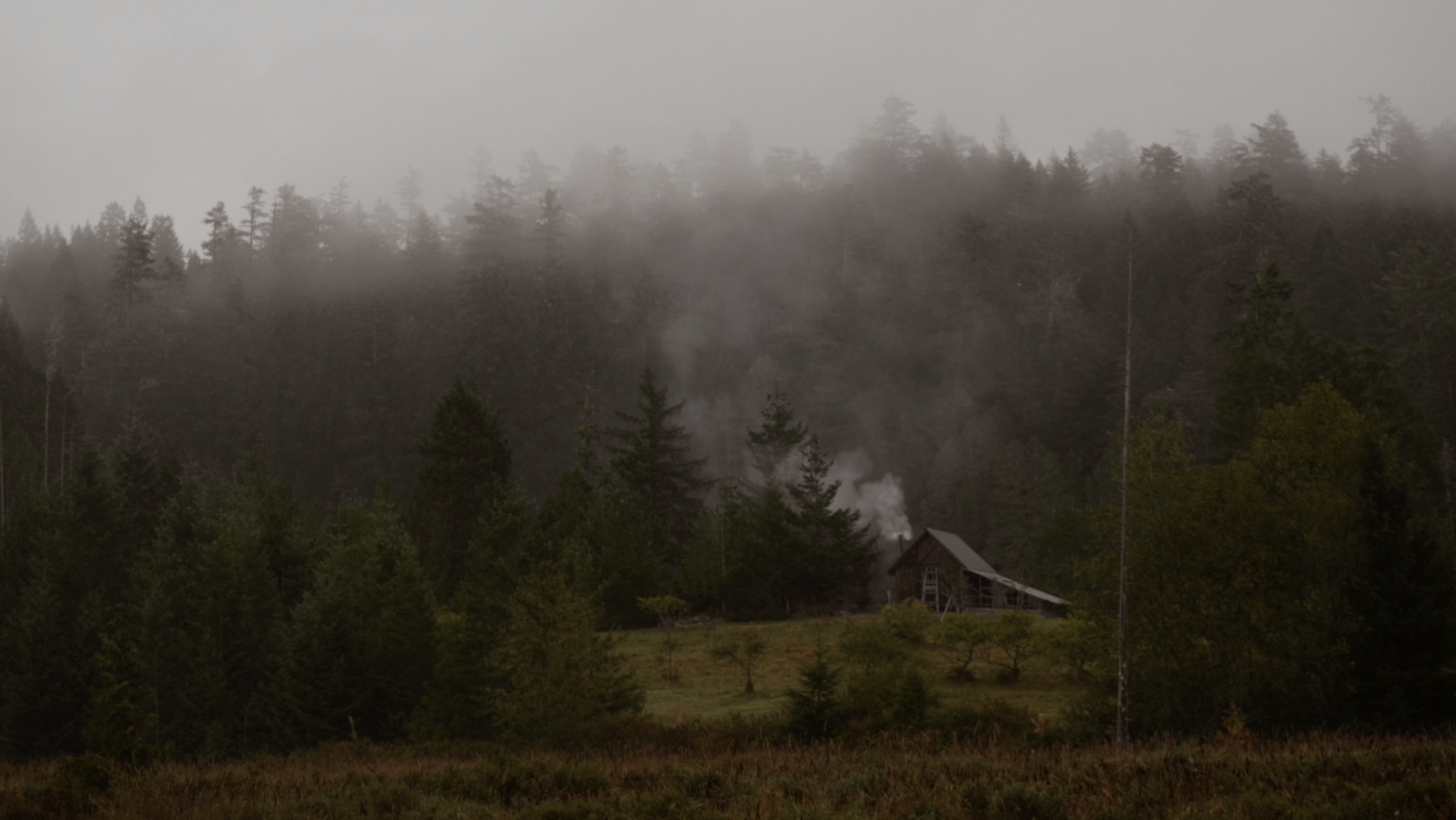
green valley film still, courtesy of doxa documentary film festival.
The farm produces most of its own food, but the homesteaders still buy coffee, chocolate, olive oil, spices, and salt. Clothing appears factory-made. “I guess I would say that we have an overarching goal of being community-interdependent,” says Max. “Which is maybe, a slightly more thoughtful version of self-sufficient, but kind of in a way that balances how far that can go with, you know, having a casual life and not being crazy extremists.” While “some people probably think we are crazy extremists,” Max asserts that the group is closer to the mainstream than the far side of homesteading. Anne and Sam, in particular, maintain a connection to nearby communities by selling produce at farmers’ markets.
Green Valley is like looking through a family photo album. We follow the daily chores of the farmers as they move from season to season, harvest to harvest. The viewer feels cradled within the lonely wildness of the Pacific Northwest. It’s a profoundly beautiful land, and it exudes a quietly formidable power. And while the film is directed by one of the community’s own members—thereby offering an insider’s rather than an objective view—it feels like a naked portrayal of their stories.
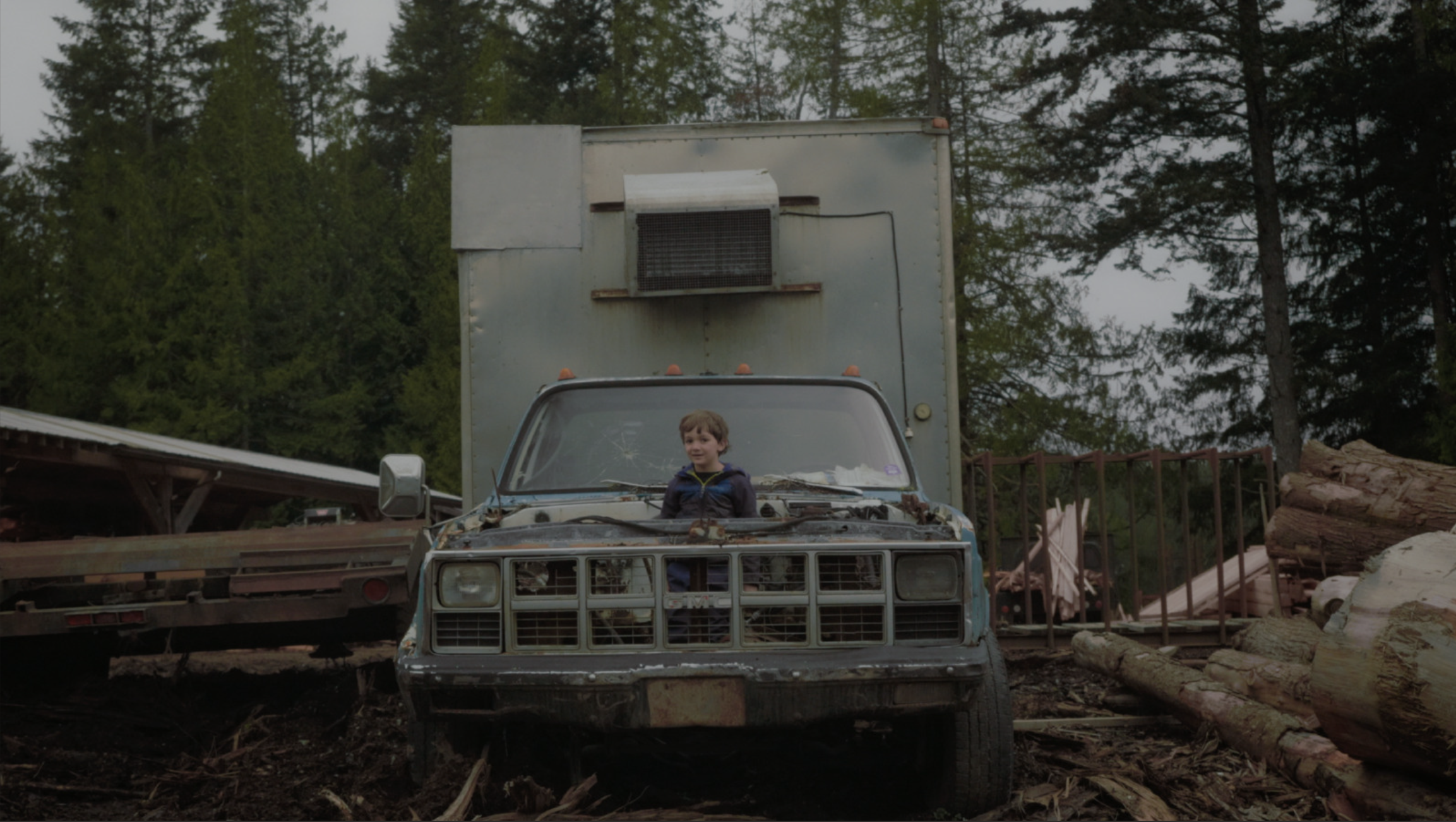
green valley film still, courtesy of doxa documentary film festival
Gael, always a flurry of energy and colour, is a vehicle of curiosity for the audience as the camera follows the child’s meanderings through the property’s collection of discarded machines. The film is exceedingly quiet, relying almost entirely on the natural soundscape…or lack thereof. The quiet fog. A braying cow. The single whine of a machine trying to cut through the stillness, only to be dwarfed by the land’s majestic silence. “Though we initially put together a lot of ‘note-y’ music demos while cuts were coming together, the final film really called for all of the more traditionally musical stuff to take a pretty distant back seat,” says composer and sound designer Darren Miller on the film’s website.
What’s never detailed explicitly is the motive behind these homesteaders’ choices. At one point, Anne touches on her family’s reasons for choosing this lifestyle, but the conversation devolves into a discussion on the energy required for childcare. “They say that the future is already here; it’s just not evenly distributed,” says Max. “We’re all going back to the basics at some point. We’ve just kind of decided to do it before it was a mandatory situation.”
The slaughtering of animals for food is indeed recorded, but the camera avoids the meat of the moment (pun unintended). Instead, it focuses on the solemn before-and-after expressions of the human butchers. Watching the homesteaders’ expressions is a provoking experience: the task feels at once mundane—a necessary chore—and a spiritual undertaking, requiring a certain reverence. As a city dweller, I become palpably aware of my privilege as someone whose meals don’t require getting mud or blood on my clothes.
At one point, the slaughter of a cow is immediately followed by the birth of a new calf. Indeed, the cycle of life and death is an implicit theme of the documentary. We journey through the seasons, from warmth and celebration to cold and anxiety. Henry ponders the fragility of his own life as he processes the uncertainty of his health. He makes more time to spend with the children and explains to Gael that “death means you don’t move again, ever.” After a brief conversation about the unknowable aspects of death, Gael gives Henry a wordless hug, and Henry says, “You’re a good friend, you know.” Far from asserting that (largely) self-reliant homesteaders have the answers to a better life, Green Valley asks viewers to remain humble.
Green Valley is screening at the DOXA Documentary Film Festival on Sunday May 3 and Saturday May 9, 2026. Browse the festival’s film guide here for more information.
Li Charmaine Anne (李倩文; she/they) is a Cantonese diaspora writer and settler who grew up in the unceded xʷməθkʷəy̓əm (Musqueam), Sḵwx̱wú7mesh (Squamish), and səlilwətaɬ (Tsleil-Waututh) territories otherwise known as Vancouver, BC. Her first novel, Crash Landing, won the 2024 Governor General’s Literary Award in Young People’s Literature - Text, the Sheila A. Egoff Prize in Children’s Literature, and the Sunshine Coast Writers and Editors Society Book Award for BC Authors. Shorter works by Charmaine can be found in The Tyee, SAD Mag, Plenitude Magazine, and more. Charmaine holds a Bachelor of Fine Arts in Creative Writing and English Literature from the University of British Columbia. Char’s influences and inspirations include the rugged natural landscape of the Pacific Northwest, her Chinese heritage, birds, boardsports, and the people and places she has had the privilege of meeting.