The Simpsons, Britney Spears and Nostalgia as a form of Endurance: A Review of Mr. Burns, a Post Electric Play
/“Larisse knows her stuff,” says my partner as we enter the Frederic Wood Theatre. The lobby is bursting with excitement—far from an exaggeration—as people fawn over the production booklets placed throughout the room.
I am new to theatre and, unlike the students we are about to watch, a terrible actor. I do not understand the rhythm that goes on before a show. Around me, people speak of the set design. The first time they watched Mr Burns, A Post Electric Play. What other shows they have seen at this venue. I am even introduced to the people who were the first to produce this play in Vancouver.
“You’ve been to other shows here, right?”
“No,” I say.
“Well at least you’re familiar with The Simpsons,” and everyone nods.
Listen—this is not me admitting I do not know The Simpsons. I know The Simpsons. On some evenings, my parents would let me watch an episode so long as they got to watch the weather report first. So I went into the night with some knowledge. Homer, Marge, Maggie, Lisa, and Bart. Oh, and Mr. Burns, of course. Though, this is me admitting that I wouldn’t survive a trivia game about The Simpsons, and this is also me admitting that I was worried about my lack of knowing as we walked to take our seats.
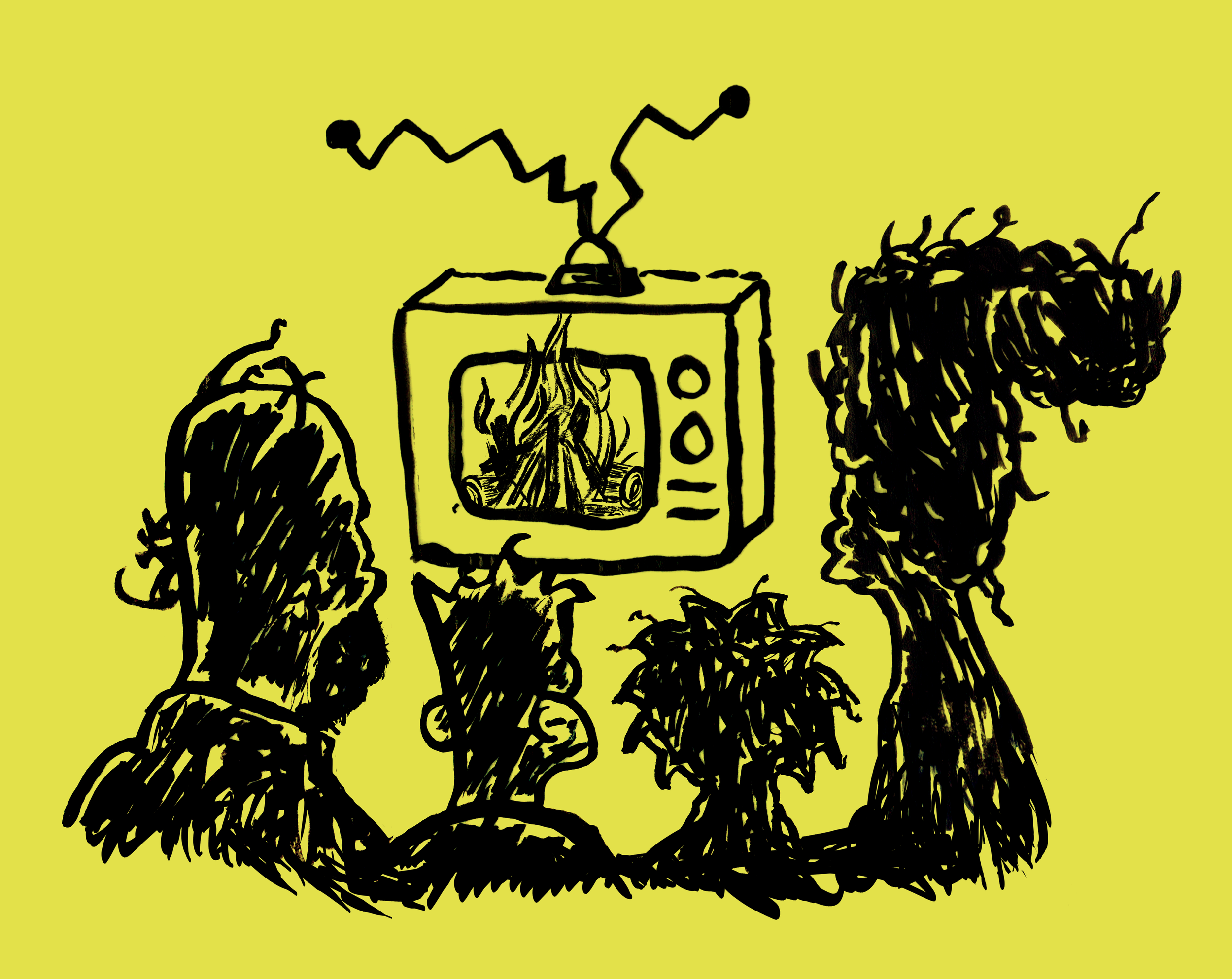
Mr Burns, a Post Electric Play illustration by Jonathan Wood
But, here is what I do know: Mr. Burns, a Post Electric Play, written by Anne Washburn, was first produced in 2012. It is currently a Saturday evening, November 2025. Thirteen years from the initial production run. The University of British Columbia’s Department of Theatre and Film is hosting the show with the help of an extensive student-led team. The director of this rendition, MFA candidate Larisse Campbell. Every actor, a BFA student. Eight of them, to be exact. Each juggling the portrayal of multiple characters (including the very beloved, Simpsons family members). What else do I know? That the show is playing until December 6th.
We take our seats and the show begins immediately. No idling in the dark, listening to people open their cans-of-whatever. Mr Burns, a Post Electric Play doesn’t play around, adhering to the strict timing outlined in the booklet.
I won’t give spoilers, but I will give context. The play begins with an ensemble cast sitting around a fake-campfire. There's a couch, two chairs. Three people reminiscing about their favourite Simpsons episode. In the background, there is another actor walking around wielding a rifle. Also, they are in a forest. We are given little clues on where we are in time or space. The script indicates the play is set in a non-descript part of the United States, but when and how is left to the reader’s imagination. In front of me, I catch two people whispering:
“So is this set in the apocalypse?” one of them says.
“Something like that.”
And it all makes sense. The rifle. The reminiscing. The forest and the fire. I mean, the title did give some clues as to where this play is set. A Post Electric Play. We are watching a play in post-electric times. Power is gone, and all the characters have to survive on is an expansive recollection of Simpsons episodes.
There were moments throughout the play that left me hungry for further clarification. We don’t remain in the forest forever, and eventually we are thrown into a musical. Then, a boat. My brain was working to collect clues on how we got to where we were, and why. While this wasn’t always answered, I appreciated how the set design worked to anchor me through most transitions, even if absurd.
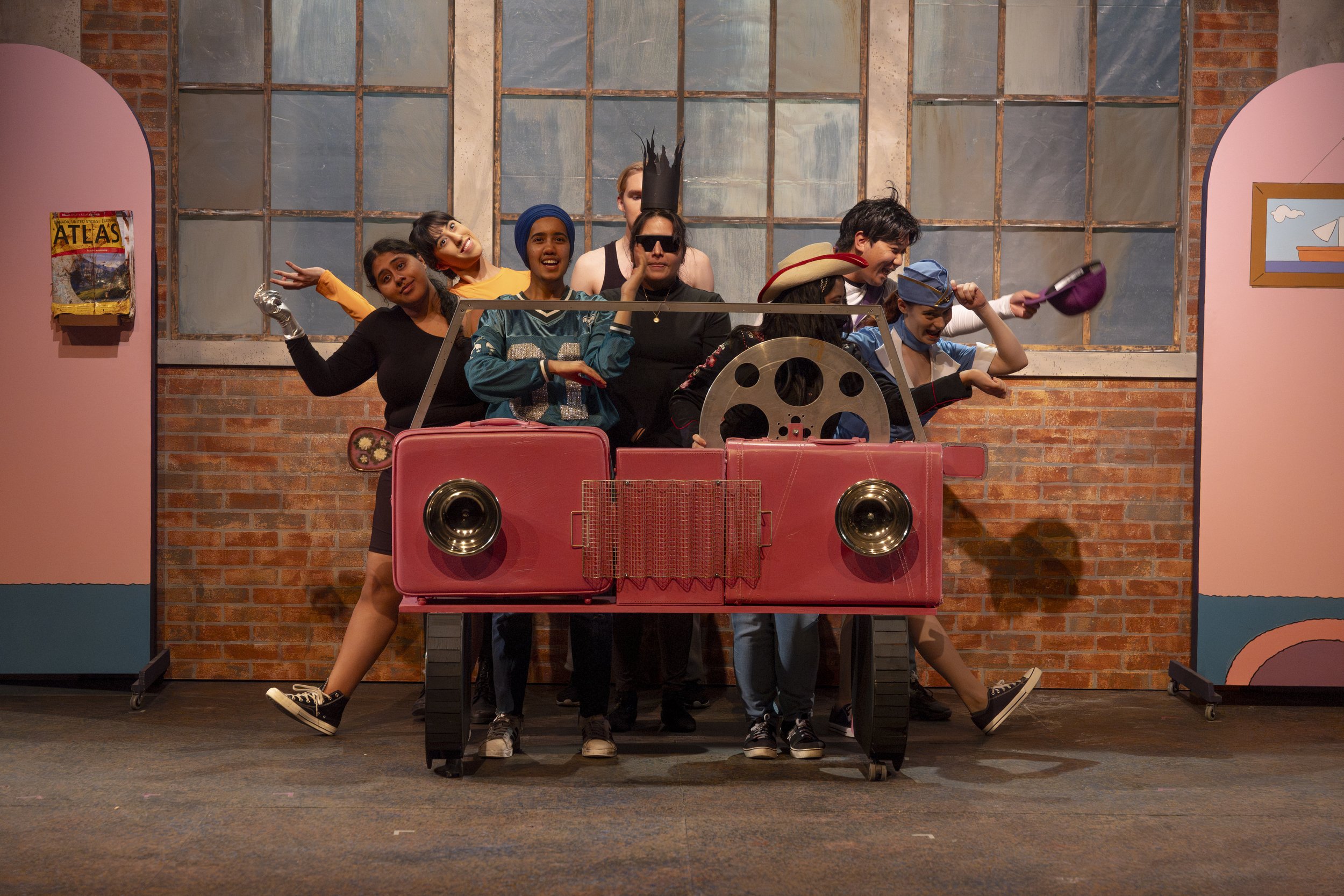
photo by javier sotres, courtesy of The ubc Department of Theatre and Film
Without saying more to the plot of the show (although, there is a twist), I will address the question that was on my mind before, during, and after the show: why The Simpsons? And I realize this is dangerous territory in a review, because this can quickly turn into a Substack essay, but I considered the backdrop of this play. Why a Simpsons rendition situated in a post-apocalyptic world? Why The Simpsons over, say Bob’s Burgers? Or even Bojack Horseman? Both shows offer up an adult humour, something which creates relatability among large demographics.
But I realize, upon reflection, Mr. Burns, a Post Electric Play didn’t concern itself with The Simpsons as a portrayal of relatable characters, wit, or ability to satirize any situation (although all these traits were utilized), it was focused on finding a sense of normalcy and hope amidst a dystopic reality. And where else can those two things be found if not in nostalgia?
The Simpsons wasn’t chosen arbitrarily, it was chosen as a nostalgic necessity. We all have ties to the show, to what this show means for us. What if The Simpsons showed us, hilariously, a form of nostalgia as endurance—as a means of hope when the world has fallen apart? That sometimes to survive, we need to reminisce on times of joy.
By the end, I left the theatre with a sense of existential awe. Every actor walked onto the stage with a clear sense of pride in their work, and the chemistry and dread between characters was captured with sharp intent. Ultimately, Mr. Burns, a Post Electric Play, was defined, for me, by the hilarious devastation of Ava Albaisa and Kyle Deslippe, playing Bart Simpson and Mr. Burns, respectively. Perhaps it was also defined by the Mr. Burns rendition of Toxic by Britney Spears (and no, I will not elaborate on that).
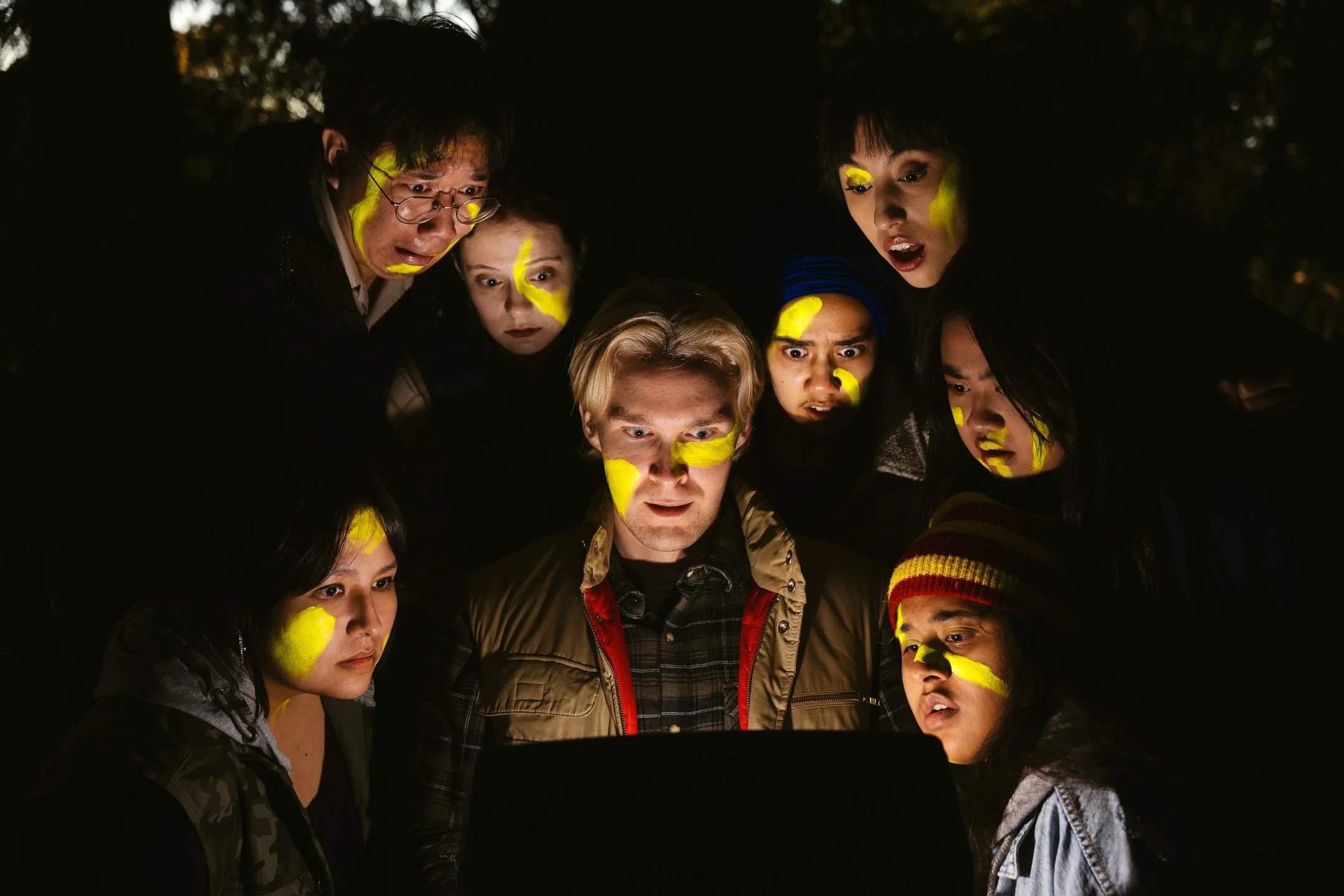
photo by javier sotres. courtesy of The ubc Department of Theatre and Film
Top (left to right): Matthew Jin, Fiona Silvis, Kyle Deslippe, Japnaam Kaur, Ava Albaisa . Bottom (left to right): Cassandra Billy, Isabel Salazar, Riya Chahal
There are four days left to witness the theatrical absurdity of Mr. Burns, a Post Electric Play. An experience which lends itself perfect for catching up with old friends, bonding with colleagues, date night, and family gatherings (although, please note, there are a few F-bombs throughout). And despite my poor-knowledge of theatre, and The Simpsons, the production was directed carefully to ensure accessibility for all audience members, (Larisse really does know her stuff). There were never moments I felt excluded. The cast presented delectable humour, the score was familiar, and the scenes that felt surreal, were surreal for everyone.
I considered giving more in terms of the plot itself. Although, given that Mr. Burns, a Post Electric Play has been in production for thirteen years, there is nothing stopping you from Googling all the questions you may have. If you take one thing from this review, let it be that the best way to experience this production is to go in knowing nothing at all.
The UBC Department of Theatre and Film’s production of Mr. Burns, a Post Electric Play is running from November 19 - December 6 2025 at the Frederic Wood Theatre. Ticket information can be found on their website.
Mary Kelly (she/her) is an Aotearoa-Canadian writer, currently pursuing an MFA at The University of British Columbia. She is the Poetry and Prose Editor for SAD Magazine and editorial assistant for ONLYPOEMS. Her work is featured and forthcoming in Grain, Maisonneuve, Poetry Society New Zealand, Canadian League of Poets, and elsewhere. You can follow her work @marykelly.co