UPU: Words in the water
/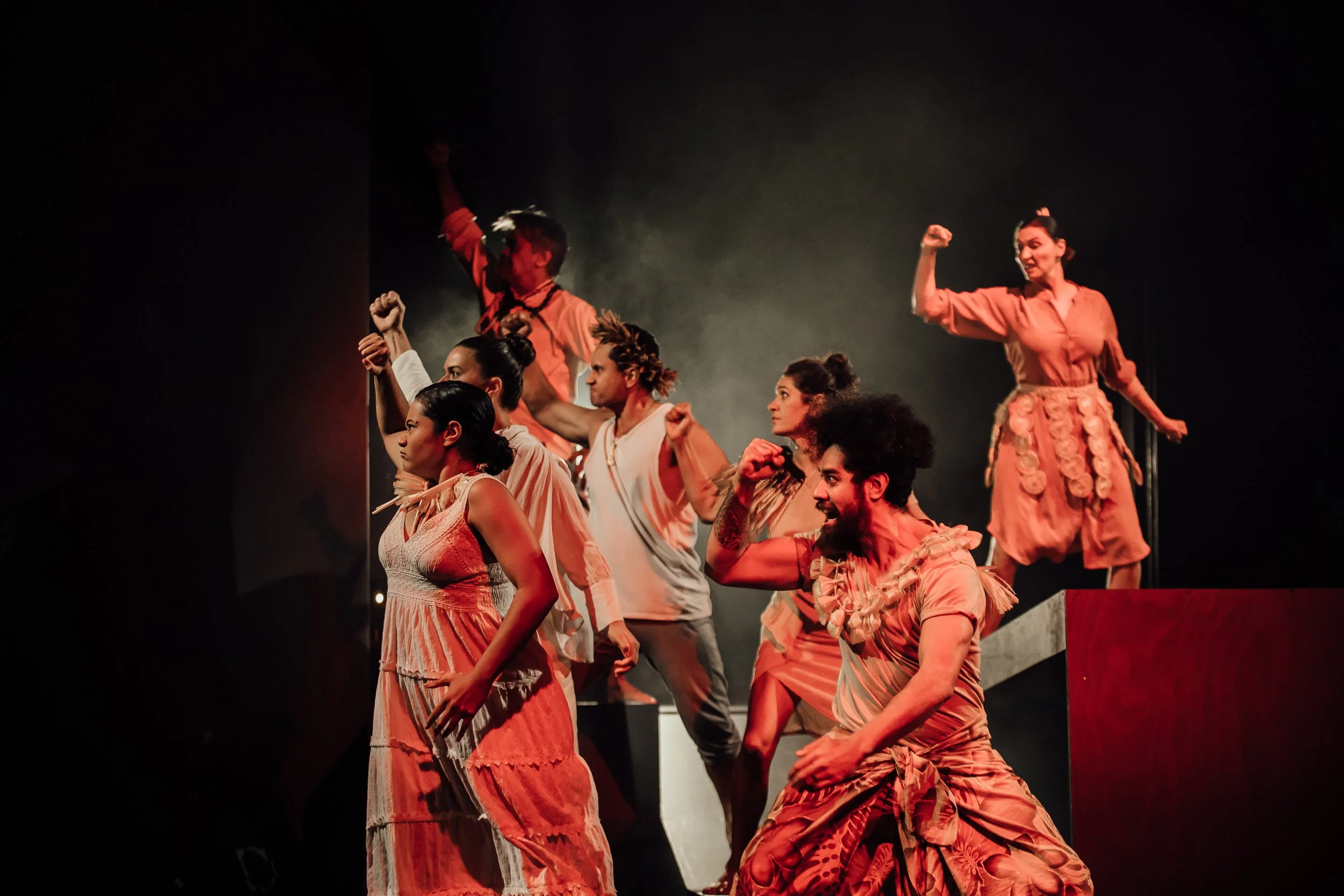
photo taken by andi crown, courtesy of the cultch.
My body floated. June 2025. The cries of my cousins, my young nieces and nephews calling for me to play, felt far away. For a moment, in the overwhelming density of sound, touch and sensation of the Philippines, I could be by myself. In the water, in the ocean. My ears, half submerged, listened to a hybrid world of water and air. Nowhere near was a rock that could ground me or hold my toes steady. With a weightless body, in a world with no clear direction and infinite space, I could imagine transforming into something else, someone else, a Filipinx person of a different ancient time, maybe my own ancestor. I opened my eyes and watched small birds dive bomb for sips of water, watched them spin and twirl without ever colliding. Intricate choreography they had committed to memory even before that first pip. And then it started to thunder. And then came the downpour of rain.
““Where do we come from? What keeps us here? What calls us back? Islands in the ocean.” ”
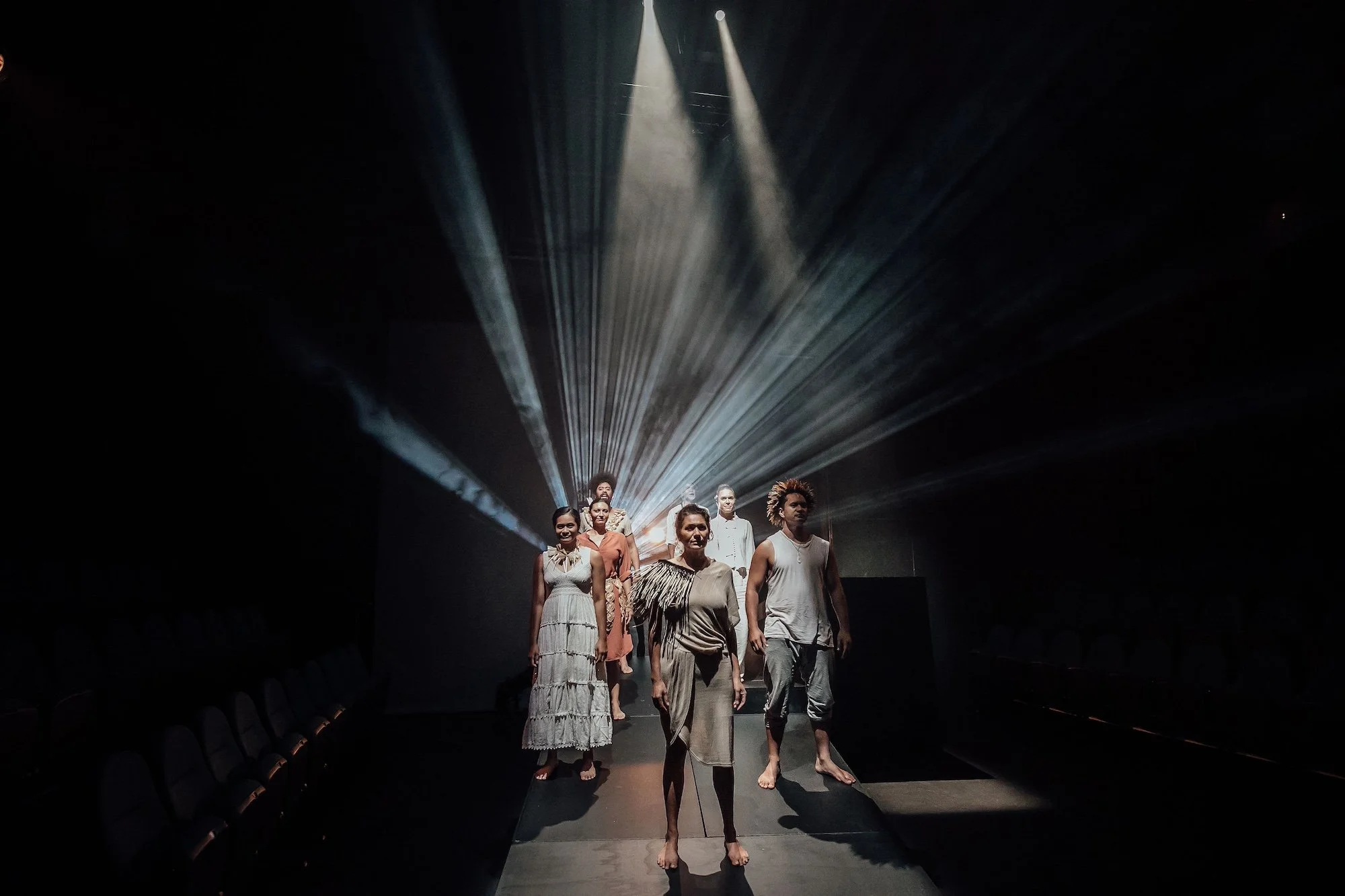
photo taken by andi crown, courtesy of the cultch.
The York Theatre filled with a smokey, slightly sweet-smelling haze that wafted in white and blue lights pointed towards the audience, as if to say: you’re part of this too, you’re here with us too. The haze billowed and cushioned performers as they lifted their arms, as they stepped onto raised platforms, as they shook their hands in haka. The stage transformed into a liminal space, a space that stretches and holds two sides of the Earth together. In my red theatre seat, in my red busted up checkered vans, on the first day of Lunar New Year, my body was weightless again. I was taken back to floating, June 2025. We, the audience, were in the wide Pacific Ocean.
UPU, meaning “words”, is a theatrical performance of spoken word, poetry and storytelling by 23 poets from across Oceania. Co-created by Grace Iwashita-Taylor and Fasitua Amosa, 6 performers from Aotearoa stood in their light with strength and resolve, and stood as warriors during the Cultch’s Warrior Festival.
The show felt suddenly familiar, as a child of immigrants, a Filipinx-Canadian person in the diaspora. Those questions spoken by the performers, that echoed call (from ancestors? from the islands? from the ocean?) were known to me, and again I felt that sense of a home that is and isn’t my home, a smattering of islands on the other side of the ocean—all gratitude and humble thanks to UPU.
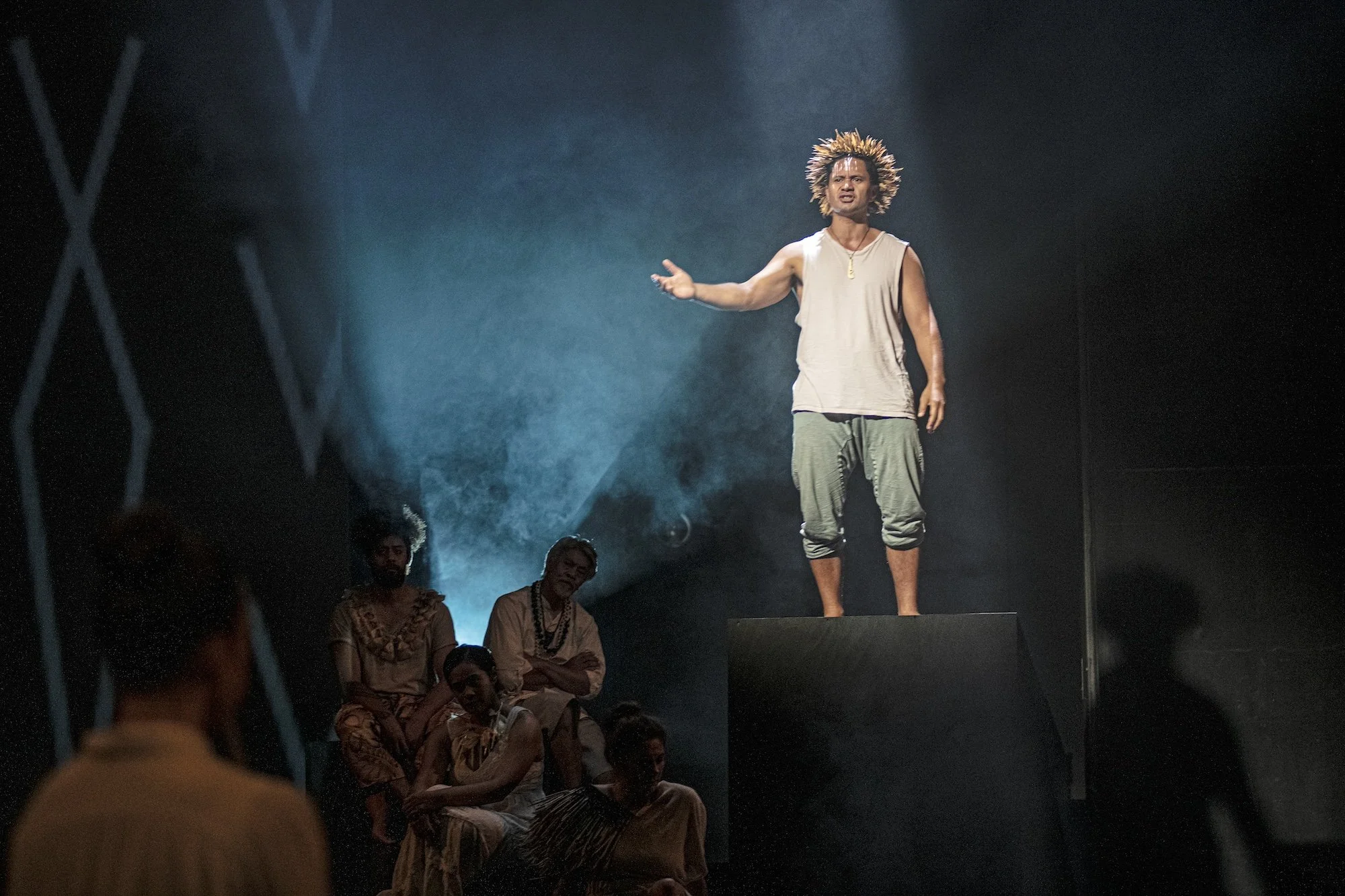
photo taken by Raymond Sagapoutele, courtesy of the cultch.
Floating, again. Once the torrential rain began to fall, I felt… something. It was indescribable at that moment. Water holding me up. And water pouring down on me. My 8 year-old nephew, Andre, tried to doggy paddle towards me in the deep water. “Tita!!!!” In the little English he knew (because I had just taught it to him a few minutes before), he screamed, “Carry me, please!” He couldn’t swim, and it would be bad if I didn’t get to him soon. Shaken out of my watery reverie by his shrill, panicked voice, I looked over and saw all his missing front teeth, saw his bare bum bobbing in the water because his swim trunks were too big for his tiny hips, and laughed. Calamity and levity, swimming hand in hand.
As each UPU performer embodied the words of SPAM’s carbon footprint and its significance in Guam, or the song of the Fat Brown Woman, or Maori Jesus with wraparound sunglasses, or the line of the ocean meeting the line of the land, I was called back out of the theatre haze and blue light. I was struck by the balance, and maybe moreso, the need for witty, satirical, tongue-in-cheek humour. In the words’ searching and understanding of identity, colonial rupture and its ongoing effects, ecological instability and Christianity’s tyranny, we laughed. Then in the next moments, in the air were the upu of: “I wear my moko on the inside.” and “You give and give, and we get the rotting leftovers.” I hate to use the word resilience. But there’s something in there, a will to carry on because what else is there to do? We keep going, so we survive. Once again, I felt the familiar: thinking of all the memes, the dance routines, the head-thrown-back type of laughter of Filipino folks while standing in flooding waters that fill their streets, and while typhoons ravage their homes. Familiar and different, specific and universal.
UPU’s powerful words, the emotions in the performers as they stood alone, representing the individual and many identities of each island and also as they sat back as witness, the emotions as they stood together to deliver the power of unison, the empowerment of seeing bodies in ancestral wear, speaking ancestral words without explanation, subtitles, or excuse brought me back to the Pacific, back to the ocean, back to my ancestors of a different time. Kinship and connection across islands in the ocean, even from and of a home that is and isn’t mine. This was that in-between feeling in the water. This is what the performance of UPU gifted me.
In the year of the Fire Horse, immerse yourself in the ocean. Allow UPU to wash over you, as we all try to spin and twirl, and maybe happily, pleasantly, meet each other in the water and collide.
UPU, a part of the Warrior Festival at The Cultch, runs at the York Theatre from February 17-21, 2026.
Kamila Sediego (she/her/siya) is a daughter of immigrants, sister, auntie, partner, playwright and dramaturg grateful to live on the unceded and stolen territories of the Musqueam, Squamish and Tsleil-Waututh peoples. Her ancestral roots stretch across the Pacific, and are embedded in the lands of Iloilo, Cebu and Manila, Philippines.
Most recently, Kamila took part in the PuSh Festival’s “In Dialogue Series,” and was a playwright at Caravan Farm Theatre’s National Playwright Retreat. She was a Playwrights Theatre Centre Associate (2021-2024), and is a current Resident Dramaturg and co-lead of Vancouver Asian Canadian Theatre’s Creation Lab. Her play “Homecoming” is published by Playwrights Canada Press. In early 2025, she was awarded the inaugural Joyce Lam Award. With the care and support of many, she is developing a new play, Engkanto. www.kamilasediego.com