Finding beauty in the broken in Dona Nabata’s The Picnic
/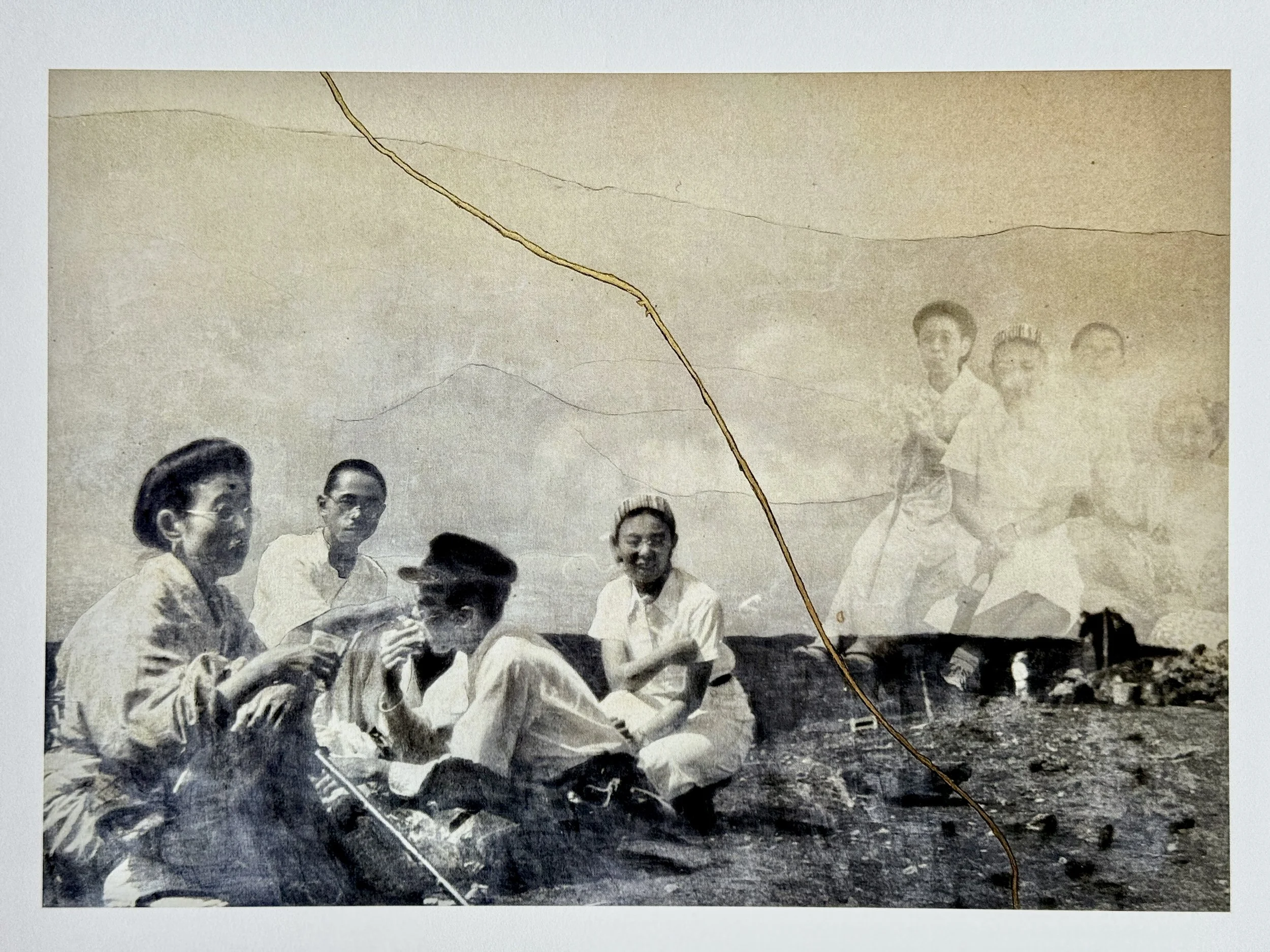
An image from dona nabata’s the picnic. image courtesy of visualspace gallery.
Smiling faces of Japanese Canadians in the 1930s enjoying bentos along a scenic landscape stare back at me from the walls of VisualSpace Gallery on Dunbar.
These expressions shared in artist Dona Nabata’s exhibition The Picnic show an unfamiliar side of a population who went on to be victims of internment during the Second World War, when the Canadian government forcibly relocated and incarcerated over 21,000 Japanese Canadians.
When shown images from this time, I’ve only ever recognized the faces of solemn victims in horse stalls who had their entire lives ripped away from them. Rather than focusing on this painful history, The Picnic highlights an underrepresented period of Japanese Canadian history through rare pre-war photographs that depict moments of leisure and tenderness.
As I stare back at the large canvas inside the intimate gallery space, I’m filled with feelings of familiarity, sadness and hope.
About a month ago, my grandfather passed away of old age. He himself was a victim of the Japanese Canadian internment between 1942 and 1949, similar to the people depicted in Nabata’s work.
Over the years, I learned very little about his time in the internment, fearing too much to invite a conversation shrouded in so much pain. But Nabata’s exhibition invites a conversation between generations about erased history and the stories we lose as generations pass.
Nabata’s work asks questions of “what if” and “what could have been” when reflecting on the 1930s photographs. If Japanese Canadian families weren’t uprooted and displaced, would this be the reflection of our community today?
Dona hand-selected the images from an archive of a hundred photos. She shared with me that what jumped out to her most when going through them was their unusually vibrant nature.
The candidness of the photographs makes you feel like a member of the picnics they depict. Faces blurred by laughter make you wonder what conversations were being had that could make them smile so brightly.
But while the subject’s expressions sparkle alongside the bold, vibrant colors and expressive brush strokes added by Nabata to enhance the images, the foreboding feeling doesn’t disappear.
Elements of kintsugi, a traditional Japanese art of mending broken pottery with lacquer mixed with gold powder, are dominant in Nabata’s artwork, reflecting themes of brokenness and mending. While the illusion of cracks on the canvas allude to something that’s been fractured and split apart, the gold paint reflects potential for new beginnings and beauty in togetherness.
As a fourth-generation Japanese Canadian, I’m left reflecting on the past lives that came before me. Not just during the internment, but before, when our community stood strong and dreamed of opportunities.
I wish I were brave enough to face those conversations and learn about the lives my grandparents had lived. Nabata’s artwork reminds me that conversations about generational trauma should not bring about shame but give us the ability to heal.
Just like in kintsugi, while the cracks themselves won’t fully disappear, we can mend ourselves to make something beautiful and bring forth renewed strength and opportunity for future generations.
Dona Nabata’s The Picnic is on view at Dunbar’s VisialSpace Gallery until July 25.
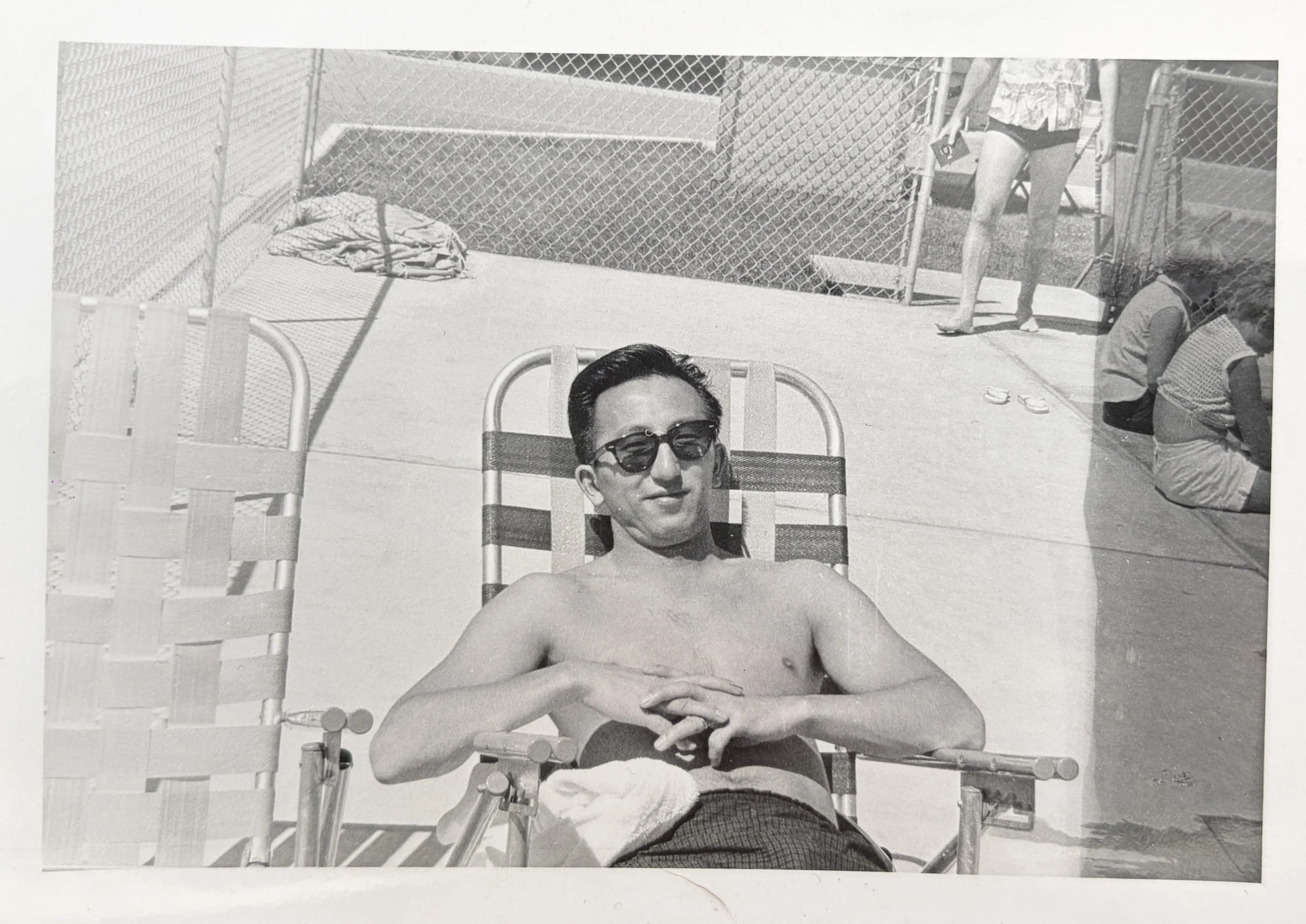
AYA’S GRANDFATHER LOUNGING BY THE POOL IN 1960. IMAGE COURTESY OF AYA FURUKAWA.
Aya is an actor, illustrator and artist based in Vancouver. You can find her work on Instagram @timetwosleep.