Ghinwa Yassine experiments with the politics of ruin and repair
/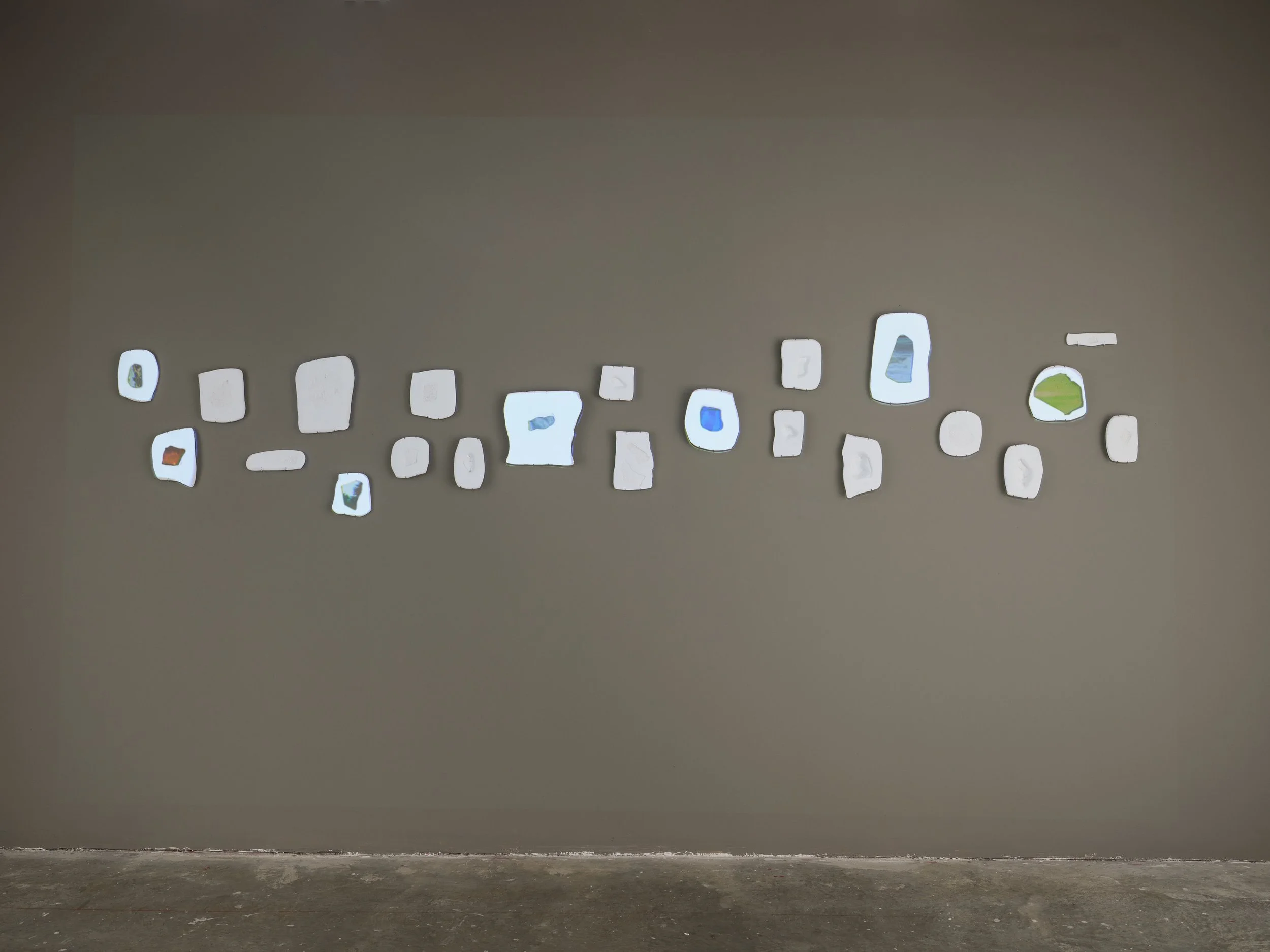
Image Courtesy of Dennis Ha
“The bag with the bubble-wrapped rubble pieces from my grandfather’s house was in the corner of my living room for weeks, and I couldn't touch it,” Ghinwa told me when I visited her art exhibition.
“It felt like I'm touching a dead body,” she continued.
Experiments in a Failed Repair started with a dream. Ghinwa Yassine kept having the same dream every night about her grandfather in the house that he built, and in the dream he was watering the big olive tree in his garden.
She felt a calling to go and document the village she grew up in, which is called Aadchit, located in the Nabatieh district in the south of Lebanon.
Her grandfather's house was destroyed by Israeli drones. The olive tree that was the center of her dream was burned. Ghinwa took her phone and started documenting the place, the destruction, and the rubble. But she noticed how the land is still green.
She wanted to record the surroundings from the perspective of an animal, to be closer to the land, to provide her with a sense of hope and belonging.
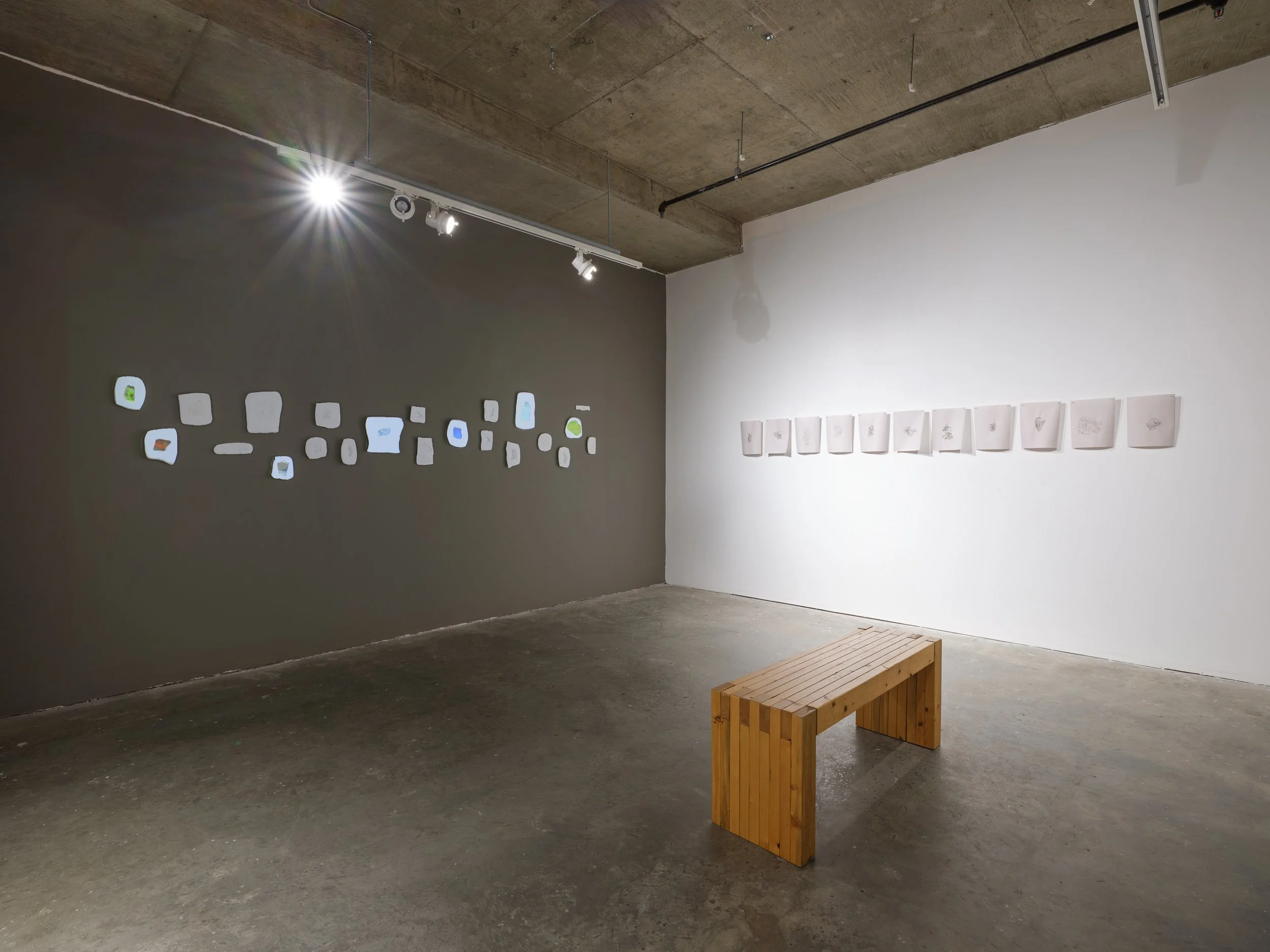
A reflection of the video of the green hills and lands can be seen on the molds she made and hung on the wall as part of the installation. In a way, land shows us how to resist destruction, stubbornly repairing itself, flourishing green and vibrant. The multimedia installation explores the idea of displacement, memory, and destruction from war without romanticizing it, but through the lens of hope and a dream of a better future that comes from a place of resistance and a will to survive. It was a part of a bigger project called “Rituals for Unstable Ground,” which combined Ghinwa Yassine’s work alongside Xinwei Che and Romi Kim. The exhibition was held at Centre A: Vancouver International Centre for Contemporary Asian Art. It combines approximately fifty sculptures, twenty projected video loops, and an immersive soundscape. It challenges the monumentalization of destruction and the colonial ways of documenting violence.
As immigrants, our relationship with our homeland is very complex. It holds our memories and our connection to the land. We carry our culture and roots with us, but how do we remain connected to a place that no longer exists as we remember it? I know too well the feeling of wanting to hold onto memories from home, and these feelings were rushing through my mind as I stood in front of the big portrait of the open bag with the bubble-wrapped rebel from her grandfather’s house.
The house that once had laughs, tears, joys of birthdays, and sounds of happy kids is now diminished to a few pieces of stone, wood, and glass in a suitcase.
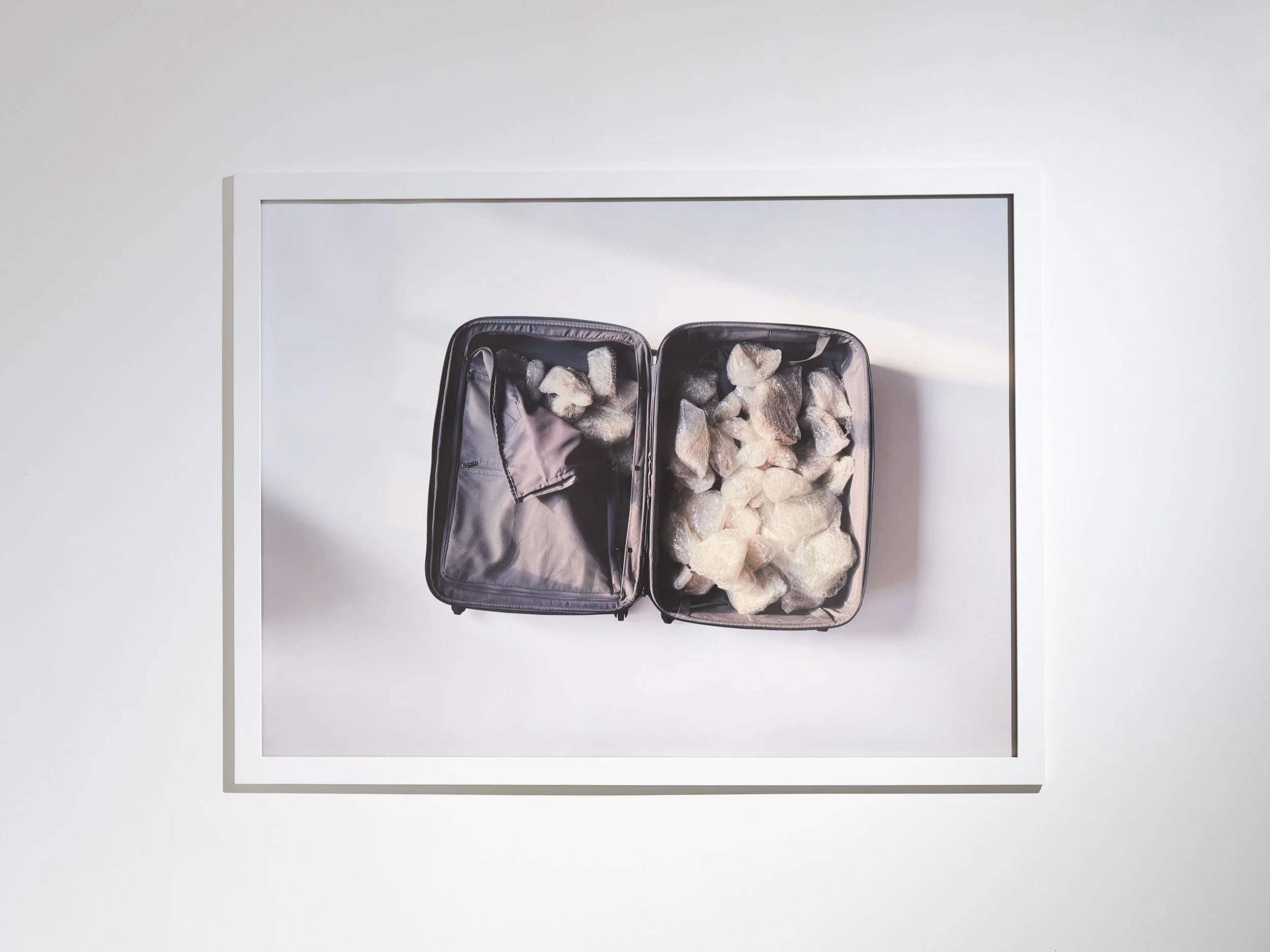
Image Courtesy of Dennis Ha
The juxtaposition that the artist created by providing the casts of concrete fragments and glass shards, capturing their absence rather than displaying the original materials, evokes the feeling of the places, history, and life that were there and now gone.
Ghinwa’s invitation to visitors were in tracing the absence of the original rubble rather than presenting it directly to them, in a way that concealed it from the world while giving the viewer a chance to see the history and life it holds.
Ghinwa described how she wanted the visitor to explore what history a material can carry and what is lost when its physical presence is removed. Using contact microphones, she recorded the sound of the rubble and imprints to unearth what sound these pieces hold. This experiment was based on a theoretical question of whether or not this debris held sounds from the explosion. Could these physical pieces of a place long gone hold the sounds of violence and destruction?
Motion sensors activate the soundscape as visitors approach or touch parts of the installation, and you can see looping images of landscapes, insects, historical moments such as a zoom in on an astronaut’s foot during the Apollo moon landing, and a fish from an aquarium that she took during a visit with her daughter. With the soundscape playing, you can hear the mic hitting against the rocks and debris, while the videos are reflected in the concave portion of the mold; you feel like you’ve been transported to the places these pieces came from. Like a window to another place or another dimension.
As an immigrant myself and a North African, I understand how a singular narrative is constructed, when people in the West hear news coverage about wars, revolutions, or famine in Africa and the Middle East. A narrative that homogenizes an entire part of the world and swallows up the histories, the cultures and the distinct experiences that lie behind these tragedies. And by doing so, the people are reduced to a singular image of suffering.
According to Ghinwa, the exhibition draws on the politics of ruins. “I approach the work as an anti-monument and anti-archive, a reclamation of the right to a ruin in the face of ongoing destruction and erasure," she explained. By concealing the remains of her family’s house, and not making them a spectacle of destruction, Ghinwa challenges the visitor to witness and imagine the life beyond the ruins.
“Through repetition, silence, and absence, I ask what remains after destruction, what can be carried across generations, and what might endure beyond our histories. The work becomes an archaeology against future erasure, holding space for loss without romanticizing it, while imagining the possibility of renewal and the earth's continued existence beyond human violence," said Ghinwa.
Karen Habashi is a freelance writer based in Vancouver. A dentist turned writer. A mom of three. She focuses on parenting, mental health, BIPOC and immigrant issues. She has bylines in CBC, Business Insider, The Georgia Straight and more. You can find her on Instagram @karen_habashi and LinkedIn as Karen Habashi.