SAD Again: Mode Moderne
/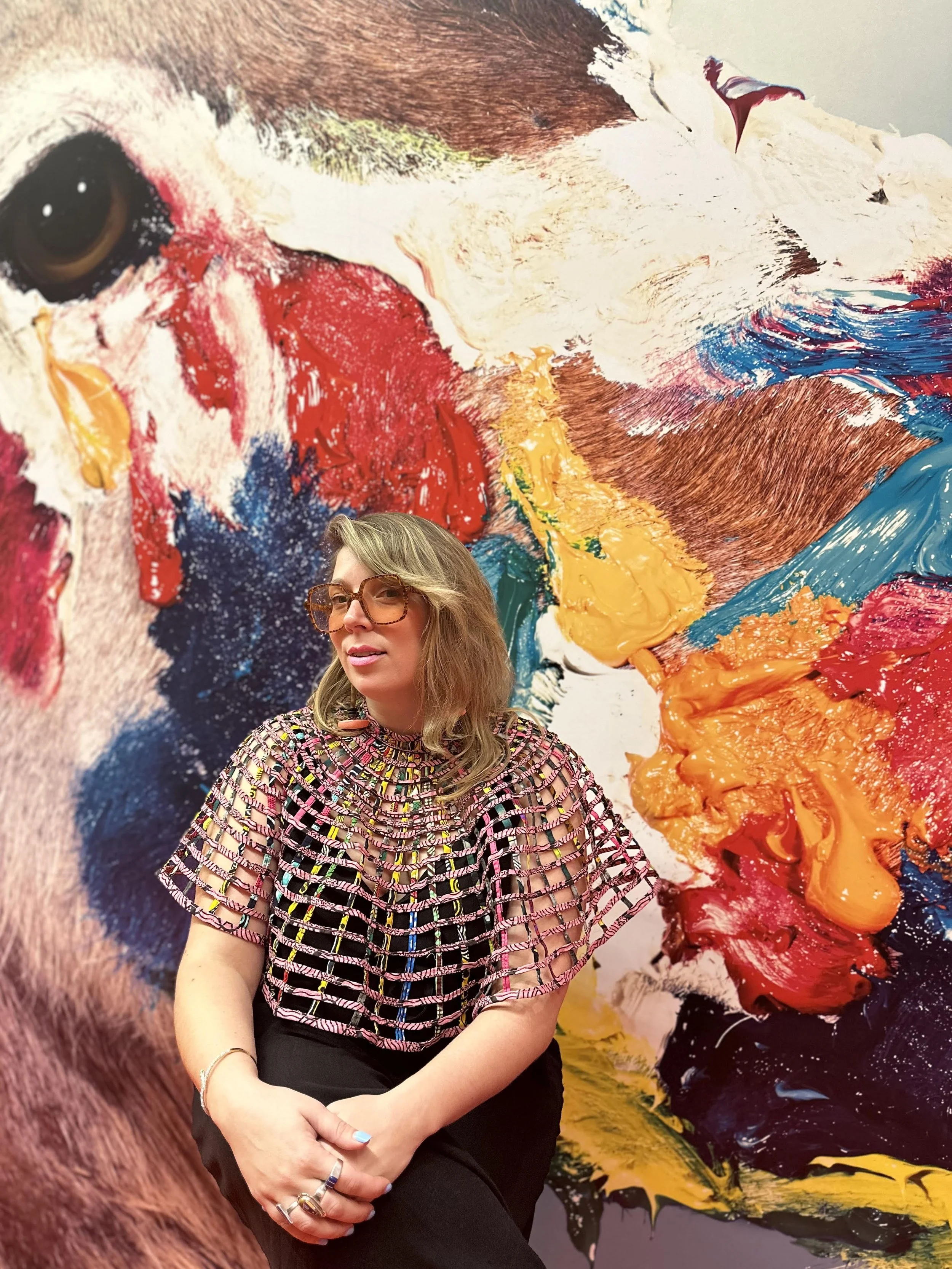
Photograph of suzy sabla
What makes one band stand out from the rest? Listening to Mode Moderne it is clear to me there is something about their musical ode to punk and rock classics and “swirling and druggy” sound that lures the listener in. It’s almost hard to believe that their sound is a product of 2013 Vancouver and not 1980s England, but Mode Moderne thrived in the local experimental arts scene, inhibited only by the usual suspects of impossible locale rent costs and bleak winters. Though one might argue the latter could only benefit a band with an album by the name of “Occult Delight”. It seems to me that few people could understand Mode Moderne the way Suzy Sabla did, however, putting sound to paper in a profile published in the “Mad Mad World” Issue.
Sabla, whose treasure trove of credentials include curating and dealing art, advising, writing and storytelling, has traveled the globe to find her creative voice, and there’s no doubt her experiences have granted her that much more to say about a piece she wrote before she had found her footing in the arts world. In her conversation with band members Intile and Gilhooly—names that summon images of black nail polish and thick under-eye liner—Sabla slowly pieced together the sound that jumps from “absolute despair to trouser-dropping hilarity,” (Intile) and whose mechanical drums and keyboard riffs are certain to seduce listeners nostalgic for the sounds of their past. While I may not have been tuned in during the height of the Smiths or even Green Day, I am here for Mode Moderne, and Suzy Sabla definitely has me tuning in.
Mode Moderne
Words by Suzy Sabla
Photography by Rachelle Simoneau & Mode Modern
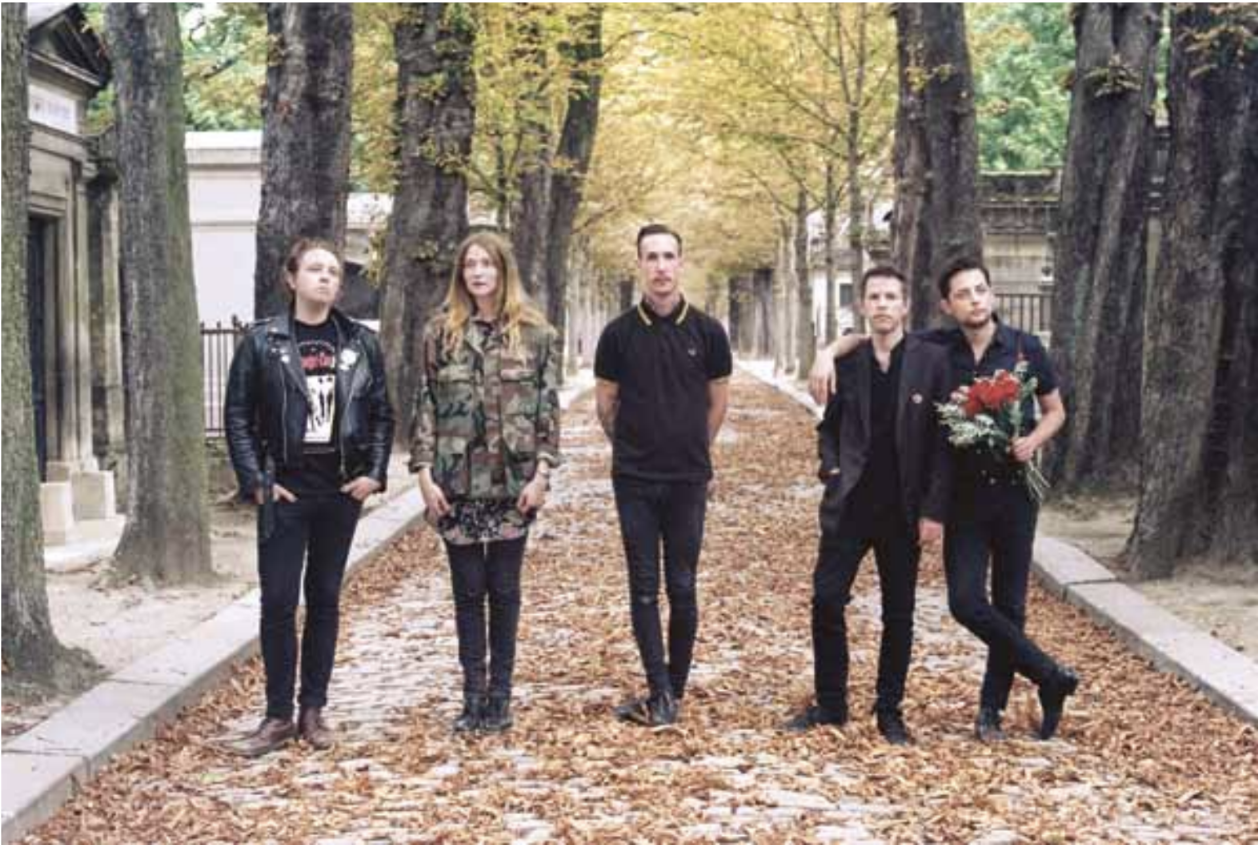
photo of mode moderne by rachelle simoneau for sad issue 12/13: mad mad world
Sitting in a quiet bar in Vancouver’s Chinatown are Mode Moderne’s Phillip Intile (voice/words + keys) and Sean Gilhooly (drums + keys). Unable to join them are the other half of the quartet’s puzzle, Clinton Loftkranz (guitar + bass) and Rebecca Law Gray (keys + voice). On this chilly night, two out of four will have to do. What they do, and how they do it, is about to pour itself into a conversation that covers everything from the band’s new album, to pop music, to romanticized nostalgia.
With the anticipated late-summer release of the band’s LP, Occult Delight, I ask the boys what the future holds for Mode Moderne. With the departure of Felix Fung, who has produced all their releases to date, and the addition of new producer Josh Stevenson (Sex Church, Nu Sensae), change is inevitable. Intile explains, “This album is going to show a diversity of sound and the different types of music that we like to listen to ... it’s going to be a little bit schizophrenic.” Gilhooly adds reassuring words for fans who like the familiar Mode Moderne: “We’re trying different sounds, but some sounds will be recognizable. People will say, ‘Yeah, that’s still them!’”
The album may be a little disjointed in nature, but it will still feature an element of Mode Moderne’s signature symbiosis. From post-punk, to mechanical drums, to a brand of shoe-gaze Intile describes—with a hint of Lost Generation poetry in his voice—as, “swirling and druggy,” there’ll be something for everyone. It also comes as no surprise that we can expect, according to Intile, “some that are just straight up Smiths pop songs,” for those who may have a harder time dealing with change. “We love pop music!” exclaims Intile. “I love choruses, I’m a sucker for a chorus. Something that I’ve always wanted to write is pop music. I love writing songs about boys and girls, and heartbreak songs. What I love even more is writing songs about big themes like luck or fate, some of those big literary classical concepts.” Gilhooly agrees, “It all comes down to a great pop song. People love a great pop song. I guess a lot of people may say that, but it’s so true.”
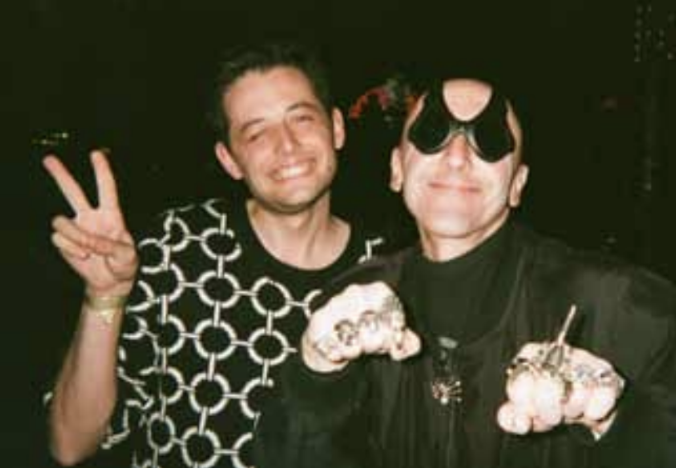
photo of mode moderne for sad issue 12/13: mad mad world
Just as diversity can be read from one song to the next, the idea of dichotomy within a single song is attractive to the band. Intile explains, “I really like singing really miserable misanthropic lyrics over a happy, snappy drum beat. If I can jump from absolute despair to trouser-dropping hilarity in the same line, that’s what I want to do: to bring people to the verge of tears, and then pull down their pants ... and just pants them.”
As everyone bursts into laughter, I realise that humour and humility are integral in understanding not only Mode Moderne, but also their music. Just as Intile presents himself as equal parts dream and dreary, or comic and cynic, the songs offer a similar trajectory. They meander through dark forests of minor chords only to find themselves on a dance floor surrounded in sparkling keyboard riffs alongside Intile’s signature croon. There’s an eloquent magic to Mode Moderne that’s hard to put a finger on.
The very eclectic influences to which they owe much of their inspiration help explain what makes their music so addictive: Intile admires Scott Walker, Morrissey, and Leonard Cohen for their sense of romanticism. Meanwhile, Gilhooly highlights his love for jazz drummers: Art Blakey, Billy Joe Jones, and Elvin Jones. His enthusiasm on the topic jumps effortlessly, much like a jazz beat, from one name to the next concluding with an off-kilter statement that has everyone in stitches, “The first drummer that got me ejaculating was Tommy Lee.” With a slight roll of the eye, yet in evident amusement, Intile simply replies, “So quotable.”
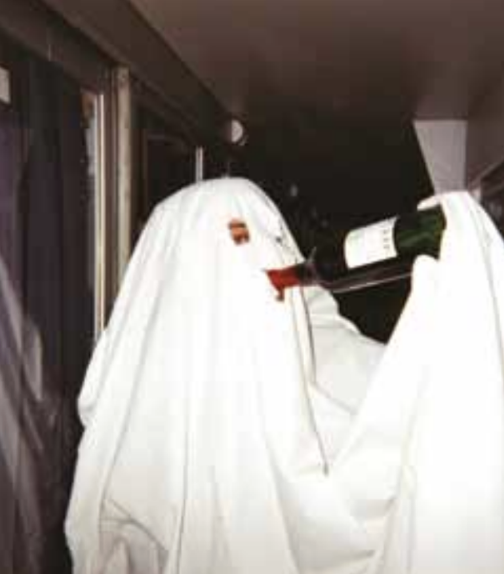
photo of mode moderne for sad issue 12/13: mad mad world
It’s no surprise that such a cheeky quartet would be charming when captured on film, but their photo diary offers sly insights as well. “Everyone wants to be a voyeur,” Intile points out, “and few people get to go tour in a rock band.” Their photos relate an amusing tale of Europe and the nuances of a rock ‘n roll tour. For the boys, Parisian cemeteries, cheap wine, and cute girls make it into their tour highlights. Glasgow girls held a particular allure for Intile, who muses, “Every girl I saw, I was convinced that they just went home and listened to Belle and Sebastian and Camera Obscura. They put on their little cardigans ... they are all fantastic, but all their boyfriends carry switchblades.”
It’s easy to understand the streak of nostalgia in centuries-old European capitals, but what is it about the past that holds so much interest to the twenty- and thirty-something’s in Vancouver? Gilhooly suggests, “I think nostalgia is riveting. Even if it’s a song that makes you think of a specific time, I don’t think we really ever get over that. I think it comes out in music when you’re not even noticing.” Intile continues, “Obviously, your past shapes you. You can’t escape the things you listened to when you were 16 ... but there’s a certain type of person that is always looking for something new.”
Kirsten Danae: Have you always felt a pull to write about music, or was there something particular about Mode Moderne that sparked your interest back in 2013?
Suzy Sabla: I spent my early twenties cutting my teeth on music writing — from mega-pop stadium concert reviews for community newspapers to contributions for Vancouver indie publications like The Skinny and SAD Mag. Those pieces were always rooted in the music scene I was deeply entrenched in: sometimes as a fangirl, sometimes as someone’s girlfriend, and at the peak of it all, the frontwoman of a little band called Junior Major.
Going out to see — and play — music was my life; the writing was an extension of that passion permeating it all. In its own way, it was my attempt to immortalize what I now understand as nostalgia. Mode Moderne carried a piece of that Vancouver with them across the Atlantic — something I knew I wanted to do myself. Revisiting this article now, it’s also nice to see how the scene continues to evolve — Felix Fung, who’s mentioned in the piece, remains a key part of Vancouver’s music scene today as a producer and the owner of Little Red Sounds.

photo by rachelle simoneau for sad issue 12/13: mad mad world
KD: You talk about how the element of surprise along with the dichotomy of the music itself are integral parts of Mode Moderne’s sound. What would you say is integral to your own writing?
SS: Absolutely. Wordplay is foreplay. And just as foreplay leads into a new rhythm of its own, a story — about music, travel, art, or myself — is only as successful as its multidimensionality and its appreciation of the nuances and bangs alike.
KD: 2013 was a while ago, and we got some catching up to do. What has your creative journey looked like since writing for SAD’s Mad Mad World Issue?
SS: 2013 was a wild time of change for me. Music was on the backburner, I had my first real heartbreak under my belt, and I was feelin’ myself — while still searching for new sides of who I was and what creativity might look like for me.
That search led me into the art world. Over the years I spent stretches living between Toronto, Bratislava, and New York City, eventually building a life as an independent curator, art dealer, advisor, writer, and storyteller. Through it all, documentation remained the thread — the way I made sense of the scenes, people, and places I found myself moving through.
In the last few years alone, my work — and my impulse to see everything there is to see — has brought me to India, Mexico, the United Kingdom, France, Italy, and across the United States. I document these travels through my personal Instagram and through Art Novel, the art advisory I lead.
Along the way I’ve met some of the most inspiring creatives — particularly artists, independent curators, and writers who champion them. Many, if not most, are brilliant, magnanimous, and adventurous women — something I still find rarer than it should be in many industries. I consider myself lucky to be in their company and to highlight their ingenuity through my travels and storytelling.
KD: Nostalgia runs rampant throughout your piece. Is there anything you’ve felt nostalgic for lately? (Personally, I’m almost nostalgic for a tour through Parisian cemeteries with a rock band I’ve never met.)
SS: I’ve actually felt nostalgic for singing on stage. Being — even if only a tiny part — of Vancouver’s cultural fabric at such a young age was a pretty amazing feeling. I feel nostalgic for house parties. For the first time falling in love with cities I’ve since come to know, underbellies and all. And for writing about myself, for myself — in song and in essay. It’s not that I don’t write about things that interest me now — I absolutely do. But lately I’ve been feeling nostalgic for a time when the narrative felt a little less prescribed, and the writing followed instinct more freely. Maybe this is the nudge to return to that.
Suzy Sabla is an art curator and dealer, advisor, writer and storyteller whose love for art has motivated her to travel the globe. She has plenty of experience in music writing but currently works at an art advisory, Art Novel, based out of Vancouver. You can find out more about her work at @artnovel or on her personal Instagram @suzysabla.