
SAD Bookclub: The Cure For Drowning By Loghan Paylor
/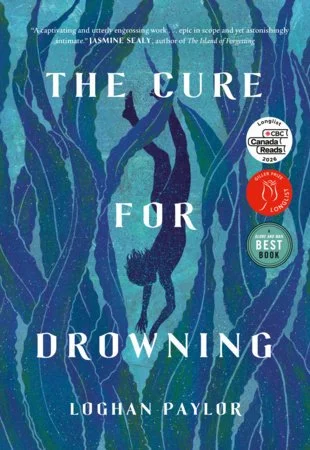
the cure for drowning cover image taken from author’s website.
Historical fiction novel The Cure for Drowning channels its era meticulously, from daily life on a 1930’s family farm to fighter pilot combat above the English Channel. But, you won’t find its Queer, Celtic folklore-infused love story in the archives. To debut novelist Loghan Paylor, that’s the point.
Kit McNair is a plucky tomboy who prefers breeches to skirts, and riding horses to sewing (think Mulan, but in Southwestern Ontario). Rebekah Kromer is the daughter of a German doctor, facing rising xenophobia in the leadup to World War II. When Rebekah’s family moves to town, sparks fly. The narration volleys between their perspectives in a love story that spans a decade, the Atlantic ocean and several subtle pronoun changes.
Paylor didn’t just research the era—they lived it, kind of. Before Paylor started their Creative Writing MFA at UBC, they worked at a historical interpretation site. They gave tours, but they also forged metal, fed chickens and dressed like a 20th century homesteader.
Some visitors were interested in dwelling in the past for the wrong reasons. As a Queer person dressed in gendered historical attire, they faced uncomfortable attention. Paylor described the tensions between their gender identity and their job in an essay for Room Magazine in 2018.
“‘I paid thirty-two dollars for historical accuracy, not some social justice stunt,’” one visitor told them, Paylor wrote. They began to wonder how extraordinary a Trans person in 20th century rural Ontario really would have been.
“I often felt erased from the narrative the site was telling about history, and searched long and hard through their archives to find any evidence that people like me had existed in the past,” they write on their website.
While they didn’t find any Trans pilots in the archive, they found a story to tell in the gap.
Then, they discovered a book of poetry their grandfather wrote during his time in the Royal Canadian Air Force during WWII. From there, the story’s details and heart took shape.
Despite its verisimilitude, The Cure for Drowning, which is a 2026 Canada Reads Finalist, isn’t necessarily trying to be textbook-truthful. Paylor calls their approach “historical fantasy.”
From the start, the more-than-human world is a player in the story. Like many an outdoorsy Queer, Kit expresses their truest self in the forest. Away from the gendered baggage of the kitchen or the stables, Kit forages wild leeks, catches trout with their bare hands and predicts coming storms.
In the Western European folklore that Paylor draws from, the wilderness is also full of unpredictable danger: lights moving under ice, seductive voices in the river, a haunted shack in the forest.
Flashes of Celtic magic explain the unexplainable, infusing the “lost and unknowable aspects of queer history into the narrative,” wrote Paylor.
Kit’s Queerness is explained by their family as the influence of a changeling, related to an ancestral Irish curse. In their family’s legend, a selkie woman temporarily abandons her seal-skin for a fisherman lover. Ultimately, she can’t thrive as a woman in a human house — she must return to the sea or die. It’s a tidy metaphor for the cost of fitting into a life that goes against your nature, and the slippery tactics Queer people employ to survive and thrive.
Beyond the fae voices in the water, the most compelling fantasy Paylor conjures is about the easy potential of Queer self-actualization. Kit moves through the world in genderfluid camouflage, and Paylor deliberately does not pry into the logistics. How does Kit use the washroom in the boys-only airforce? That question has no place in the The Cure for Drowning universe (and why would you even ask that, freak?).
Instead, Paylor grants the character an agency and privacy that Trans people are increasingly forced to fight for. They’re honest about the historical challenges of balancing Queer expression with societal convention, but don't sensationalize them.
Paylor said that they intended The Cure for Drowning as the book that they needed but didn’t have as a younger person.
Kit’s pronouns also morph over the course of the book as their self-knowledge evolves, and depending on the onlooker.
“While people weren't using they/them in the 1940s the same way we use it in 2026, there are many examples of people throughout history rejecting descriptions of binary gender,” wrote Paylor. “Ultimately, I sacrificed some historical accuracy for the sake of building a bridge between the past and the present.”
Find Loghan Paylor Sun Mar 30, 6-7pm: Sardis Library, Chilliwack for an author reading and signing. Follow their instagram for @loghanish for more events.
Tova is a writer based in Vancouver. Her work, focusing on climate, ecology, and culture, has appeared in publications including the Georgia Straight and the Energy Mix.